
Africa Can Accelerate Economic Transformation and Mass Employment through Good Governance and Strong Industrial Policy
The cost of daily life, is climbing faster than incomes, as millions of families across Sub-Saharan Africa feel the pinch on daily-basis. Food prices remain volatile, transport fares are rising, and small businesses are struggling with expensive electricity, weak infrastructure, and limited access to finance. Against this backdrop, the World Bank Group warns that the region’s economic recovery is losing momentum, even as governments face mounting pressure to create jobs for a rapidly growing young population.
The latest edition of the World Bank Group on African economic report, projects that economic growth across Sub-Saharan Africa will remain at 4.1% in 2026, unchanged from 2025, but says the outlook is increasingly fragile due to geopolitical tensions, rising debt burdens, inflationary pressures, and slowing external financing. Conflicts in the Middle East and disruptions in global supply chains are expected to push up the prices of fuel, fertilizer, food, etc. Costs of living that are often felt first in low-income households and informal communities.

Across many African cities and rural towns, the effects are already visible. Market traders are paying more to transport goods, farmers are struggling with higher input costs, and urban workers are finding it harder to stretch monthly earnings. In this view, without stronger policy coordination, economic shocks could expand disparity in social-status and weaken social stability, particularly among young people entering the labor market in record numbers.
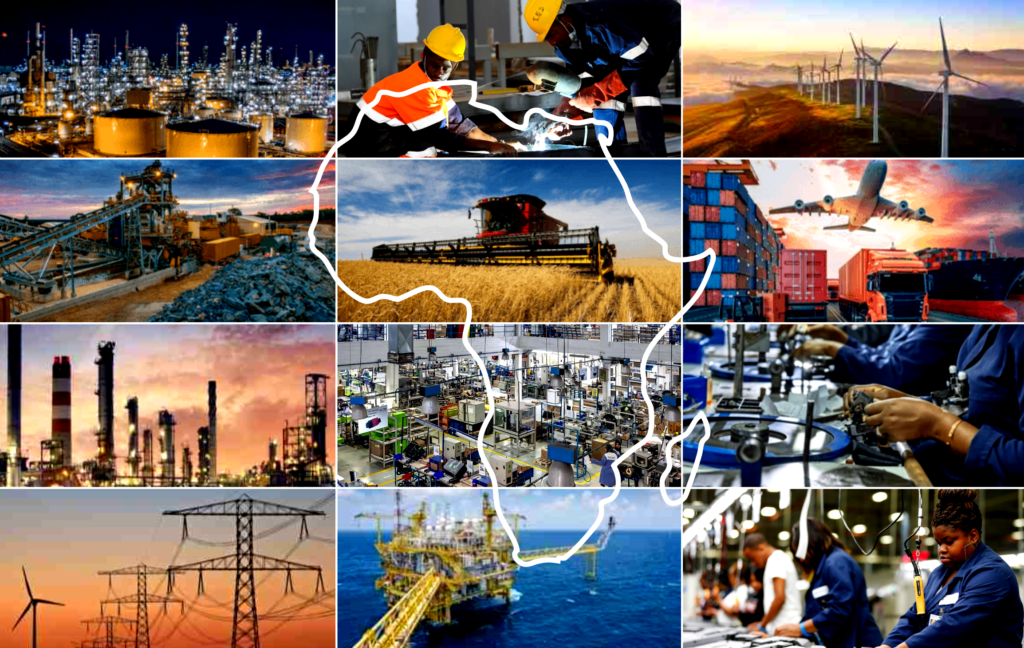
The report says Africa’s long-term economic transformation, will depend less on short-term commodity booms and more on smarter industrial policies that can expand manufacturing, processing industries, pharmaceuticals, technology services and value-added exports. With more than 620 million people, expected to join Africa’s workforce by 2050, governments are being urged to build economies capable of generating productive and stable employment, rather than relying heavily on raw commodity exports.
According to the report, industrial policy can help countries move into higher-value sectors, if backed by reliable electricity, transport infrastructure, technical education, access to credit and stronger regional trade systems. Supporters argue that successful industrial strategies, could create jobs not only in factories, but also in logistics, construction, agriculture, digital services and small-scale supply chains that sustain local communities.

The economic stakes are also tied closely to governance. High public debt and rising debt-servicing costs, are reducing the fiscal space available for investments in schools, healthcare, roads, energy systems and so on. Public capital investments across the region, remain significantly below 2014 levels, while external debt servicing has doubled as a share of government revenues, over the past eight years. This leaves many governments, balancing between immediate social protection needs and long-term development priorities. Andrew Dabalen, the Chief Economist for the Africa Region at the World Bank Group, said governments must protect vulnerable households, while maintaining macroeconomic stability through inflation control and prudent fiscal management.
The report also places strong emphasis on regional integration through the African Continental Free Trade Area, describing it as a critical pathway for expanding African industries, beyond different countries’ borders. Also, deeper trade integration, could help African producers reach larger markets, reduce dependence on imports and strengthen resilience against global economic shocks.
But the report cautions that industrial policy alone, will not guarantee transformation. Without transparent governance, implementation capacity and accountability, countries risk creating isolated projects that will fail to generate broad economic benefits. As for many Africans, the real measure of success will not be growth statistics alone, but whether policies translate into stable jobs, affordable living conditions and wider economic opportunities in everyday communities.
SOURCE: World Bank Group