
Nigerians/Other Africans Caught in the Crossfire of Migration and Xenophobia, powered by Governance Failures

Across parts of South Africa, scenes of burning shops, fleeing families and frightened African migrants have once again exposed a painful fracture in continental relations. In cities such as Johannesburg, Pretoria, Durban, etc., renewed anti-foreigner tensions have left many Nigerians, other African nationals and white Africans living under fear, uncertainty and economic vulnerability.
Xenophobic violence in South Africa has been discussed largely as a security and humanitarian crisis, over a prolonged period. But behind the attacks, lies a more painful Africa-transnational reality that the victims of these attacks, are migrants-recipients of their various countries’ failure in governance for socioeconomic wellbeing, back home, across the African continent. The abysmal crisis goes beyond why South Africans are attacking fellow Africans, to questioning why many non-South Africans feel compelled to leave their home countries to anywhere, in the first place.
Nigeria’s migration wave, popularly described as the “japa” movement, is increasingly less about ambition and more about survival, and so are other migration intents in other African countries. It’s ambitious. Doggedness for better livelihood, or future, if you may. Behind every bus ride to another African country, every visa application and every dangerous relocation journey, is a familiar story of economic frustration, unemployment, weak institutions, shrinking hope, non-existing governance, staring hopelessness, etc.


While South African communities wrestle with rising poverty, inequality and joblessness, many Nigerians/other Africans arriving there, are escaping similar pressures, probably because of their intense driving-zeal to achieve destiny without the contraction of crime. The result is a collision of two national crises as painted by the actions of South Africans; with the ordinary migrants trapped in the middle. In a continent with a common racial-colour identity. Could this be spurred by jealousy, hate, hosts’-laziness towards attainment while migrants spring economically, or what?
Even South African President Cyril Ramaphosa recently acknowledged that governance failures across Africa, are fueling migration pressures. How about South Africa with the online viral pandemic-spread of street crime, daily car/phone theft, house burgling, bullion-van robbery, gang-banging, etc., could these be caused by governance-failures in South Africa too? Well, as Ramaphosa remarks, though it sounded controversial in some Africans’ circles, but it sure reflects a growing diplomatic concern that migration within Africa can no longer be separated from socioeconomic collapse, youth unemployment, weak governance structures and less infrastructural developmental leverages across the African continent.
This is where the conversation becomes politically sensitive. As for Nigeria that has been long celebrated as the “Giant of Africa”, Ghana, well embraced as the most peaceful nation in Africa, amongst some others, etc., they continue to struggle with conditions that push millions of their citizens outward, despite the countries’ vast oil/mineral resources wealth, youthful population and entrepreneurial potentials.

For example, in communities across Nigeria, young graduates speak openly about abandoning dreams of building businesses at home because of unstable electricity, rising inflation, limited access to credit, devaluation of the currency, collapse of social-trust for government/her structure and declining public trust in institutions. Small business owners complain of surviving without state support while navigating multiple taxes, insecurity and a banking system, many believe serves government borrowing, more than grassroots enterprise.
This disconnect is visible in the country’s financial structure. Although small and medium-sized businesses remain the backbone of employment and local commerce, access to affordable loans remains extremely limited. Some economists debate that commercial banks are increasingly preferring the safety and profitability of government securities, over lending to productive sectors capable of creating jobs. The implications go surpasses economic details. Every struggling business contributes to the rising social pressure across board; and every unemployed graduate, adds to a migration pipeline, stretching from other countries to South Africa and beyond.

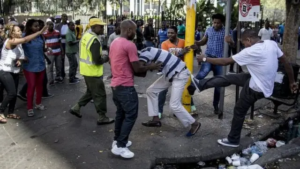
Nonetheless, in South Africa, migrants often arrive in communities already battling severe inequality and economic exclusion. In townships and low-income neighborhoods, frustration frequently turns toward foreigners accused of taking jobs or dominating informal trade that in most cases, are established by the migrants, or powered by migrants’ educational qualification.
Opposition politician Julius Malema has publicly questioned the logic behind xenophobic attacks, asking whether violence against migrants has created any meaningful employment for struggling South Africans. His criticism mirrors a wider argument, among scholars and civil society groups, stating that xenophobia is not an economic solution, but a political symptom of profound structural failures. Still, on the ground in real-time, the human implication remains devastating.
Nigeria/other African SMEs’ owners, recount losing shops built over decades, within hours of mob attacks. Families describe hiding indoors during unrest, while others quietly relocate to safer neighborhoods. Human rights advocates say many African migrants are increasingly living in fear of sudden violence, triggered by political rhetoric, or misinformation, or economic unrest.

What makes the crisis especially painful for many other Africans, most especially Nigerians, is the historical relationship between both countries. During the anti-apartheid struggle, Nigeria provided diplomatic support, funding, scholarships and political solidarity to the Black South Africans. Nigerian musicians, activists and students, participated in continental campaigns against apartheid, at a time when South Africa was faced with international isolation. Today, many Nigerians see the hostility directed at African migrants, as a betrayal of that shared history.
But diplomats and regional policy experts warn that emotional outrage alone, will not solve the crisis. While Nigerian lawmakers periodically condemn xenophobic attacks and demand stronger protections for citizens abroad, some political analyst suggest that sustainable solutions, will require coordinated reforms on both sides. To the government of South Africa, that means addressing unemployment, social inequality and inflammatory anti-migrant rhetoric, before frustration hardens into violence. While for the Nigeria/other African governments, it means confronting the governance failures that are driving large-scale economic migration.
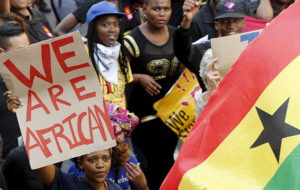

Across the continent, the crisis is also testing the credibility of African unity frameworks that is championed by organizations such as the African Union and the African Continental Free Trade Area initiative. African leaders continue to promote regional integration, open markets and intra-African mobility, yet, migrants in many parts of the continent still face hostility, discrimination and weak legal protections. This contradiction, has become one of Africa’s defining diplomatic challenges. The continent speaks of unity at summits, while many Africans remain unsafe across African borders. Policy experts’ opinion states that the way forward, requires more than symbolic diplomacy. It demands economic reforms capable of creating opportunities at home, stronger regional migration protections, coordinated anti-xenophobia campaigns and financial systems that support productive industries, rather than expand social-disparity.
Nigerians living abroad, frown greatly and personal against the issue governance failures back home; because, they are not simply migrants searching for adventure, as the case may be. Increasingly, they are citizens pushed outward by economic pressure and pulled into societies struggling with their own unresolved social-inequalities and downslided socioeconomic status. And until these structural realities change, the cycle is likely to continue with more departures, more resentment and more vulnerable Africans, caught between collapsing opportunities at home and hostility abroad.



The tragedy unfolding in South Africa is consequently not only about xenophobia. Presumably, it is about what happens when governments fail to provide dignity, security and economic-belongings, for their own people. It could also be about what happens, when a great number of society abhor individual-educational development, positive-ambitiousness towards entrepreneurial attainments regardless of business-size/capacity and when crime becomes the easiest perceive socioeconomic escape-route.
And honestly, unless African governments/political leaders/states begin to confront these failures in governance, the dream of continental solidarity, may remain far weaker than the desperation driving instigated-migrants across borders.
Photo Credit: NALTF | Glimpse from the Globe | Rfi | REUTERS
Source: BAO