

Africa Must Intensify Industrialization Development to Expand Value-Added Economic Benefits
Across Africa, governments are facing growing pressure to transform economies that remain heavily dependent on raw material exports into industrial powerhouses capable of creating jobs, raising incomes, and strengthening economic resilience.
While industrialization has long been viewed as the pathway to prosperity for developing nations, recent evidence suggests that Africa’s manufacturing journey remains unfinished. Policymakers, economists, development analysts and institutions, are consistently warning that unless African countries move beyond exporting raw commodities and low-value products, the continent risks missing a critical opportunity for long-term economic advancement.
A growing body of research shows that Africa has not experienced the widespread collapse of manufacturing, which was once feared by experts. Instead, many countries have recorded periods of industrial growth that failed to develop into sustained transformation. Factories opened, investments arrived and jobs were created, but the momentum often faded, before industries could mature into major drivers of economic growth.
The challenge is evident in Sub-Saharan Africa, where manufacturing employment has expanded significantly over the past two decades. Millions of new jobs have emerged in the sector, yet manufacturing’s contribution to national output, has remained largely stagnant. Some economists describe this as a troubling paradox that more people are working in manufacturing, but the sector is not generating enough value to significantly boost economic growth. This reality is a visible fact on the ground, to many workers and small business owners
Across industrial zones and urban production clusters, thousands of small enterprises provide employment, but struggle with limited access to financing, outdated technology, unreliable electricity, poor transport networks and restricted market access. As a result, productivity remains low and many businesses are unable to compete further than their local markets.

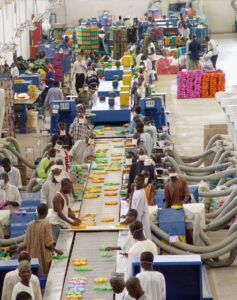

At the same time, large manufacturers, often backed by foreign investment, account for a substantial share of industrial output, but employ relatively few workers. Although these firms bring technology and export opportunities, experts say their connections to local suppliers remain weak, limiting the larger economic benefits that could flow through domestic industries. There are claims by development analysts that the key issue facing Africa today, is not simply job creation but value creation.
Countries that successfully integrate into regional and global value chains, tend to record stronger gains in productivity and employment. Rather than exporting raw cotton, cocoa, lithium, or agricultural products, these countries generate greater economic returns by processing them into textiles, chocolate, batteries, and other finished goods. A case study of Burkina Faso, will greenlight a result to this submission.
The difference is significant. Every additional stage of production creates new opportunities for employment, skills development, business growth, etc. It also enables countries to capture a larger share of profits that would otherwise be earned abroad.
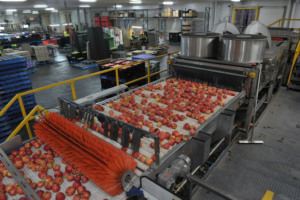
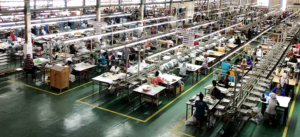
In several African nations, examples of this approach are beginning to emerge. Manufacturing clusters in Ethiopia, agro-processing industries in Côte d’Ivoire, apparel production hubs in Kenya, mega garment manufacturing factory in Egypt and so on, have demonstrated how firms connected to export markets often achieve higher productivity, pay better wages and remain in business, longer than companies focused solely on domestic markets. Nevertheless, competitiveness in the modern economy, can no longer rely on low labour costs alone. In a view, the race is no longer about who offers the cheapest workforce, but about who can produce more value through technology, skills, innovation and efficient production systems.
This shift is becoming progressively urgent, as global manufacturing undergoes major changes. Advances in automation, digital technology, green energy, artificial intelligence, etc., are reshaping production networks worldwide. At the same time, companies are seeking more resilient supply chains, creating new opportunities for emerging manufacturing destinations. As regarding the probable views of African governments, these changes present both risks and opportunities.
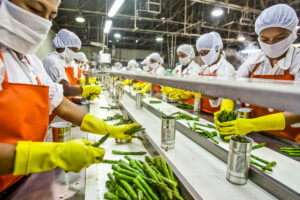

Many countries are now prioritizing industrial policies that focus on improving infrastructure, expanding energy access, supporting small/medium-sized enterprises and strengthening workforce skills. There is also growing emphasis on creating stronger links, between local businesses and multinational manufacturers operating on the continent.
Regional integration has emerged as another critical priority. The implementation of the African Continental Free Trade Area (AfCFTA), is widely viewed as a potential game-changer for industrial development. By reducing trade barriers and harmonizing regulations across African markets, African governments hope to create larger production networks capable of attracting investment and supporting industrial scale.
Industry observers point to initiatives such as battery manufacturing projects linked to mineral resources in the Democratic Republic of the Congo and Zambia, as well as expanding food-processing and textile industries across West Africa, as examples of how regional value chains could accelerate economic transformation.

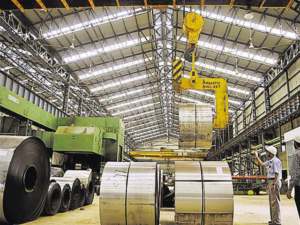
The stakes are particularly high given Africa’s demographic realities. The continent is home to the world’s youngest population, with millions of young people entering the labour market every year. Without stronger industrial growth, governments may struggle to generate enough formal employment opportunities to absorb this rapidly expanding workforce.
Industrial experts contend that the future industrial policies, must move beyond attracting factories alone. Instead, governments must focus on building ecosystems that encourage innovation, technology transfer, supplier development and continuous learning. They say support for businesses, should be linked to measurable outcomes, such as export performance, skills development and increased local value addition.
Encouraging signs are already visible. Investments in renewable energy manufacturing, electric vehicle production and digital industries suggest, Africa could become an important player in emerging global sectors. These industries offer the possibility of creating skilled jobs, while positioning the continent within future-oriented value chains. Nonetheless, the larger picture remains one of unfinished progress.
So, despite decades of policy efforts, many African economies continue to export raw materials while importing higher-value manufactured goods. This pattern limits income growth, weakens industrial competitiveness, and leaves countries vulnerable to global commodity price shocks. Governments across the African continent, should be getting the clear message from most economists by now that industrialization remains essential, but its success will depend on how much value, African economies can create and retain at home.


As global competition intensifies and production networks evolve, Africa’s next phase of economic development may hinge both on the quantity of factories developed and if those factories can transform local resources into higher-value products, generating skilled employment and anchor sustainable economic growth.
Analytically, the continent’s industrial future, will be defined by its ability to move from exporting raw materials to producing finished goods, such as from cocoa to chocolate, cotton to textiles, minerals to batteries, data to digital services and so on. Only then can industrialization deliver the wide-range prosperity that African governments and citizens have long envisioned.