
Nigeria’s Security Debate Intensifies Push for Local Policing Reform

As violent crimes, kidnappings, banditry and communal conflicts continue to test Nigeria’s security architecture, the debate over how best to protect citizens is increasingly moving from the corridors of power to villages, towns and city neighborhoods where insecurity is felt most deeply.
Deputy Speaker of the House of Representatives, Hon. Benjamin Kalu, has argued that Nigeria’s highly centralized policing structure is no longer sufficient for a nation of more than 220 million people spread across 36 states and 774 local government areas. According to him, the current model struggles to respond effectively to the country’s complex and diverse security challenges, making the case for greater decentralization through the proposed State Police Bill.
In regards to many Nigeria families, the discussion is personal than being a mere constitutional or political matter. In communities affected by kidnappings, armed attacks and violent crime, residents often describe long waits for security intervention and limited police presence. Rural farmers, traders and transport operators frequently say that insecurity has disrupted livelihoods, restricted movement and increased the cost of doing business.
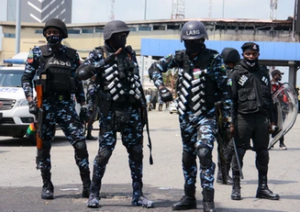
Security specialists note that local policing structures could potentially bridge the gap between law enforcement agencies and communities, by relying on officers who understand local languages, customs, geography and social networks. Supporters of this policy claim that such familiarity could improve intelligence gathering and enable quicker responses to emerging threats, before they escalate into major security incidents.
The economic implications are equally significant. Across several regions, insecurity has affected agricultural production, supply chains and investment decisions. Businesses operating in high-risk areas often spend heavily on private security, while some investors avoid locations perceived as unsafe. Advocates of state policing, believe that improved local security could encourage economic activity, support small businesses and restore confidence among investors and residents alike.


Farther than economics, the issue also touches on cultural and social cohesion. Nigeria’s diverse ethnic and linguistic landscape means that trust between communities and security agencies, can be influenced by local knowledge and relationships. Community leaders have long have been saying that security personnel, who understand local traditions and social dynamics may be better positioned to mediate conflicts, identify threats and build public cooperation.
However, the proposal remains a subject of intense debate. Civil society organizations, including the Civil Society Legislative Advocacy Centre (CISLAC), have supported discussions on security reform, while warning that decentralization must be accompanied by strong legal safeguards. Critics fear that without adequate oversight, state-controlled police forces could become vulnerable to political interference, particularly during elections or periods of political tension.
These concerns have fueled calls for independent monitoring mechanisms, transparent recruitment processes, professional training standards and clear constitutional limits on the powers of state police authorities. Governance experts also claimed that accountability structures, will be just as important as the creation of the new policing system itself.
Political observers view the State Police Bill as one of the most consequential security reform efforts in recent years because it raises broader questions about federalism, governance and the distribution of power in Nigeria. Supporters see it as a practical response to evolving security realities, while opponents urge caution to prevent unintended consequences.

However, at the grassroots level, many citizens are less-focused on political theory and more expectant of results. In communities facing daily security challenges, the central question is, whether any new structure can provide faster protection, prevent attacks and restore public confidence in law enforcement.
As lawmakers continue deliberations on the future of policing, the growing consensus across many sectors is that Nigeria’s security challenges, require solutions that combine national coordination with stronger local participation. Whether state policing ultimately becomes part of that solution or not, may depend on the government’s ability to balance efficiency, accountability and public trust, in a country where security remains one of the most pressing concerns of everyday life.