

Rescue of the Late General’s Wife – Hajiya Amina, Renews Questions Over the Fate of Kidnapped Oyo Pupils/Teachers

The successful rescue of Hajiya Amina Abubakar Rabe, wife of the late Major General Rabe Abubakar, has renewed public debate over Nigeria’s response to kidnapping crises, with many citizens asking why security forces were able to locate and free one hostage in Katsina State, while 46 schoolchildren and teachers abducted in Oriire Local Government Area of Oyo State, still remain in captivity weeks after their disappearance.
While security experts caution that no two rescue operations are identical, the contrasting cases have intensified pressure on authorities to demonstrate that every victim receives the same level of urgency and protection, regardless of social status or location.
Military officials involved in the Katsina operation, reportedly acted on precise intelligence that identified the location of the hostage, enabling a focused intervention. In contrast, the Oriire abduction presents a far more complex challenge. The victims – 39 pupils and seven teachers, are believed to be held across difficult forest terrain, where kidnappers can move captives frequently, divide them into smaller groups, and exploit the dense environment to evade surveillance. Though, operational explanations offer little comfort for families of the missing children.


Across affected communities near Ogbomoso, anxiety continues to grow as parents struggle with uncertainty over the fate of their children. Many residents say, each passing day extends fears about the physical and psychological condition of the captives, particularly younger children who may be unable to withstand prolonged hardship in remote locations.
The crisis has also exposed the wider human cost of insecurity. Schools that should represent safety and opportunity, have become symbols of vulnerability. Parents in several communities are reportedly reconsidering school attendance, while a rising number teachers are worried about their own safety, in rural areas where security presence is limited.
Security specialists note that mass-hostage situations differ significantly from single-hostage rescues. Any direct assault, carries the risk of endangering dozens of lives simultaneously. Children can be used as human shields, making aggressive military action far more complicated. Such operations often require prolonged intelligence gathering, aerial surveillance, negotiation efforts and careful coordination among military, intelligence and local security actors.
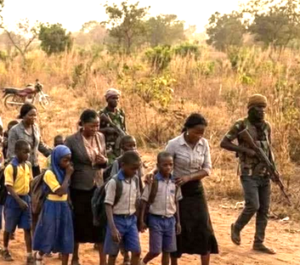
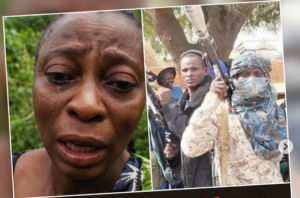
Nonetheless, the prolonged captivity of the school children, has also raised questions about preparedness and intelligence capacity, in parts of southwestern Nigeria. While large-scale kidnapping operations have been plaguing parts of the North-West for a long period of time now, the Oriire incident has highlighted growing concerns that criminal groups are expanding into regions, previously considered relatively safer.
At the grassroots level, the abduction has triggered calls for stronger community-based security structures, improved intelligence sharing between residents and security agencies; and increased protection around schools. Community leaders say that local vigilance networks, forest monitoring, rapid-response mechanisms, etc., must become part of the bigger strategy to prevent future attacks.
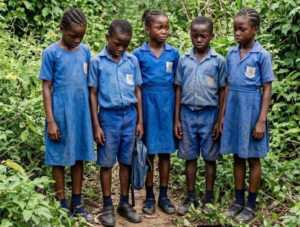
The economic consequences are equally significant. Rural communities depend heavily on education as a pathway out of poverty. When schools are attacked, families face additional costs, local businesses suffer reduced activity, and the confidence of both local/international investors in these affected areas, can grow weakened. Prolonged insecurity, also diverts public resources towards emergency responses that might otherwise support development projects.
The social impact may be even more lasting. Furthermore, apart the immediate suffering of the hostages and their families, repeated kidnappings risk normalizing fear among children and undermining public trust in institutions responsible for protecting citizens. Mental health experts warn that survivors of abduction, often face long-term traumatic experiences, so they require sustainable support after they return home.

Government officials maintain that efforts to secure the release of the Oriire victims, are ongoing and that operational decisions are being guided by the need to protect lives. Even the government authorities insist that rescue strategies must account for the unique realities of each case, rather than relying on comparisons between different incidents.
Nevertheless, the contrast between the rescue of Hajiya Amina Abubakar Rabe, the late General’s wife and the continued captivity of the Oriire school-children, has become a powerful symbol in the national conversation on security. With great regards to many Nigerians, the central question here is no longer how difficult the operation may be in simple mere explanation of tactical terms, but how quick and effective the federal/state government can reassure frightened communities/families that every citizen, whether a military family member, teacher, or schoolchild, deserves equal protection and an unwavering commitment to their safe return.