

Rwanda Approves Airline-Style Bus Reform in Kigali, Pressuring the East African Region’s Development
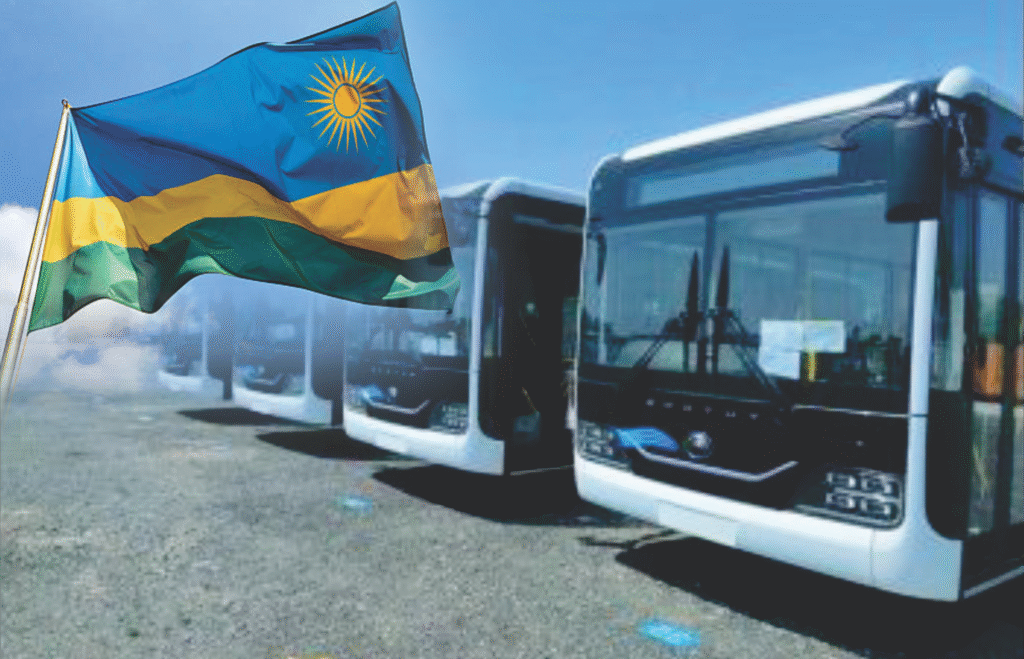
Rwanda has taken a bold step toward transforming urban mobility, approving an airline-style public transport model that requires buses to depart on strict schedules rather than waiting to fill up. This is a small technical shift with enormous social, economic and political implications. The reform stands in sharp contrast to Uganda’s decades-long struggle to establish an organised public transport network.
Kigali is now preparing to launch one of East Africa’s most ambitious mobility overhauls: a service-driven system built around punctuality, fleet discipline and commuter dignity. Approved by the Rwandan Cabinet on November 28, the change reflects an increasingly deliberate national effort to professionalize the public realm.
Under the new model, buses will operate like airlines departures, triggered by time, not passenger numbers. Rwanda’s junior transport minister – Jean De Dieu Uwihanganye said “with the new model, buses will not wait until they are full. They will be running on fixed and predictable timetables”. He added that buses will be allowed no more than a 10-minute delay at the main bus parks and only three minutes at intermediate stops. A reform with human consequences.
To the ordinary commuter, the reform promises more than punctual buses. It offers something intensely valued in fast-growing African cities, predictability. No more standing in long queues with no idea when a bus might depart. No more rushed, chaotic boarding. No more gambling with time, especially for workers whose livelihoods depend on arriving punctually.
Cleaner, electric buses are set to replace all traditional diesel models by 2026, which will reduce noise/pollution in the city, improving health outcomes in communities long exposed to fumes. Real-time travel updates through mobile apps and station screens will give passengers a sense of control unfamiliar in much of the region. As for many Kigali residents, this is beyond a transport upgrade. It is a boost to daily life. This is showcase of political will as a differentiator.
Rwanda’s reform therefore lands as a political message as much as an administrative one, noting that public systems can work if institutions are empowered to enforce standards, even against entrenched interests. And building a centralised model for socioeconomic accountability.
To ensure coherence, Rwanda has set up Ecofleet Solutions, a state-owned company that will oversee virtually every component of the public transport chain like fleet management, depots, cashless payments, route planning and service monitoring.
Private bus companies will not disappear, but will operate under tightly enforced, performance-based contracts. Payment will depend on service quality rather than passenger volume, discouraging the “wait-to-fill” culture and ensuring that operators are rewarded for reliability rather than crowding practices. Poor performance will attract penalties.
A digital tracking system will monitor buses in real time, enabling swift intervention when delays or breakdowns occur. Dedicated bus lanes, upgraded traffic signals and strict maintenance standards will reinforce the system’s efficiency. Even buses that depart half-empty will be subsidised to ensure timetables remain intact.
Rwanda’s approach throws challenges in the East African region into sharper relief. The contrast highlights infrastructural differences, issues of governance and political priority.
As Kigali moves toward a green predictable commuter-centred model, the East African region risks being left behind, in an era defined more by dynamic economic development.
Rwanda’s airline-style bus system may become a benchmark for medium-size African cities seeking to modernise mobility without the enormous cost of rail systems. The reform demonstrates how political will, public investment and coordinated management can deliver humane, reliable services.
To the East African region, it raises an uncomfortable but necessary question -how long can a the region depend on an unmanaged, taxi/bike-dominated system before the economic and social costs overwhelm the city?
Above all, Kigali is charting a new course, one that asks its neighbours to reconsider what is possible in African urban transport.