

Scientists Transform Everyday Clay into Quantum Computing Potential: From Dirt to Data

In an unexpected twist of science meeting everyday life, researchers in Norway have discovered that simple clay, a material found virtually everywhere, could play a role in the quantum computers of the future. While clay cannot yet be used directly, it provides a promising base once its active components are extracted, potentially paving the way for a more environmentally friendly and accessible era of supercomputing.
The breakthrough comes from an international collaboration led by the Norwegian Institute of Science and Technology (NTNU), with partners from Brazil, the Czech Republic, and France. Their research shows that clay’s unique properties may one day allow it to perform at the cutting edge of quantum computing, a field often dominated by rare and costly materials such as superconductors or trapped ions.

Quantum computers represent the next frontier of computation, with the potential to solve problems in minutes that would take today’s fastest supercomputers decades. This transformative power relies on materials capable of maintaining delicate quantum states, a challenge that has historically required extreme conditions like ultra-cold temperatures, complete isolation, or exotic elements. Clay, surprisingly, appears to possess the necessary quantum characteristics under the right conditions.
At its core, clay’s promise lies in its structure and properties. The material is essentially two-dimensional, a critical feature when manipulating matter at the quantum scale. Like silicon, clay exhibits semiconductor behavior: it can conduct electricity under certain conditions and act as an insulator under others, effectively functioning as a controllable switch. Additionally, clay has antiferromagnetic properties, meaning it can exhibit magnetic behavior without being traditionally magnetic. This combination is exactly what makes it suitable for quantum computation.
The human benefits of this discovery are substantial. If clay can be harnessed as a quantum material, it could dramatically reduce the environmental and economic costs of building quantum computers. Unlike rare and resource-intensive materials currently used, clay is abundant, inexpensive, and naturally occurring. This opens the door to democratizing access to quantum technology, potentially reducing inequalities in technological capabilities between nations and institutions. Countries without rare mineral resources could participate in the quantum revolution, shifting the geopolitics of computing power.
Socially, the research signals a broader movement toward sustainable innovation. As concerns over climate change and electronic waste grow, finding alternative materials for high-tech applications is increasingly urgent. Clay-based quantum computers could be part of a future in which advanced computing does not come at the expense of the environment, aligning technological progress with societal values.

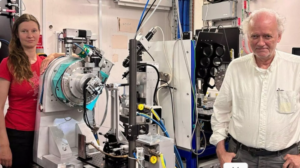
Barbara Pacáková and Jon Otto Fossum, members of the research team, emphasize that while the discovery is promising, much work remains. Clay cannot yet be used directly in quantum machines. The challenge now lies in extracting and refining its active components to function under precise, high-tech conditions.
Nevertheless, this study represents more than a technical achievement, illustrating the power of international collaboration, the untapped potential of common materials, and a vision of technology that serves society without exhausting the planet. From the ground beneath our feet to the quantum computers of tomorrow, clay may soon help us compute faster, greener, and more equitably than ever before.