

African Medical Centre of Excellence (AMCE) Records Her First Two Medical Successes, Redefining Access to Advanced Care in West Africa
default
New cardiac and cancer milestones reduce medical travel, strengthen families and signal a turning point for Africa’s health economy.
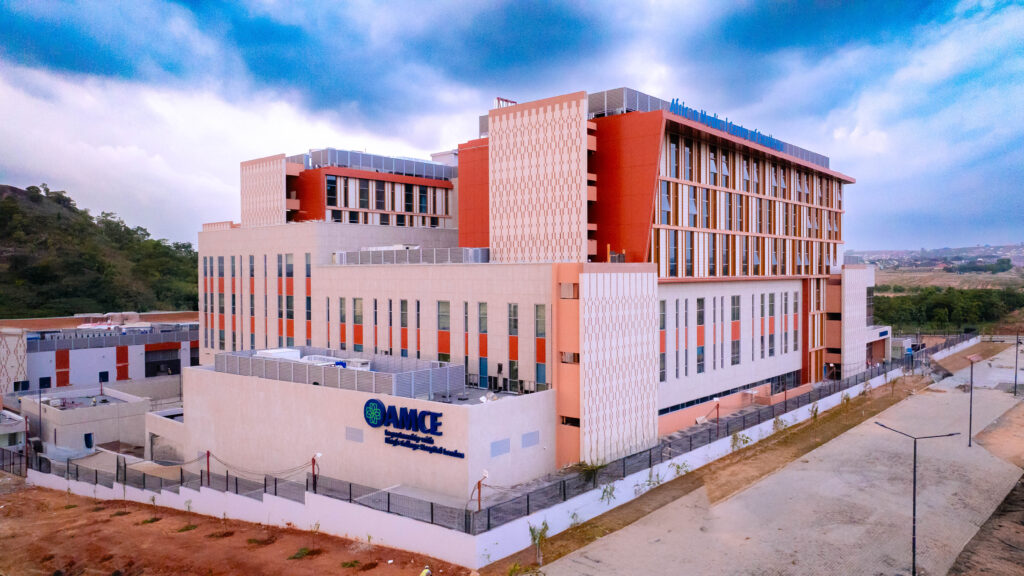
Just six months after opening its doors, the African Medical Centre of Excellence (AMCE) in Abuja has reached two historic clinical milestones that are reshaping expectations of healthcare delivery in West Africa. The quaternary-level hospital has successfully performed its first open-heart surgery, a complex triple coronary artery bypass grafting (CABG), and delivered West Africa’s first Stereotactic Body Radiation Therapy (SBRT) for lung cancer.
Developed by African Export-Import Bank (Afreximbank) in partnership with King’s College Hospital London, AMCE’s rapid progress signals more than technical achievement. It reflects a broader dimension toward healthcare sovereignty, with profound human, social, economic and political implications for Nigeria and the region.
As to patients and families, the impact is immediate and intensely personal. Procedures that once required costly, stressful journeys to Europe, Asia or the Middle East, can now be accessed closer to home, allowing families to remain together during treatment and recovery. In the case of the pioneering SBRT procedure, performed on an elderly patient with a localized lung tumor, the technology delivered surgical-level precision without incision, minimizing hospital stay and preserving quality of life.
Clinically, AMCE’s first CABG places it among a small group of African institutions offering fully integrated cardiac care, from advanced diagnostics and interventional cardiology to open-heart surgery within a single facility. In its first six months, the hospital has already carried out more than ten cardiac interventions, including angiographies, pacemaker insertions and percutaneous coronary interventions, underscoring the speed at which its capabilities are scaling.
Away from the hospital walls, these milestones carry significant economic and social weight. Africa is estimated to spend between US$6 billion and US$10 billion annually on outbound medical tourism. By retaining patients and their spending within the continent, AMCE is helping to redirect resources into local health systems, job creation and skills development. The facility’s growing workforce and advanced training environment also address the long-standing brain drain of African medical professionals seeking opportunities abroad.
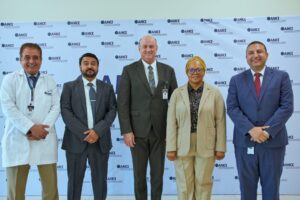
Brian Deaver, Chief Executive Officer of AMCE said – “there is a dignity in being treated at home, by world-class professionals, using the most advanced technology. These achievements show that Africa can deliver the highest standards of cardiac and cancer care, and that patients no longer need to travel abroad for life-saving treatment”.
From a policy perspective, AMCE’s progress aligns with Nigeria’s and Africa’s broader ambitions to strengthen health security and resilience. Investment in high-end medical infrastructure reduces dependence on foreign systems and enhances preparedness for complex, non-communicable diseases that are rising across the continent.

Oluranti Doherty, Managing Director of Export Development at Afreximbank, described the milestones as evidence of what strategic investment can achieve. “This is about building local capacity, retaining expertise and advancing a new era of health dignity for Africans”, she said, noting the wider benefits for the region’s health ecosystem.
With 170 beds currently and plans to expand to 500, AMCE is positioning itself as a long-term hub for complex care, research and medical education. Its advanced facilities from catheterization laboratories to specialized oncology and imaging equipment, reflect an ambition to treat patients and redefine Africa’s place in global medicine.
As AMCE prepares for further complex procedures, including valve repairs and replacements, its early successes suggest a broader cultural shift, from one in which trust in African healthcare institutions grows, families face fewer disruptive medical journeys and the continent steadily reclaims control of its health future.