
DR Congo’s Equateur Province Turned the Tide on Mpox: From Fear to Hope
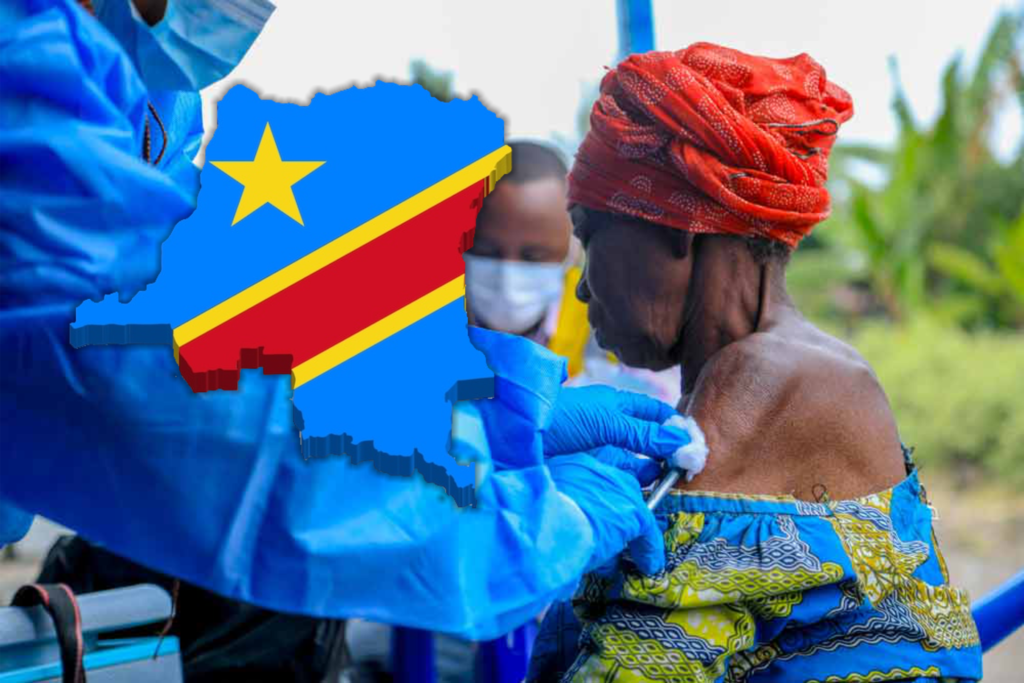
In Mbandaka, the riverine capital of the Democratic Republic of Congo’s Equateur province, the wards of the Mama wa Elikya health centre once carried a heavy silence. As mpox cases climbed month after month, health workers operated under constant tension, balancing clinical duty with the fear of bringing a deadly virus home.
Concerning Monique Mulo Itala, a 50-year-old registered nurse and mother of five, the crisis was intensely personal. Each shift meant confronting patients whose symptoms were sometimes invisible, and returning home with lingering anxiety. “I was afraid to enter the isolation site”, she recalls. “Even with protective clothing, I worried about infecting my family. I asked them to keep their distance”.
That fear was widely shared. On 14 August 2024, the World Health Organisation (WHO) declared mpox a public health emergency of international concern after a sharp rise in cases across the country. Between January and November 2024, the DRC recorded 8,517 suspected cases, 1,439 confirmed infections and 417 deaths. Equateur was among the hardest hit, accounting for 1,262 confirmed cases and 374 deaths, more than a third of the national toll.
The impact rippled beyond hospitals. Families were separated by fear of contagion, livelihoods were disrupted as markets slowed, and misinformation fed stigma in close-knit communities. In a province where extended families and communal living are central to social life, isolation protocols, though necessary, cut against cultural norms of care and closeness.

Relief came through a coordinated response that blended global support with local leadership. Between January and July 2025, the African Development Bank and the WHO partnered with the Congolese government under the Emergency Assistance Project to Combat Simian Smallpox (MPOX), financed by a $1 million grant from the Bank’s Special Relief Fund. The strategy focused on early diagnosis, vaccination, infection prevention and control and multi-sectoral coordination. It targets frontline health workers, high-risk groups, children, veterinarians, hunters and game traders.
The results were swift and measurable. By October 2025, all newly identified suspected cases were rapidly confirmed in laboratories, treated appropriately and followed by systematic vaccination of contacts. Confirmed cases in Equateur have fallen by about 60 percent, with just 14 deaths recorded so far in 2025, compared with 417 over the same period a year earlier.
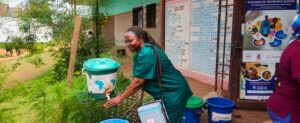
As for the health workers like Monique, vaccines changed everything. “When the vaccines arrived, we were relieved. They protected us and our families. We’re no longer afraid to care for patients because our bodies have developed antibodies” she says
More than 1,406 people have been vaccinated across the province, including thousands of frontline staff. Outreach teams reached over a million residents, countering rumours and reinforcing preventive behaviours. This social mobilization proved as critical as clinical care, rebuilding trust between communities and the health system.
The intervention also strengthened Equateur’s health infrastructure. Laboratories in Mbandaka, Ingende and Bikoro were upgraded, thousands of infection-prevention kits distributed, and 4,800 GeneXpert cartridges deployed to speed diagnosis. Routine immunization gaps were addressed too. “Out of 100 children we traced who had missed earlier vaccinations, we reached 88,” Monique notes, underscoring the programme’s broader public health dividend.
Politically, the turnaround offers a case study in how timely investment and coordination can restore confidence in public institutions. Economically, reducing outbreaks helps stabilise local trade and transport along the Congo River, a lifeline for the region. Socially and culturally, the response reaffirmed the power of collective action of neighbours, health workers and leaders pulling together to protect one another.
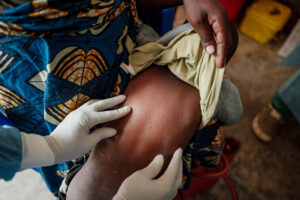
Today, Equateur province stands more resilient: better equipped, better trained and better prepared. The decline in mpox cases is a public health victory, but it is also a human one—rooted in solidarity, trust and shared responsibility.
In Monique’s expression, fear has given way to hope. “We tell the community to be proud to be vaccinated. To vaccinate is to protect yourself. To vaccinate is to love”.