

President Tinubu Proposes a Budget Overhaul of ₦43.56 Trillion, to Streamline Economic Rounds

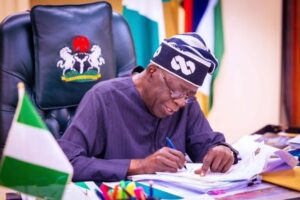
President Bola Tinubu has asked the National Assembly to approve a fresh N43.56 trillion budget framework for the 2024-2025 fiscal period, a move his administration says is designed to end the long-criticised practice of running overlapping budgets within a single year and to restore order to Nigeria’s public finance system.
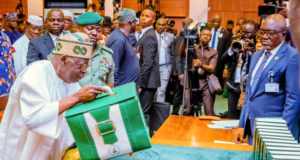
The proposed Appropriation (Repeal and Re-enactment) Bill comes just days before Tinubu is scheduled to present the 2026 Appropriation Bill to a joint session of the National Assembly on Friday, underscoring the scale of the fiscal reset the government is attempting.
At its core, the request reflects a technical budget adjustment. But beyond the numbers, it speaks to deeper political, economic and social pressures facing the administration, as Nigerians grapple with high living costs, fragile household incomes and growing demands for visible governance dividends.
According to details submitted to lawmakers, the revised framework authorizes N43.56 trillion in spending, including N22.28 trillion for capital projects, N11.27 trillion for recurrent (non-debt) expenditure, N8.27 trillion for debt servicing, and N1.74 trillion for statutory transfers. The emphasis on capital spending signals the government’s belief that infrastructure investment remains central to economic recovery, job creation and long-term stability.
For families and communities, the stakes are immediate. Roads, power projects, schools and hospitals, often stalled by weak budget execution, are the channels through which federal spending is most tangibly felt. Tinubu’s argument is that a clearer, single-cycle budget structure will reduce delays and confusion that have historically slowed project delivery, leaving ordinary Nigerians to bear the cost of unfinished or abandoned public works.
From a business perspective, the proposal is also aimed at restoring predictability. Multiple fiscal cycles running at once have created uncertainty for contractors, investors and lenders, complicating cash-flow planning and weakening confidence in government commitments. By consolidating emergency and time-sensitive expenditures already incurred, particularly in areas such as security, the administration hopes to regularize payments and reduce the risk of arrears that ripple through the private sector.
Politically, the bill places renewed emphasis on legislative oversight. Tinubu has pledged stricter controls on virement, limits on corrigenda, and tighter reporting requirements for agency revenues and external assistance. These measures are designed to reassure lawmakers and the public that executive flexibility will not translate into unchecked spending.
This assurance is particularly significant amid concerns raised in the House of Representatives about alleged alterations to tax bills already passed by the legislature, a development that has heightened sensitivities around transparency and trust between the executive and parliament.
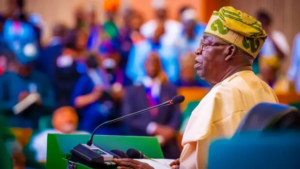
In the Senate, leaders described the proposal as a structural reform rather than a routine amendment. Senate Leader Opeyemi Bamidele said the bill seeks to correct practices that have blurred accountability across ministries and agencies, arguing that urgent spending, especially during emergencies, should not exist in legal or administrative limbo.
The social implications are equally pronounced. With debt service consuming a substantial portion of the budget, questions persist about fiscal sustainability and intergenerational equity. For many Nigerians, the concern is whether the renewed emphasis on capital projects will translate into improved livelihoods, or whether rising debt obligations will continue to crowd out social spending.
Lawmakers in both chambers are expected to subject the proposal to intense scrutiny, especially as finance and budget officials appear before appropriation committees to defend the figures and assumptions behind the reset.
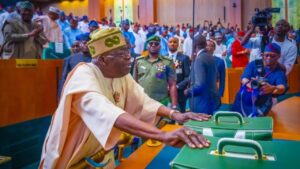
As Tinubu prepares to unveil the 2026 budget, the sequencing is deliberate. The administration is attempting to draw a line under past fiscal fragmentation while setting the stage for a more coherent budgeting future. Whether this reset restores public confidence will depend not only on legislative approval, but on whether Nigerians ultimately see clearer, faster and fairer outcomes from the nation’s vast public spending.