
Nation’s Building: The Evolution of Expendability, why some Ants Traded Armor for Number
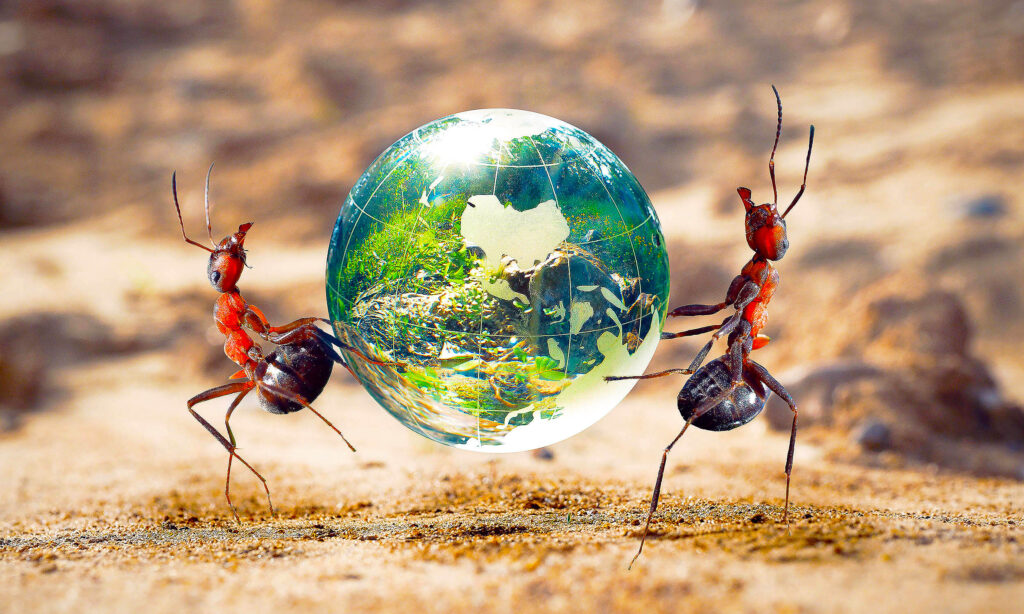
In the natural world, survival is often framed as a contest of strength. But new insights into ant societies suggest a different rule applies: sometimes, it’s safer to be many than to be tough.
Biologists studying ant colonies have found a consistent trade-off between individual protection and population size. Smaller colonies tend to produce fewer workers, each equipped with thicker armor and stronger defenses. Larger colonies, by contrast, invest less energy in protecting each ant. Instead, they prioritize numbers such as fielding vast workforces that can forage, build and defend through collective action rather than individual resilience.

The logic is simple but powerful. Armor is costly. Producing a heavily protected ant requires more resources, time, and energy. When a colony diverts those resources toward sheer population growth, it gains flexibility. Losses can be absorbed. Tasks can be completed faster. Threats can be overwhelmed. In this strategy, no single ant is indispensable, but the colony as a whole becomes harder to defeat.
This evolutionary bargain has striking parallels to human societies. In public health for example, broad access to basic care for millions can often deliver greater overall benefit than the elite high-cost treatments available to only a few. In economics, governments frequently face a similar choice like investing heavily in a small but specialized workforce, or spread resources to build a larger, a more adaptable labor pool. Ant colonies show that scale itself can be a form of protection.
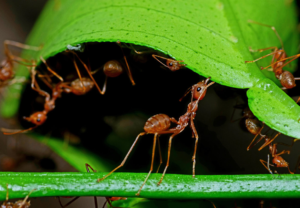
The comparison also extends into politics and governance. Large, decentralized systems, whether democracies, social movements, or civic institutions, often rely less on reinforced-individuals with exceptional power and more on participation by many ordinary people. While this can make individuals feel replaceable, it also creates flexibility towards productivity. When leadership changes or members drop out, the system continues to function because responsibility is widely shared.

Socially, the ant model challenges the idea that value must be tied to individual toughness or exceptionalism. In many human communities, strength emerges from cooperation, crowd-movement and mutual support. Furthermore, schools, volunteer networks and online communities often succeed not because each member is highly fortified against failure, but because there are enough people to help step in and keep things moving.
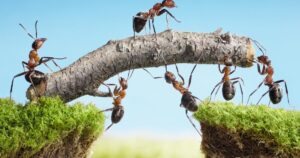
Ants did not choose to become expendable, but evolution favored colonies that treated expendability as a strength rather than a weakness. Their story is a reminder that biological or social progress does not always come from building thicker armor; but from building together.