
Drought Hits Tehran: Iran Faces a National Water Crisis as Vital Resource Disappears
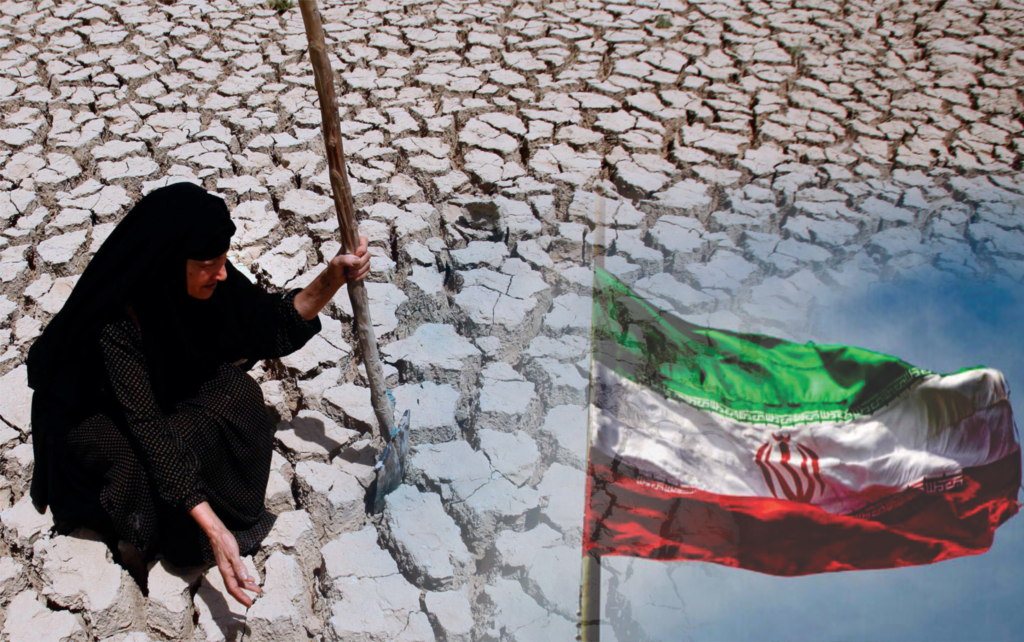
Iran’s water crisis has reached a tipping point. The country’s government is now seriously considering relocating the nation’s capital from Tehran to the wetter southern coast. A staggering undertaking, projected to cost up to $100 billion, because the city’s water supply is fast becoming unsustainable. Experts warn that Tehran’s plight is not the result of drought alone, but of decades of poorly planned engineering projects, overpumping of underground aquifers, and the abandonment of a centuries-old sustainable water system known as qanats.
While international sanctions, regional conflicts, and political repression often dominate headlines about Iran, hydrologists argue that the country’s most immediate existential threat is a phenomenon they call water bankruptcy. This crisis is already reshaping every aspect of Iranian life, from family livelihoods to urban planning, agriculture and the economy, as a human and cultural toll.
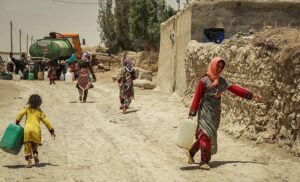
The water crisis is more than a policy problem for millions of families, to a daily struggle. Farmers in eastern Iran, long dependent on qanats for irrigation, are abandoning fields as groundwater wells run dry. Villages once thriving on carefully managed underground water now face the stark choice of migration or severe poverty. Children are growing up in areas where access to water has become a luxury, and families are forced to spend hours each day collecting increasingly scarce supplies.
Culturally, the destruction of qanats represents a profound loss. These tunnels, some more than 2,500 years old and stretching over 250,000 miles collectively, are a symbol of Persian ingenuity. They allowed water to flow gently from mountains to valleys using gravity alone, providing a sustainable lifeline for cities like Yazd, Isfahan, and Tehran. Yet today, less than one in seven fields are irrigated by qanats; and half of the system’s structures have fallen into disuse. “History will never forgive us for what deep wells have done to our qanats” says Mohammad Barshan, director of Iran’s Qanats Center in Kerman.
In consideration of business and agricultural consequences, the crisis is sending shockwaves through Iran’s agricultural sector, which consumes roughly 90% of the country’s water. Overpumping has resulted in diminishing returns: as farmers dig more wells, less water is yielded. Once-fertile lands lie barren, threatening food security and family livelihoods. For Iran’s economy, which relies on domestic agriculture for staples like wheat and rice, this presents a stark business challenge. Hydrologists now argue that Iran’s ambition for complete food self-sufficiency is unrealistic without major shifts in policy and trade.
Efforts to address shortages by building dams have largely backfired. Reservoirs built on insufficient rivers have increased evaporation and dried downstream wetlands, while tens of thousands of wells have emptied aquifers faster than they can be replenished. Surface water and underground aquifers, once carefully balanced, are now collapsing. Subsidence from overpumping and drying qanats is damaging infrastructure in historic cities, a phenomenon experts call a silent earthquake.
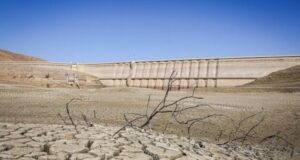
The water crisis is deeply political. Officials have often favored large-scale engineering projects, such as dams and a costly new desalination pipeline stretching 2,300 miles from the Persian Gulf, over smaller-scale, sustainable solutions. Critics argue that these decisions benefit politically connected engineers rather than the general population. Meanwhile, mismanagement has fueled social unrest: nationwide water protests in 2021 signaled that citizens will challenge the government over essential resources.
Iran’s political isolation compounds the problem. International trade restrictions prevent the country from importing water-intensive crops, making domestic water demands even higher. Experts suggest that integrating with the global market could allow Iran to grow fewer water-intensive staples domestically, instead exporting higher-value crops, reducing the pressure on dwindling water supplies. A frame of regional and environmental pressures.
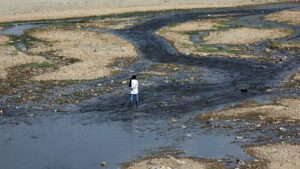
Iran’s water shortages are not contained within its borders. Rivers vital to eastern Iran, such as the Helmand and Harirud, now face upstream damming in Afghanistan, reducing cross-border flows by up to 80% in some cases. Wetlands like Lake Urmia and the Hamoun, once ecological jewels supporting wildlife and human populations alike, have largely dried up. These losses underscore the environmental and geopolitical stakes of water scarcity in the region.
Hydrologists also point to climate change as an aggravating factor, with warmer temperatures reducing snowfall in the mountains, a key source of groundwater recharge. Yet, human intervention like overpumping, damming, inefficient irrigation, etc., is cited as the primary driver of the crisis. A 35% decline in aquifer recharge since 2002 illustrates the long-term consequences of policy missteps.
Many experts advocate for a dramatic shift to repairing the qanats, recharging aquifers and transitioning to less water-intensive crops. Pilot programs in southern Iran have shown that redirecting floodwaters to replenish underground reserves could restore much of the country’s water sustainability. But political will has been lacking, with funding continuing to favor high-profile infrastructure over these ancient but effective solutions.
As for most Iranian families, the stakes are clear. Without urgent intervention, water scarcity will continue to erode daily life, destabilize communities, and deepen economic inequalities. For the nation, the crisis is a reminder that technological progress must be balanced with sustainable management. Otherwise, Iran risks not just drying up its lands but eroding the cultural, human, and social foundations of its society.