
US Suspends Visa Issuance to 19 African Countries, Beginning January 1st, 2026
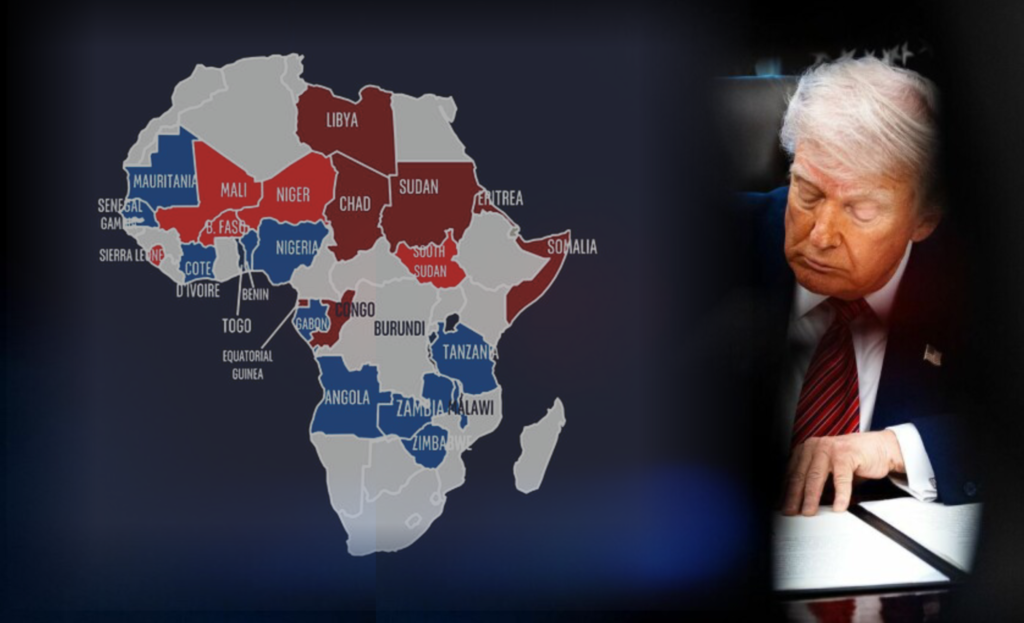
The U.S. Department of State has announced that it will partially suspend the issuance of certain visas to nationals of 19 countries starting at 12:01 a.m. EST on January 1, 2026, citing Presidential Proclamation 10998. The policy does not amount to a blanket travel ban, but it will restrict specific visa categories, reshaping travel, study, work, and family reunification pathways for thousands of people.
Officials said the measure is aimed at tightening vetting and addressing national security and immigration compliance concerns. The affected visa types and exemptions will vary by country, according to the State Department, with consular officers instructed to apply the new rules case by case.
Families and human impact: to most families with relatives across borders, the announcement brings renewed uncertainty. Parents hoping to visit children in the US, couples planning weddings, and families awaiting reunification after years of separation may face longer delays or denials depending on visa category. Immigration advocates warn that even partial suspensions can have outsized emotional effects, particularly on mixed-status families who rely on temporary visas to maintain close ties.
Students and exchange visitors may also be affected. Universities that enroll students from the listed countries are assessing how the changes could disrupt admissions, research timelines, and campus diversity, especially in specialized fields that depend on international talent.
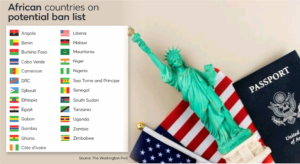
Image Source – Washington Post
Sociocultural ripple effects: culturally, the policy risks narrowing people-to-people exchanges that often serve as informal diplomacy. Community groups, religious organizations, and cultural institutions that host visitors and scholars say visa slowdowns can reduce cross-cultural understanding and strain diaspora communities that act as bridges between the U.S. and their countries of origin.
At the same time, supporters of the move argue that clearer limits will restore confidence in the immigration system and ensure consistent enforcement. This is an issue that continues to divide public opinion.
In business and economic considerations: businesses are closely watching the impact on travel for meetings, short-term assignments, and specialized labor. Companies that rely on international professionals, particularly in technology, health care, academia, etc., say uncertainty around visas can delay projects and increase costs. Small businesses in tourism and hospitality could also feel the effects if visitor numbers decline.
Politically, the proclamation underscores an ongoing debate over border security, national sovereignty, and America’s role as a destination for global mobility. Lawmakers are split, with some praising the administration for prioritizing security, while others argue the policy risks diplomatic friction and undermines U.S. competitiveness.
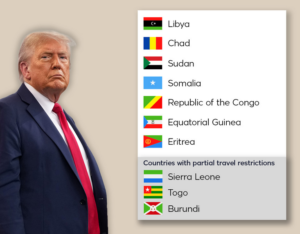
The State Department says additional guidance will be released to clarify affected visa categories and exemptions. For now, prospective applicants are urged to check consular updates and seek legal advice before making travel plans.
As January approaches, the partial suspension is set to test how the U.S. balances security priorities with its longstanding identity as a hub for families, students, workers, and ideas from around the world.