
What Israel-Somaliland’s Recognition/Relationship Means: the Origin, Risk and Human Cost of a Diplomatic Earthquake
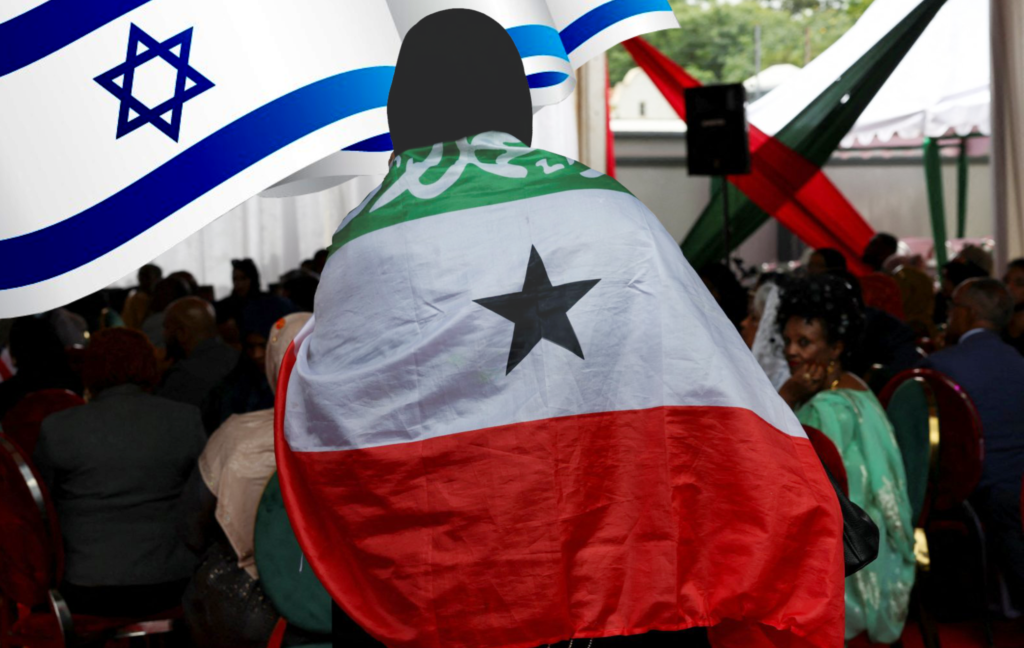
By late December 2025, a long-gestating, discreet relationship burst into the open. Israel’s formal recognition of Somaliland as an independent sovereign state, first kind of recognition by a United Nations member, has redrawn diplomatic lines in the Horn of Africa. Yet, apart from the communiqués and condemnations lies a deeper story that touches families, markets, sociocultures and fragile political balances across the region.
A relationship rooted in history and isolation: Israel’s recognition of Somaliland on 26 December 2025 did not emerge from nowhere. In 1960, Israel was among 35 countries that recognized the short-lived independence of the State of Somaliland before it voluntarily united with Italian Somaliland to form Somalia. When Somaliland re-declared independence in 1991 after years of civil war and state collapse, it found itself politically isolated, but peaceful, relatively stable, yet unrecognized.
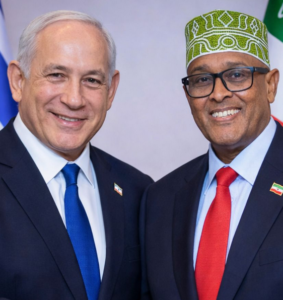
Israel too, has long experience navigating diplomatic isolation. That shared condition formed an early, quiet bond. In 1995, Somaliland’s then president, Ibrahim Egal, wrote to Israeli Prime Minister Yitzhak Rabin seeking diplomatic ties, framing cooperation as a bulwark against rising Islamist militancy and as a pathway to eventual Western recognition. Israeli officials later acknowledged seeing Somaliland as strategically significant, particularly for its proximity to the Bab al-Mandab strait linking the Red Sea and Indian Ocean.
Over the years, contacts waxed and waned. Somaliland leaders balanced outreach to Israel against dependence on Arab markets, especially livestock exports to Gulf States; and the sensitivities of their overwhelmingly Muslim population. Meanwhile, Israeli interest extended quietly through intelligence contacts, economic assessments and security calculations, particularly during periods of heightened instability in the Red Sea corridor.
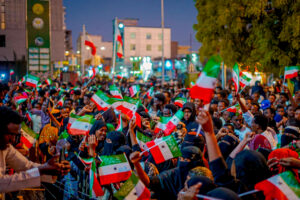
The Gaza war and a turning point: The 2023-2025 Gaza war added urgency and controversy to these contacts. Reports in early 2025 that Israel and the United States had explored the idea of relocating displaced Gazans to countries including Somaliland triggered alarm across Somali society, even though both Somaliland and Somalia denied receiving formal proposals. Analysts warned that any such move would inflame public anger, fracture clans, and hand extremist groups powerful propaganda.
To the ordinary Somaliland families, the episode crystallized a fear that global crises could be offloaded onto a small, unrecognized state with limited resources. “People worried about job losses, land, social-identity, about being turned into a bargaining chip” said by one analyst Hargeisa. The government’s cautious language reflected this anxiety – open to dialogue, but wary of speculation and unilateral decisions.

Against this backdrop, Israel’s recognition later in 2025, framed as being in the spirit of the Abraham Accords, was both vindication and shock. As for most Somaliland’s political elite, it marked the first tangible breakthrough after more than three decades of lobbying. While to many other citizens, it raised many questions beckoning for answers.
Families, livelihoods and cultural fault lines: At street level, recognition carries human stakes. Somaliland’s economy is deeply tied to livestock exports, remittances, and informal trade networks across the Gulf and East Africa. Condemnation from Saudi Arabia, Kuwait, Egypt and others immediately revived fears of trade restrictions or diplomatic pressure that could hit pastoralist families hardest.
Culturally, the move touches sensitive ground. Somaliland prides itself on blending clan traditions with electoral politics and relative religious moderation. Open alignment with Israel, especially amid unresolved Palestinian suffering, risks polarizing communities and straining the social consensus that has underpinned Somaliland’s stability since the 1990s.
Yet, there is also hope. Younger Somalilanders, especially in urban centers, see potential for investment, technology transfer and international migration opportunities. Recognition, even by one state, strengthens the case for Somaliland passports, foreign missions and access to global markets; and changes that could reshape family prospects over a generation.
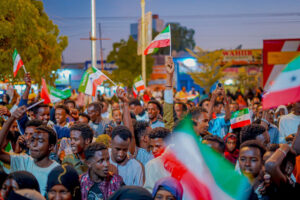
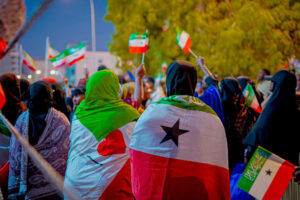
Business and the geopolitics of ports: Economically, Israel’s recognition intersects with Somaliland’s strategic assets. The port of Berbera, developed with Emirati backing, already serves landlocked Ethiopia. Israeli interest in infrastructure, logistics, agriculture, and security technology could accelerate Somaliland’s integration into Red Sea trade routes.
But this commercial promise heightens regional anxieties. Djibouti, Egypt and Turkey all see Red Sea access as a zero-sum game. In Somalia’s view, which still claims Somaliland as part of its territory, the recognition threatens not just sovereignty but future revenue and influence. Mogadishu’s condemnation reflects a fear that Somaliland’s de facto independence could harden into irreversible fact.

Political shockwaves across Africa and the Middle East: Politically, Israel’s move has produced rare alignment among the African Union, Arab League, Gulf Cooperation Council and Organisation of Islamic Cooperation—all rejecting the recognition and reaffirming Somalia’s territorial integrity. For the AU, the decision challenges its long-standing principle of preserving colonial borders, even as some African states privately acknowledge that Somaliland meets the criteria for statehood.
In Washington and London, the reaction has been more cautious. Republican politicians in the United States openly welcomed the move, seeing strategic value in a pro-Western, pro-Israel partner in the Horn. Others warned that unilateral recognition could destabilise Somalia further and complicate counter-terrorism efforts.
China, keen to uphold principles of sovereignty while balancing relations with Israel and the Muslim world, swiftly backed Somalia. Taiwan, itself diplomatically isolated, welcomed the recognition, framing it as solidarity among “like-minded democratic partners.”
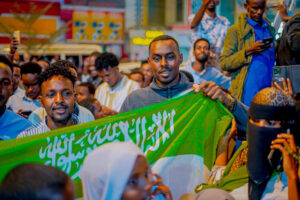
Security risks and the shadow of militancy: Perhaps the gravest concern lies in security. Al-Shabab’s rejection of Israel’s recognition and its vow to respond to any Israeli presence, raises the spectre of increased attacks, not only in Somalia but potentially in Somaliland, which has largely been spared from large-scale violence for years.
In respect to families who have rebuilt lives after decades of conflict, this is a chilling prospect. Schools, markets and mosques that symbolize Somaliland’s hard-won normalcy, could become targets if the territory is drawn deeper into global and regional conflicts.
Israel’s recognition as both prize and test: Israel’s recognition of Somaliland is historic, but it is not an endpoint. It is a test of Somaliland’s ability to manage new alliances without fracturing its society; while it will be of Israel’s capacity to expand diplomacy without inflaming already volatile regions; and of the international system’s willingness to reconcile legal principles with political realities.
At the moment, the question is for or against the Israel’s recognition of Somaliland is deeply individual, for Somalilanders; whether recognition will translate into safer lives, fuller stomachs, and broader horizons for their children or whether it will invite new pressures that the small unrecognized republic has long struggled to avoid, is puzzling-mind-trauma to solve.
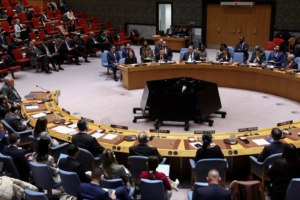
As the UN Security Council convenes and diplomats trade statements, the real verdict will be delivered far from conference rooms. The verdicts will be gaveled in pastoral communities watching export markets, in urban families weighing opportunity against risk; and in a societies, once again navigating the consequences of being seen by the world.
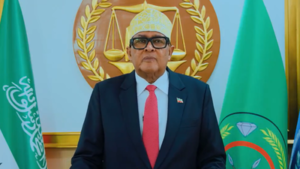
The list of a panoramic-view of States that recognise or are unclear about Somaliland; and the ones that do not recognize Somaliland
| No. | Country | Date of recognition | Diplomatic relations | Relevant membership, further details |
| 1 | Israel | 26 December 2025 | Yes | Israel–Somaliland relations |
States whose recognition of Somaliland is unclear
| Name | Official position |
| Taiwan | It is unclear whether Taiwan and Somaliland recognise each other as independent states. In 2020, Taiwan and Somaliland signed a bilateral cooperation agreement and established mutual representative offices, though this did not amount to formal diplomatic relations. When asked to clarify whether Taiwan recognises Somaliland as independent, foreign minister Joseph Wu responded “Somaliland has been independent since 1991.” Somaliland treats Taiwan as a sovereign entity separate from China. |
States that have stated that they do not recognize Somaliland: Member states of the United Nations
| Name | Official position |
| Afghanistan | The Taliban, which de facto governs Afghanistan but does not hold the country’s seat at the UN, stated that recognizing Somaliland was against international law, and that it was wrong to support the division of a Muslim country as it undermined Somalia’s sovereignty and would destabilize the region. |
| Algeria | Algeria rejected Israel’s recognition of Somaliland, stating that it violates Somalia’s sovereignty, unity, and territorial integrity and contravenes international law. The Algerian Ministry of Foreign Affairs emphasized that the move conflicts with the principles of the United Nations Charter and the African Union, particularly the inviolability of inherited national borders, and reaffirmed Algeria’s continued support for the Federal Republic of Somalia and regional stability in the Horn of Africa. |
| China | The People’s Republic of China emphasized its support for Somali territorial integrity. |
| Comoros | The Comoros signed a joint official statement along with various Arab and Muslim countries which stated that they officially condemned the “serious repercussions to peace and security in the Horn of Africa and the Red Sea region, and its serious impacts on international peace and security” that came with recognizing Somaliland. |
| Djibouti | Djibouti has emphasized “full support for the unity, sovereignty and territorial integrity of Somalia.” |
| Egypt | Egypt has emphasize “full support for the unity, sovereignty and territorial integrity of Somalia.” |
| Eritrea | The Eritrean Ministry of Information stated in a press release that the “ploy” of recognition had been underway for some time before the first recognition by a UN member state, and that it was not surprising. Eritrea also called specifically on China to intervene more firmly against it, as, according to the Ministry, they had a moral obligation to intervene similarly with the Taiwanese situation. |
| Gambia | Gambia signed a joint official statement various Arab and Muslim countries which stated that they officially condemned the “serious repercussions to peace and security in the Horn of Africa and the Red Sea region, and its serious impacts on international peace and security” that came with recognizing Somaliland. |
| Iran | Iran condemned Israel’s recognition of Somaliland as a “flagrant violation of Somalia’s sovereignty.” |
| Iraq | Iraq claimed in a joint official statement with other Arab countries that they condemned the “serious repercussions to peace and security in the Horn of Africa and the Red Sea region, and its serious impacts on international peace and security” that came with recognizing Somaliland. |
| Jordan | Jordan issued a joint official statement, also signed by various Arab and Muslim countries, which stated that they officially condemned the “serious repercussions to peace and security in the Horn of Africa and the Red Sea region, and its serious impacts on international peace and security” that came with recognizing Somaliland. |
| Kuwait | Kuwait has declared full support for Somalia’s sovereignty over all its territory. |
| Lebanon | The Lebanese Ministry of Foreign Affairs and Emigrants stated full support for the sovereignty and territorial integrity of Somalia. |
| Libya | Libya claimed in a joint official statement with other Arab countries that they condemned the “serious repercussions to peace and security in the Horn of Africa and the Red Sea region, and its serious impacts on international peace and security” that came with recognizing Somaliland. |
| Maldives | The Maldives claimed in a joint official statement with Arab and Muslim that they condemned the “serious repercussions to peace and security in the Horn of Africa and the Red Sea region, and its serious impacts on international peace and security” that came with recognizing Somaliland. |
| Mauritania | In a statement by the Ministry of Foreign Affairs, Mauritania declared its “alignment with Arab, Islamic, and African positions, rejecting any recognition or support for attempts to undermine Somalia’s territorial unity.” |
| Nigeria | Nigeria claimed in a joint official statement with Arab and Muslim countries that they condemned the “serious repercussions to peace and security in the Horn of Africa and the Red Sea region, and its serious impacts on international peace and security” that came with recognizing Somaliland. |
| Oman | Oman claimed in a joint official statement with other Arab countries that they condemned the “serious repercussions to peace and security in the Horn of Africa and the Red Sea region, and its serious impacts on international peace and security” that came with recognizing Somaliland. |
| Pakistan | Pakistan stated that recognition of Somaliland was detrimental to the peace and stability within the Horn of Africa, confirming its support for Somalia’s territorial integrity. |
| Qatar | Qatar officially supports the sovereignty, unity, and territorial integrity of the Federal Republic of Somalia. The Qatari Ministry of Foreign Affairs rejected any unilateral actions aimed at recognizing or establishing parallel entities in Somalia, stating that such moves violate international law and undermine regional stability. Qatar has reaffirmed its full support for Somalia’s internationally recognised government and its legitimate institutions, and has called on the international community to respect international law and United Nations resolutions concerning Somalia. |
| Saudi Arabia | Saudi Arabia has expressed “full support” for Somalia’s sovereignty, unity, and territorial integrity. |
| Serbia | Serbia expressed full support to the territorial integrity and sovereignty of the Federal Republic of Somalia. |
| Somalia | The Federal Republic of Somalia claims Somaliland as part of its sovereign territory. |
| South Africa | In 2011, the foreign minister of South Africa said that it would not recognise Somaliland and preferred that Somalia remain a single country. However, South Africa has stated that Somaliland fulfils the Montevideo Convention criteria for statehood and accepts the Somaliland passport. |
| South Sudan | Claims were made on 26 December 2025 by Somaliland media outlets, Fox News and The Independent that South Sudan was the second nation to recognise Somaliland after Israel. The following day, South Sudan’s foreign minister was reported to have told their Somali counterpart that they were against “any actions that undermine the country’s territorial integrity”. |
| Sudan | Sudan claimed in a joint official statement with other Arab countries that they condemned the “serious repercussions to peace and security in the Horn of Africa and the Red Sea region, and its serious impacts on international peace and security” that came with recognizing Somaliland. |
| Syria | Syria affirmed its “its support for the unity of Somali territories.” |
| Tanzania | In 2011, the foreign minister of Tanzania said that it would not recognise Somaliland and preferred that Somalia remain a single country. |
| Turkey | Turkey has emphasised “full support for the unity, sovereignty and territorial integrity of Somalia.” |
| United States | On 26 December 2025, when asked whether he planned to recognise Somaliland, US president Donald Trump said “no,” adding “Does anyone know what Somaliland is, really?” The US Department of State subsequently stated that it continued to recognise the territorial integrity of Somalia, which includes the territory of Somaliland. |
| Yemen | The Presidential Leadership Council, which holds Yemen’s seat at the United Nations, claimed in a joint official statement with other Arab countries that they condemned the “serious repercussions to peace and security in the Horn of Africa and the Red Sea region, and its serious impacts on international peace and security” that came with recognizing Somaliland. |
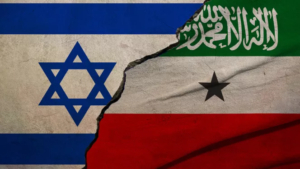
Other states
| Name | Official position |
| Palestine | The foreign ministry of the State of Palestine expressed full support for Somalia’s unity and sovereignty. |
Positions taken by intergovernmental organizations
| Name | Official position |
| African Union | On 26 December 2025, the African Union warned against any attempt to “undermine the unity, sovereignty, and territorial integrity of Somalia.” However in 2005, an African Union fact-finding mission to Somaliland concluded “The fact that the “union between Somaliland and Somalia was never ratified” and also malfunctioned when it went into went into action from 1960 to 1990, makes Somaliland’s search for recognition historically unique and self-justified in African political history. Objectively viewed, the case should not be linked to the notion of “opening a Pandora’s box”. As such, the AU should find a special method of dealing with this outstanding case.” |
| Arab League | The Arab League has rejected “interference in Somalia’s internal affairs.” |
| European Union | The European Union reaffirmed the importance of respecting the unity, sovereignty and territorial integrity of Somalia |
| Gulf Cooperation Council | The GCC has declared support for Somalia’s security, stability, sovereignty, and territorial integrity. |
| Organization of Islamic Cooperation | The Organization of Islamic Cooperation affirmed its full solidarity with the Federal Republic of Somalia and its unwavering support for its sovereignty and territorial unity, as well as its unequivocal support for its legitimate institutions. |

Why Israel’s recognition of Somaliland May Have triggered global backlash: Political, security and economic calculations help explain the move and why many countries are pushing back.
Israel’s decision to become the first country to formally recognise Somaliland as an independent state has sparked sharp criticism from African, Arab and international actors, not simply because of the diplomatic novelty, but because of the far-reaching political, security and social consequences it could set in motion.
At its core, the backlash reflects fears that Israel’s move could destabilize an already fragile region, redraw sensitive political lines in Africa, and deepen Middle Eastern conflicts beyond their current boundaries. Security calculations are assumably behind the adventure.
One of the clearest drivers is security. Somaliland sits on the Gulf of Aden, directly opposite Yemen, where Iran-backed Houthi rebels have been in intermittent conflict with Israel. Analysts argue that recognizing Somaliland could give Israel strategic proximity to a key maritime and military corridor.
In the view of David Makovsky of the Washington Institute for Near East Policy, he believes it is hard to avoid the following question:- does Israel’s current recognition of Somaliland open the door formally or informally to access of military facilities there, aimed at countering Houthi drones and missiles from nearby Yemen across the Gulf of Aden?
Over the past year, the Houthis have attacked ships in the Red Sea in protest against Israel’s war in Gaza, while Israel has struck Houthi-controlled targets in Yemen. Although tensions have eased somewhat, many governments fear that Israel’s recognition of Somaliland could militarize the Horn of Africa, turning it into a new front in Middle Eastern rivalries. This is Political shockwaves in blowing into Africa.
This decision cuts against a long-standing African Union principle of respecting existing borders politically. Somaliland declared independence from Somalia in 1991 but has never been internationally recognised. By breaking that consensus, Israel has raised alarm among African states that worry about setting a precedent for other separatist movements.
Somalia reacted swiftly, condemning the move as a violation of its sovereignty. The African Union echoed these concerns, warning that unilateral recognition could undermine regional stability. To many African governments, the issue is less about Israel itself and more about protecting fragile national unity across the continent.
Arab states, including Egypt and Palestine, also criticised the move, viewing it through the lens of wider Middle Eastern politics and the Gaza war. Some see Israel’s action as part of a broader strategy to gain leverage while the international community is divided. Could this venture birth positive or negative economic and trade implications?
Nonetheless, Somaliland’s port city of Berbera is a major prized-location economically. Located near the Bab al-Mandeb strait, one of the world’s most important maritime chokepoints, the port overlooks a route vital for global trade, energy shipments and food supplies.
Access to Berbera could offer Israel logistical advantages in the Red Sea, strengthening trade and security links with East Africa. Critics, however, argue that such benefits for Israel could come at the cost of increased competition, insecurity and diplomatic strain for neighbouring countries.
Tensions were already high after Somaliland signed a deal last year to lease a stretch of coastline to Ethiopia, another close Israeli partner. Somalia protested strongly, seeing the agreement as a further erosion of its territorial integrity. Intertwine in this geopolitical/sociopolitical controversies is the human and social dimensions.
Away from geopolitics, the decision carries real human consequences. Many Somalis fear that renewed disputes over Somaliland’s status could worsen insecurity, disrupt trade, and divert resources away from development and humanitarian needs in a region already struggling with poverty, displacement and climate shocks.
There are also concerns that Somaliland could be drawn into global power struggles, limiting its ability to prioritise education, healthcare and economic opportunities for its people.
Why most countries oppose this development; the global reaction against Israel’s recognition of Somaliland can be understood through a combination of probabilities:
- High probability (around 50–60%) – is that countries fear setting a precedent for separatist recognition, especially in regions with fragile borders.
- Moderate probability (25–35%) – is that governments are concerned about escalating military competition in the Red Sea and Horn of Africa.
- Lower but significant probability (10–20%) – is that opposition is driven by solidarity with Somalia and broader anger over Israel’s actions in Gaza.
Taken together, these factors explain why Israel’s move, though historic, has been met with widespread resistance. Whether it delivers long-term benefits for Israel or Somaliland remains uncertain. But its immediate impact has been to expose how extremely interconnected security, politics and human welfare have become across Africa and the Middle East.
Further Info-galleria:__________________________________________________________________________________________________
LIAISON OFFICES OF SOMALILAND: AND STATES HOSTING A REPRESENTATIVE OFFICE OF SOMALILAND
Somaliland maintains representative (liaison) offices in several countries, but these missions do not have formal diplomatic status under the provisions of the Vienna Convention on Diplomatic Relations.
Such offices exist in the following cities:
– Addis Ababa
– Djibouti City
– Dubai
– Juba
– London
– Nairobi
– Oslo
– Paris
– Pretoria
– Riyadh
– Stockholm
– Taipei
– Turin
– Washington, D.C.
States with Consulate Or Representative Office In Somaliland
The following foreign governments have diplomatic offices in Hargeisa:
Denmark – Programme office
Djibouti – Consulate; headed by a diplomat with the rank of consul general
Ethiopia – Consulate; headed by a diplomat with the rank of ambassador.
Kenya – Liaison office
Taiwan – Representative office
Turkey – Consulate; headed by a diplomat with the rank of consul general
United Arab Emirates – Representative Office
United Kingdom – Liaison office
United States – Representative office
As of February 2010, the Yemeni government was reportedly planning to open a diplomatic office in Hargeisa.
Passports: Somaliland issues its own passports, recognized by certain nations. If and when Somaliland achieves its goal of recognition, a number of countries have stated that they will allow Somalilanders to travel to their countries, subject to visa regulations.
Organisational Membership: Somaliland is a member of the Unrepresented Nations and Peoples Organization (UNPO). The African Union (AU) is considering Somaliland’s application for membership to the bloc and has indicated a willingness to deal with it as an ‘outstanding case’. In 2007, a delegation led by President Kahin was present at the Commonwealth Heads of Government Meeting in Kampala, Uganda. Somaliland has applied to join the Commonwealth under observer status, but its application remains pending.
Period of International Recognition of Israel: As of December 2025, the State of Israel is recognized as a sovereign state by 163 of the other 192 member states of the United Nations, or approximately 84% of all UN members. The State of Israel was formally established by the Israeli Declaration of Independence on 14 May 1948, and was admitted to the United Nations (UN) as a full member state on 11 May 1949. It also maintains bilateral ties with all of the UNSC Permanent Five. 29 member states have either never formally recognized Israel or have withdrawn their recognition; others have severed diplomatic relations without explicitly withdrawing their recognition. Additionally, many non-recognizing countries have challenged Israel’s existence-predominantly those in the Muslim world, due to significant animosity stemming from the Israeli–Palestinian conflict and the Arab–Israeli conflict.
Present Day Israel’s Status: As of December 2025, 163 of the 192 other member states of the United Nations (UN) recognize Israel. 29 UN member states do not formally recognize Israel: 16 members of the Arab League (Algeria, Comoros, Djibouti, Iraq, Kuwait, Lebanon, Libya, Mauritania, Oman, Qatar, Saudi Arabia, Sudan, Somalia, Syria, Tunisia, and Yemen); 10 non-Arab members of the Organization of Islamic Cooperation (Afghanistan, Bangladesh, Brunei, Indonesia, Iran, Malaysia, Maldives, Mali, Niger, and Pakistan); and Cuba, North Korea, and Venezuela. In 2002, the Arab League proposed the recognition of Israel by Arab countries as a pathway towards a resolution of the Israeli–Palestinian conflict under the Arab Peace Initiative. Following the Abraham Accords, which were signed in September 2020 between Israel and the United Arab Emirates and Bahrain, the Palestinian National Authority condemned any Arab agreement with Israel as dishonourable, describing them as a betrayal to the Palestinian cause and a blow to their quest for an independent Palestinian state.
The passports of some countries are not valid for travel to Israel, including Bangladesh, Brunei, Iran, Iraq, and Pakistan. Thirteen countries do not accept Israeli passports: Algeria, Bangladesh, Brunei, Iran, Iraq, Kuwait, Lebanon, Libya, Malaysia, Pakistan, Saudi Arabia, Syria, and Yemen. Some of these countries also do not accept passports of other countries whose holder has an Israeli visa or stamp on it. The stamp may be a visa stamp, or a stamp on entry or departure. Because of these issues, Israeli immigration controls do not stamp passports with an entry visa, instead issuing a separate insert which is discarded on departure. However, a stamp of another country which indicates that the person has entered Israel may frustrate that effort. For example, if an Egyptian departure stamp is used in any passport at the Taba Border Crossing that is an indication that the person entered Israel, and a similar situation arises for land crossings into Jordan. Some countries also ban direct flights and overflights to and from Israel. In August 2020, the United Arab Emirates permitted direct flights from Israel, and Saudi Arabia and Bahrain authorized overflights for such flights. On 8 October 2020, Israel and Jordan reached an agreement to allow flights to cross over both countries’ airspace.
International recognition of Somaliland: As of December 2025, the Republic of Somaliland is recognized as a sovereign state by one UN member state – Israel. The Republic of Somaliland was proclaimed on 18 May 1991 claiming to be the legal successor to the State of Somaliland which gained independence from the United Kingdom on 26 June 1960 and merged into the Somali Republic on 1 July 1960. Somalia continues to claim Somaliland as an integral part of its territory, considering it to be one of its federal member states.
On 26 December 2025, Israel became the first country and United Nations member state to recognize the re-established Somaliland.
Somaliland History: The region of modern day Somaliland was ruled by various groups including most recently the Isaaq Sultanate before coming under British rule in 1884. While under British rule, British Somaliland defined the borders that are today claimed by the Republic of Somaliland.
In June 1960, British Somaliland gained its independence from the United Kingdom as the State of Somaliland. The following month, in July 1960, the State of Somaliland merged with the Trust Territory of Somaliland to form Somalia. In May 1991, Somaliland declared independence from Somalia.
On 26 December 2025, Israel became the first UN member state to recognize Somaliland. At the request of Somalia, the United Nations Security Council will convene for an emergency session on 29 December following Israel’s recognition of Somaliland.