
America Withdrawal from International Organizations: Inside the Trump’s Administration
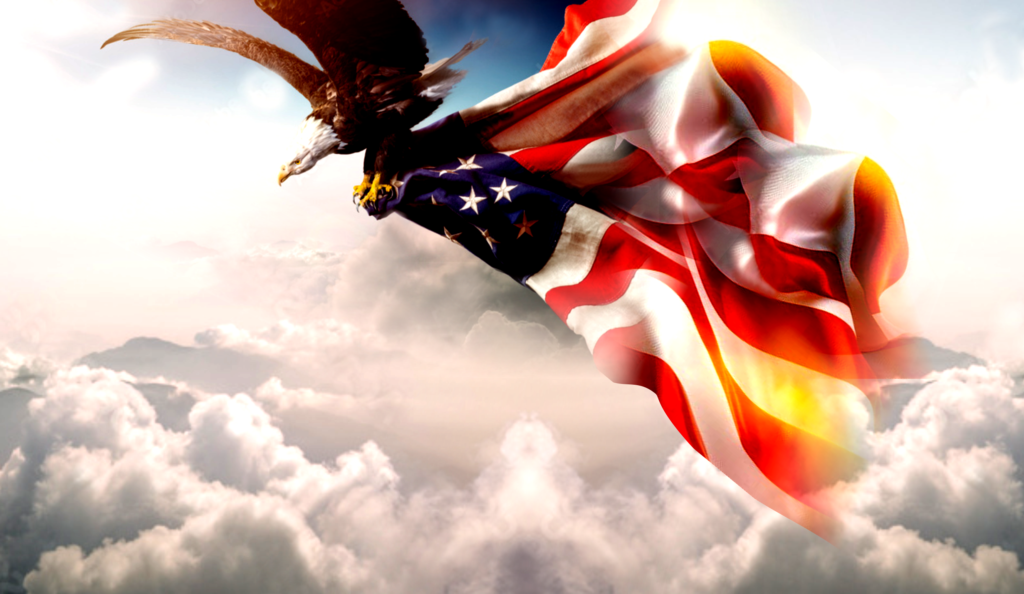
Washington’s relationship with the world’s multilateral institutions entered a sharper, more consequential phase this week as President Donald Trump announced the United States’ withdrawal from 66 international organizations, citing concerns that they are “wasteful, ineffective, and harmful” to American interests. The decision, taken under Executive Order 14199, marks one of the most sweeping retrenchments from global institutions in modern US history and signals a decisive shift in how the world’s largest economy intends to engage beyond its borders.
Administration officials framed the move as the outcome of a months-long review of international bodies receiving US funding or political backing. According to the White House, many of these organizations were found to be redundant, poorly managed, ideologically driven, or captured by interests that no longer align with US priorities. Reviews of additional organizations, officials say, are still ongoing.
“This is about accountability” President Trump said in a statement. “It is no longer acceptable to send the blood, sweat, and treasure of the American people to institutions that deliver little in return, undermine our sovereignty, or work against our prosperity”.
The scope of the withdrawal is striking. It spans non-United Nations bodies focused on climate, energy, culture, cybersecurity, democracy, and regional cooperation, as well as a wide array of UN agencies and offices dealing with development, trade, gender, climate change, peace building and human rights.
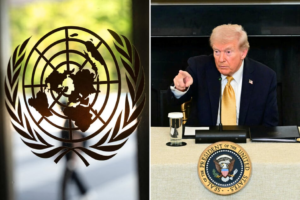
Among those affected are high-profile institutions such as the Intergovernmental Panel on Climate Change (IPCC), the UN Framework Convention on Climate Change (UNFCCC), UN Women, the UN Population Fund, and the UN Conference on Trade and Development (UNCTAD). Others, less visible to the general public, quietly shape policy frameworks in areas ranging from migration and biodiversity to electoral assistance and post-conflict justice.
To supporters of the decision, the breadth of the list is precisely the point. “What began after World War II as a limited architecture for peace and cooperation has expanded into a vast, self-sustaining ecosystem,” said a senior administration official. “Many of these institutions now exist to justify themselves, not to serve the interests of the nations funding them”. This is an ideological fault line.
At the heart of the administration’s critique is ideology. White House statements argue that many international organizations have drifted from technical cooperation into what they describe as “progressive orthodoxy”, advancing agendas around climate policy, diversity and inclusion, gender equity and global governance that the administration views as political rather than practical.
Officials frequently point to what they call the “NGO-plex”, a dense network of international bureaucracies, non-governmental organizations and advocacy groups that influence policy across borders while remaining insulated from voters. In the administration’s view, continued US participation lends legitimacy and resources to a system increasingly detached from national democratic control.
This critique echoes a broader skepticism of globalization that has shaped Trump’s foreign and economic policy since his first term, such as tariffs over trade liberalization, bilateral deals over multilateral agreements; and a preference for transactional diplomacy over institution-building. Human and social consequences are inevitable between this intersections.
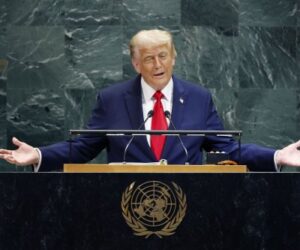
However, critics warn that the effects will not be confined to balance sheets or diplomatic communiqués. Many of the organizations on the list work in fragile states, conflict zones and low-income countries where US funding and political backing often play an outsized role.
Former US diplomats and humanitarian officials caution that withdrawals from bodies addressing children in armed conflict, sexual violence, public health, urban development and environmental protection could weaken already strained international responses. A former UN official said “These institutions may be imperfect. But when the US steps back, the vacuum doesn’t remain empty. Other powers, with very different values, step in”.
On the ground, the consequences may be uneven and indirect: fewer grants for local civil society groups, scaled-back research programs, or diminished coordination during humanitarian crises. In regards to communities that rely on multilateral programs, whether farmers affected by climate shifts, cities grappling with rapid urbanization, or post-conflict societies seeking justice, the changes may be felt slowly but intensely. As it will vibrate business and geopolitical ripples.
The decision also carries implications for American businesses. International standards bodies, energy forums, and trade-related agencies often provide platforms where US companies help shape rules that affect global markets. Withdrawal risks ceding influence to competitors, particularly China and the European Union, who remain deeply invested in multilateral institutions.
At the same time, the administration argues that American innovation and economic strength do not depend on global bureaucracies. Officials say bilateral agreements and market-driven solutions can better serve US firms without entangling them in regulatory frameworks shaped by what they see as anti-growth or anti-industry bias.
Geopolitically, the move reinforces a narrative of strategic decoupling, not only from rivals, but from institutions that have reinforced the post-Cold War international order. Allies in Europe and parts of Asia have responded cautiously, expressing concern privately while avoiding public confrontation.
Supporters of the withdrawals see them as a necessary reset rather than a retreat, as a turning point, not an endpoint. The Trump’s administration insists it is not rejecting cooperation outrightly, but redefining it on the terms that it believes are clearer, narrower and more accountable to American voters. “We reject inertia and ideology in favor of prudence and purpose. We will cooperate where it serves our people and stand firm where it does not”. The White House statement concluded
Whether this marks a temporary swing of the pendulum or a lasting transformation of the US engagement with the world, remains uncertain. What is clear is that America’s relationship with international institutions, which was once assumed to be a permanent pillar of global governance, is now subject to the same hard scrutiny as any other lined item in the federal budget or plank in a political platform.
As for supporters and critics alike, the withdrawals highlight a central question of the moment, asking that – in a fragmented world, how much multilateralism is too much and who gets to decide?