
Continuing Battle for Recognition in the Horn of Africa: Israel, Somaliland, and Türkiye at a Geopolitical Crossroads
The Horn of Africa has long lived in the shadows of global power politics, its crises often framed as local or humanitarian rather than strategic. That perception no longer holds. Stretching from the Red Sea to the Indian Ocean, the region has become a frontline where trade routes, security concerns, and competing visions of sovereignty intersect. Few issues illustrate this shift more clearly than the renewed international attention on Somaliland; and Israel’s decision to recognize it is an act that has sharpened regional rivalries and unsettled long-standing diplomatic norms.
What might appear, at first glance, as a narrow dispute over diplomatic recognition is in fact a complex struggle involving families divided by borders, traders dependent on fragile ports, governments guarding precedents, and regional powers projecting influence far beyond their immediate neighborhoods.
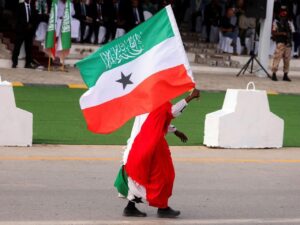
Since declaring independence from Somalia in 1991, Somaliland has operated as a de facto state. It has held multiple elections, maintained relative security, and built functioning institutions in a region better known for conflict. In the capital, Hargeisa, families have raised generations who have never known rule from Mogadishu. Local businesses trade livestock with Gulf markets, diaspora remittances sustain households, and community elders still play a visible role in mediating disputes.
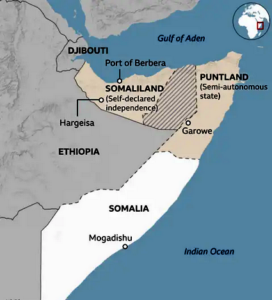
Yet internationally, Somaliland remains invisible. Passports go unrecognized, development loans are limited, and access to global financial systems remains constrained. In three decades, this limbo status has been justified by a broader African consensus: protecting inherited borders, however imperfect, is seen as essential to preventing endless fragmentation.
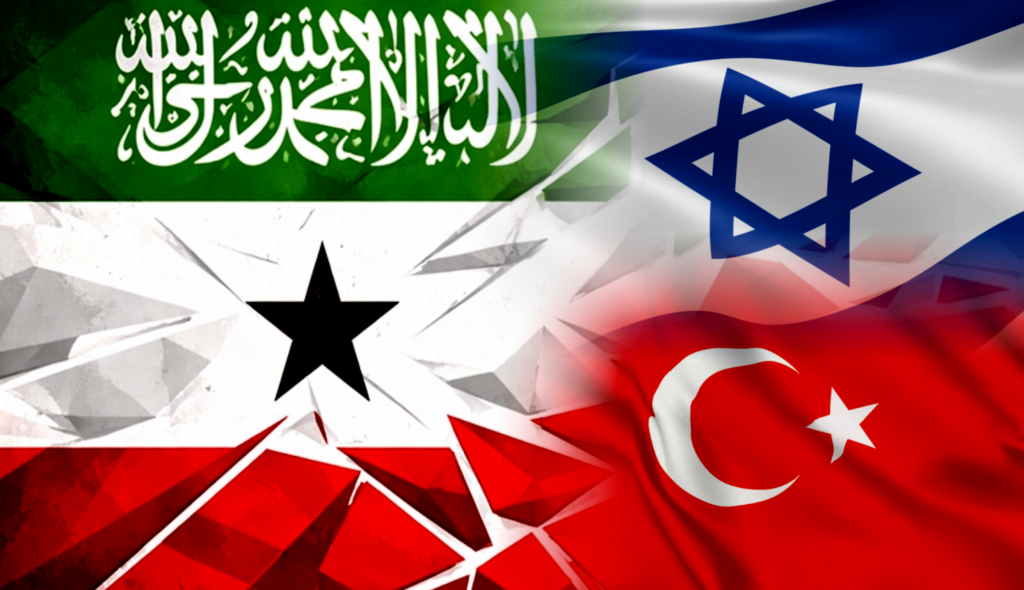
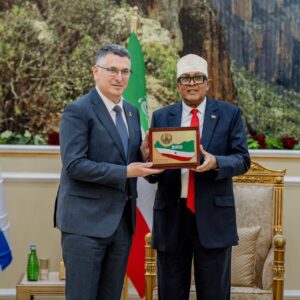
Israel’s decision on December 26 to recognize Somaliland challenges that consensus directly. It elevates a long-frozen issue into an active geopolitical contest, and places Israel on a collision course with Somalia’s allies, most notably Türkiye.
Diplomatic recognition is often described in legal or moral terms, but it is also a strategic instrument. For Israel, engagement with Somaliland reflects a broader recalibration of foreign policy amid diplomatic strain elsewhere. Facing growing criticism in parts of Europe and the Global South, Israel has sought partnerships in regions where geopolitical alignment matters more than public opinion.
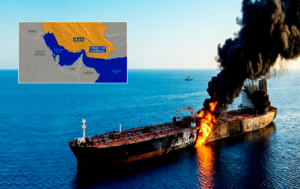
Geography plays a decisive role. The Horn of Africa sits beside the Bab al-Mandeb Strait, one of the world’s most sensitive maritime chokepoints. Disruptions to shipping transitions, whether from conflict in Yemen or attacks on commercial vessels, have sustained some global economic consequences. Access, intelligence cooperation and logistical proximity in this corridor offer strategic leverage.
Somaliland, unlike Somalia’s federal government, presents a relatively stable partner. It is internally coherent, less entangled in regional Islamist networks, and able to deliver predictable security guarantees. To the Israeli policymakers, this offers proximity without deep entanglement. It is a familiar pattern in Israel’s peripheral diplomacy, which has historically favoured functional partnerships over formal alliances.
If Israel’s move is strategic, Türkiye’s opposition is existential in geopolitical terms. Since 2011, Ankara has invested heavily in Somalia, combining humanitarian aid with infrastructure projects, diplomatic backing, and military training. Turkish-built hospitals, roads, and schools have reshaped parts of Mogadishu, while Turkish-trained forces play a central role in Somalia’s security sector.
In the Turkish leaders’ perspective, Somalia is more than a partner. This is a proof of Türkiye’s claim to be a different kind of power that blends solidarity, development and security without the overt coercion associated with great-power intervention. This narrative resonates domestically and across much of Africa.
Recognition of Somaliland threatens this model. It undermines the authority of the Somali federal government and weakens Türkiye’s role as a guarantor of Somali unity. More troubling for Ankara is the precedent: if a major external actor can recognize a breakaway region without regional consent, the norm of territorial integrity begins to erode.
At the heart of the dispute lie two contrasting visions of regional order. Türkiye emphasizes centralized sovereignty, strong state partners, and influence exercised through long-term engagement. Israel favors flexible, outcome-driven partnerships with actors capable of delivering stability and access, even if formal recognition remains contested.
Neither approach is inherently illegitimate. Türkiye’s model seeks to prevent fragmentation in a region already scarred by conflict. Israel’s approach acknowledges fragmentation as a reality to be managed rather than denied. Somaliland becomes the test case for which vision better reflects political realities on the ground.
This divergence is sharpened by wider rivalries. For Türkiye, Somalia anchors its presence along the Red Sea and counters competitors such as the UAE and Egypt. For Israel, Somaliland offers strategic depth at a time when traditional diplomatic backing has become less reliable.
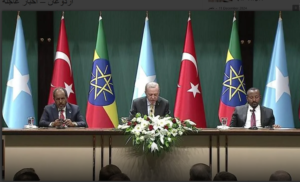
Comparative Strategic Postures of Israel and Türkiye in the Horn of Africa: The contrast between Israel’s and Türkiye’s approaches to the Horn of Africa reveals an in-depth divergence in how each power understands influence, risk and regional order, particularly through the prism of Somaliland.
At the strategic level, Israel’s objective is narrowly focused but geographically significant. By seeking proximity to the Red Sea and access to key ports, Israel aims to gain leverage in a vital maritime corridor without becoming deeply entangled in local political disputes. Türkiye, by contrast, prioritizes the preservation of Somalia’s territorial integrity as the foundation of its regional influence. For Ankara, maintaining unity in Somalia is inseparable from sustaining its broader presence in the Red Sea basin and countering rival actors. This contrast highlights a fundamental clash: Israel favors flexible partnerships that can be adjusted as conditions change, while Türkiye anchors its strategy in sovereignty and continuity.
The methods each employs reflect these priorities. Israel’s engagement relies on a most notable signal, through potential or actual recognition, and on pragmatic functional partnerships with Somaliland’s authorities. This approach minimizes long-term obligations while maximizing strategic access. Türkiye’s method is far more embedded. It has invested heavily in physical infrastructure, humanitarian programs, military training, and sustained diplomatic backing for the Somali federal government. The result is two distinct toolkits of influence: Israel’s light-footprint, high-impact diplomacy versus Türkiye’s deep, institution-building presence.
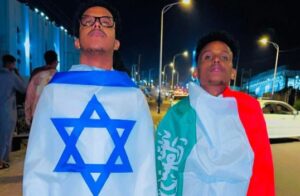
Risk tolerance further separates the two. Israel has shown a willingness to challenge entrenched norms of territorial integrity when it calculates that the strategic payoff outweighs the diplomatic cost. That flexibility, however, creates precedent risk and invites pushback from regional and continental institutions. Türkiye, on the other hand, exhibits little tolerance for challenges to Somali sovereignty. Its determination to defend this principle may reinforce its credibility as a partner, but it also raises the risk of overreach as Ankara seeks to protect the model it has invested in so heavily.
These differences are rooted in competing regional visions. Israel’s outlook accepts fragmentation as an existing reality and seeks to work with effective actors regardless of formal status. Türkiye’s vision is more state-centric, emphasizing centralized authority and the preservation of inherited borders as safeguards against instability. Somaliland thus becomes a proving ground for two competing ideas of order: one adaptive and transactional, the other normative and sovereignty-driven.
Both countries also interpret the Horn of Africa through wider geopolitical lenses. Israel views engagement there as a way to diversify partnerships at a time of diplomatic isolation and to secure strategic depth along the Red Sea. Türkiye sees the region as a natural extension of its influence, closely tied to its competition with other regional powers, including the UAE and Egypt. In both cases, Somaliland is less an end in itself than a node within larger strategic calculations.
The potential flashpoints are clear. Israel faces diplomatic resistance from Somalia, Türkiye, and African multilateral institutions. Meanwhile, Türkiye sees Israeli engagement with Somaliland, and possible involvement of additional external actors as a direct challenge to its position. Miscalculation on either side risks escalating a dispute that could draw in other regional players.
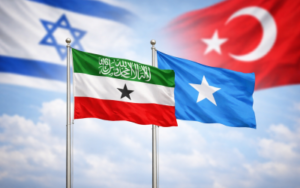
The outcomes are of this diplomatic-tussle, is double-edged for the Somaliland. Israeli engagement offers prospects for investment, international visibility, and long-sought recognition. Yet, it also exposes Somaliland to the risk of becoming instrumentalized within rival geopolitical frameworks, potentially constraining its autonomy rather than enhancing it.
Taken together, these contrasts underscore that the struggle over Somaliland is not only about recognition. It is about how power is exercised, how borders are interpreted, and how regional order is imagined in a part of the world that has become central to global strategic competition.
Aside the capitals and council chambers, the dispute has tangible consequences. Somaliland traders see recognition as a gateway to investment, banking access, and expanded markets. Families hope it might mean easier travel, scholarships, and international mobility for their children. At the same time, many fear becoming pawns in conflicts among distant powers.
In Somalia, recognition stirs anxieties about national cohesion. Ordinary citizens who are already navigating insecurity and economic hardship, worry that renewed attention to Somaliland could divert resources or harden divisions just as reconstruction efforts begin to show results.
Israel’s engagement carries clear risks. It may provoke diplomatic retaliation, strain relations with African institutions, and draw Israel into local disputes it cannot easily control. Türkiye’s response also carries dangers. By framing recognition as an existential threat, Ankara risks escalating a dispute that could invite further external involvement and deepen polarization.
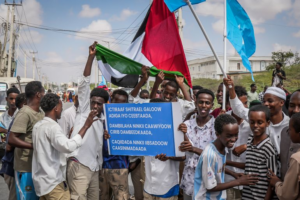
The controversy has already been complicated by broader regional narratives, including unsubstantiated claims linking Somaliland to plans for relocation of Palestinians from Gaza to Somaliland. These claims were denied by Somaliland authorities. But it is illustrative of how quickly symbolic, disputes can become entangled with unrelated conflicts.
Whether Somaliland gains wider recognition remains uncertain. What is already clear is that the debate itself has altered the Horn of Africa’s political landscape. Recognition has become a signal of intent, sovereignty a contested concept rather than a settled principle.
As for Somaliland, external attention offers long-sought visibility, but also the danger of instrumentalization. While in regards to Somalia, the challenge is to defend unity amid intensifying external competition. For Israel and Türkiye, the dispute reflects broader struggles over influence, norms, and the shape of regional order.
In a region marked by long memories and shifting alliances, the battle over recognition is unlikely to fade quietly. Whatever the outcome is, will write out a larger truth that the Horn of Africa is no longer peripheral, but a stage where global and regional ambitions increasingly collide, with consequences that reach far beyond its shores.