
Synoptic View of Prof. PLO Lumumba on Power, Sovereignty and the Trump’s Doctrine: Venezuela as a Test Case
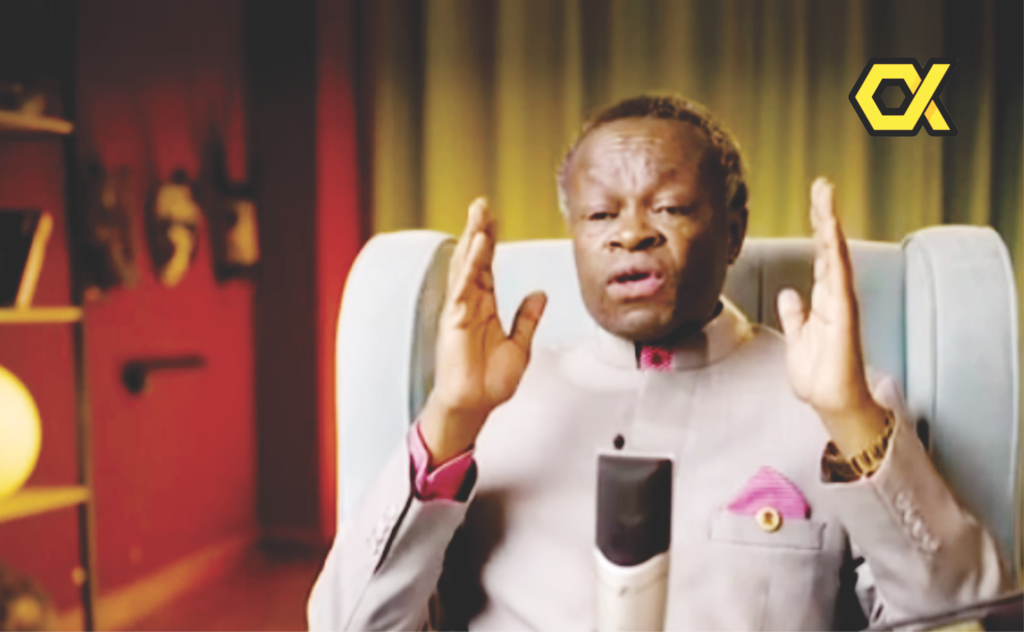
Prof. PLO Lumumba argues Venezuela, is not just a country in crisis. It is a warning to the world. It is a test case of a guinea pig, on which global power politics are being experimented. What happens there, he suggests, will signal what powerful states believe they can now get away with.
At the centre of this moment is the dramatic removal of President Nicolás Maduro from his residence in Caracas on the 3rd of January, 2026. The operation shocked many people, but Prof. PLO Lumumba insists it was not unexpected. President Donald Trump had already hinted of a covert US operations inside Venezuela and had positioned advanced naval assets in the Caribbean. To observers of geopolitics, the message was clear; this was only a matter of time.
Lumumba noted that this episode marks a return to an old idea in new clothing. In 1823, President James Monroe declared that the Americas were off-limits to European colonial powers. It was a policy that became known as the Monroe Doctrine. Two centuries later, the world is witnessing a “Trump Doctrine”. A blunt assertion that American interests will be secured not through diplomacy and multilateralism, but through force.
He likens this approach to Otto von Bismarck’s 19th-century claim that the great questions of the age would be settled not by speeches, but by “blood and iron”. In the Trump doctrine’s version, blood and iron have been replaced by missiles, drones and warships, and classic gunboat diplomacy.
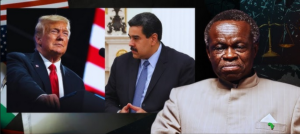
The implication is clear. Under this doctrine, America casts itself as the global hegemon and ultimate arbiter of right and wrong. What the United States defines as legitimate becomes legitimate; what it condemns becomes unlawful. Venezuela is only one example. Similar rhetoric has been directed at Iran, Nigeria and others. The cumulative effect, Lumumba warns, is the steady erosion of international law as conceived in 1945 with the creation of the United Nations. This raises an uncomfortable question: is the UN still relevant, or is it headed the way of the League of Nations, obsolete in the face of unilateral power?
In the Venezuelan case, Lumumba dismisses US claims of “diplomacy” as hollow. He critique that when American leaders speak openly about US companies exploiting Venezuela’s vast oil reserves and about Washington “running” the country until it deems it ready for self-rule, this is colonialism in plain sight. Venezuela in his view, is being treated as a laboratory for a revived, resource-driven imperialism.
The charges leveled against Maduro, particularly narco-terrorism, are also treated with skepticism. Lumumba notes that such labels have been used before to justify regime change; citing cases from Manuel Noriega in Panama to leaders elsewhere who were later pardoned or quietly forgotten. Drug trafficking, he points out, is a global problem driven largely by demand, including within the United States itself. Branding a head of state as a cartel leader, he suggests, is often less about justice and more about creating a moral cover for political objectives.
What troubles Lumumba most is the precedent. If a sitting head of state can be seized, handcuffed and taken to a foreign country, what remains of sovereignty and the principle of equality among nations? The list of past examples like Panama, Iraq, Libya, suggests a pattern rather than an exception.
The broader danger he warns, is global. Once such actions are normalized, the moral authority of the United States to criticize Russia over Ukraine, or China over Taiwan is severely weakened. Worse still, it sends a signal to other powerful states that might now feel emboldened to act similarly, especially because of their nuclear power, guarantees impunity.
Lumumba believes the world is already witnessing a fragmented, piecemeal version of a third world war, fought through proxy conflicts, targeted operations and economic coercion. His greatest fear is not escalation itself, but miscalculation of a single mistake that might be involving another nuclear power.
As for resistance, options are limited. Countries such as Russia, China, India and Brazil can condemn the action and call emergency meetings, as Brazil’s President Lula has already done. But condemnation alone, Lumumba notes, rarely restrains raw power.
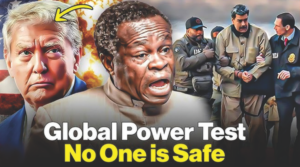
He also points to unease within the United States itself. Critics, including Senator Bernie Sanders, have questioned the bypassing of Congress and warned against presidential overreach. Suggesting that in another context, such concentration of power would be described as authoritarian. Though the Western media is reluctant to use that language.
Looking ahead, Prof. Lumumba predicts an era defined by unilateralism and transactional foreign policy, where access to resources shapes alliances and interventions. Venezuela, with the world’s largest proven oil reserves, fits neatly into this pattern.
Yet, he also offers a note of caution to those who believe domination is easy. History, he reminds us, is littered with failed interventions, from the Vietnam to Afghanistan to Iraq. Military power can topple governments, but it cannot conquer the spirit, nationalism and resilience of a people.
In the end, Lumumba believes the Trump era will pass, and a future US administration will likely attempt to repair the damage and restore predictability to American foreign policy. But for now, he says, Venezuela stands as a stark reminder of a world drifting toward the law of the jungle, where fear replaces respect and might increasingly defines right.
Venezuela, in his words, is not just a crisis. It is a flare-signal. The question is whether the rest of the world is paying attention.