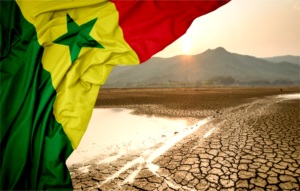

Africa is Rewriting Her Development Story, Challenging Reliance and Reclaiming Ownership
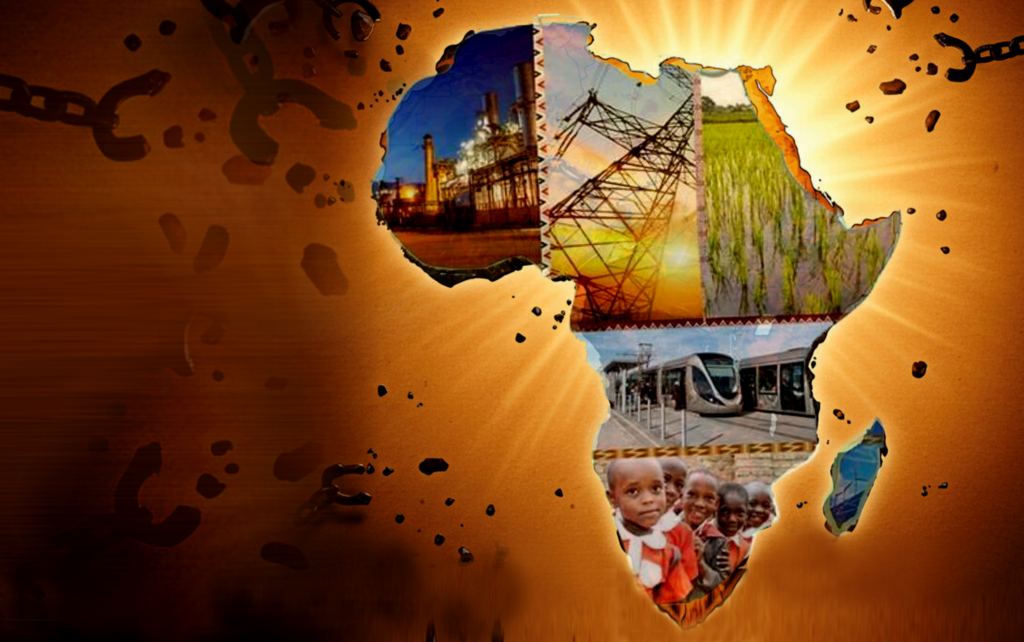
Over eight decades, ‘African-Ownership’ was a familiar phrase in development circles, repeated in policy documents, donor conferences and mission statements. But when funding ran short, ownership often stopped at the slogan. Decisions were still shaped by external priorities, external timelines and external money. That era is now drawing to a close. As foreign aid budgets shrink and global geopolitical attention shifts elsewhere, African countries are confronting a more demanding reality that ownership is no longer optional. It is becoming the condition for survival.
Across Sub-Saharan Africa, this transition is unfolding not in theory, but in households, clinics, classrooms and government offices. The age of Big Aid is fading, with it the safety net that once allowed governments to defer hard choices. What replaces it will determine whether countries consolidate self-reliance or slide into crisis. One would rightly think that when aid retreats in Africa, the homefront feel it first.
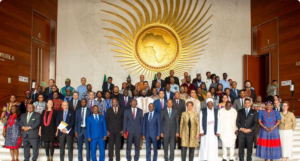
On the ground the consequences are already visible. Clinics that once depended on donor-funded staff are being absorbed into national payrolls, stretching health budgets thin. Schools are enrolling more students than ever, but without matching increases in teachers, textbooks, or classrooms. Families are quietly picking up the slacks ushered by foreign-aid, by paying informal fees, contributing to labour, or stepping in as caregivers when public services falter.
Development analysts note that the retreat of aid is not an abstract fiscal adjustment. When HIV/AIDS funding slopes, care responsibilities fall back on households. Often on women and older relatives. When education budgets tighten, communities are asked to build desks, provide meals, or fund repairs. Ownership in practical form, is now being negotiated at firstly the family homefront before any other sociocorporate, or sociopolitical, or sociocultural, etc., divisions.

Tanzania’s experience with fee-free basic education illustrates both the promise and the pitfalls of this transition. Introduced in 2015, the policy was a political and social milestone. Parents who had struggled to keep children in school, especially girls, welcomed it. Enrollment surged almost overnight.
But behind closed doors, unresolved questions surfaced. At a high-level meeting in Dar es Salaam, donors asked government officials a seemingly straightforward question – how much does it cost to educate one child? According to participants, the room fell silent. The issue was not capacity, but history. In years, cost-breakdown models had been developed by donors and consultants, but not fully embedded in government systems.


When donors hesitated to bridge a short-term funding gap, the limits of the old model became clear. To most parents, this showed up as overcrowded classrooms and hidden costs. While for the government, it was a wake-up call about what ownership really requires. From donor accountability to citizen accountability, the flag of transparency blows.
As aid recedes, something else is also changing – the relationship between citizens and the state government. Domestic financing through taxes, levies and insurance schemes, creates expectations that are harder to ignore. People are beginning to ask not only whether services exist, but whether they work and whether public money is being used well. Zimbabwe’s AIDS Levy offers a telling example.


The small tax on financial transactions has helped sustain HIV programs through years of economic difficulty and fluctuating donor support. Public health analysts describe it not just as a funding mechanism, but as a social contract that binds citizens and the state around shared responsibility.
Politically, the end of Big Aid is forcing governments into tougher, more transparent choices. Policies can no longer assume donors will fill budget gaps. In response, some countries are strengthening public financial management, digitizing tax systems and negotiating more assertively, with emerging partners such as China, India, Russia and Turkey; and may be the UAE, etc.
In Tanzania, major infrastructure deals increasingly include local content requirements and skills transfer clauses. Regionally, blocs like the East African Community and the African Continental Free Trade Area (AfCFTA) are being used to amplify bargaining power. Meanwhile, the private sector is being repositioned as a donor substitute and development partner through clearer regulations and improved contract enforcement.
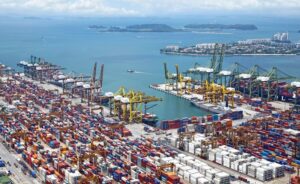
Kenya’s M-Pesa remains a reference point. What began as a mobile money platform has reshaped how people pay school fees, access health insurance and interact with government services. It demonstrates how locally developed systems can expand access while strengthening domestic revenue collection.
Here is a new role for the NGOs, grassroots power and civil society. The shift toward ownership is also existential for non-governmental organisations. Many NGOs were built around project delivery, operating parallel systems that compensated for weak state capacity. Today, those models are under pressure. Governments increasingly want partners who can strengthen systems, advice on policy and support long-term capacity, not replicate services indefinitely. This transition is uncomfortable, particularly for organisations dependent on project funding. Yet, community needs are changing. People don’t need parallel structures anymore, they need governments that function.
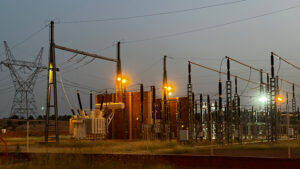
At the same time, grassroots groups are gaining new relevance. As accountability moves inward, civil society organisations are stepping up in budget tracking, citizen feedback and anti-corruption advocacy. Their audience is no longer primarily donors, but the public itself. Furthermore, a view into infrastructure, industries and the politics of self-reliance.
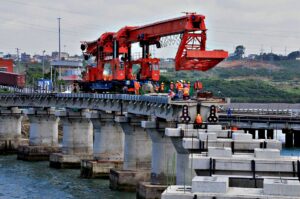
Aside from social services, Africa’s ownership push is reshaping how growth is financed and built. Infrastructure, especially energy and transport, has become central to this new development logic. One of the most ambitious proposals is the Gas-by-Rail Economic Corridor Initiative (GBR-ECI). A private sector-led concept anchored by a preliminary Ethiopia-Nigeria agreement. The plan envisions a 73,500-kilometre rail network across 40 Sub-Saharan African countries, transporting liquefied natural gas to power factories and trade corridors.
With projected costs between US$500 billion and US$1 trillion, the scale is daunting. Nonetheless, supporters argue that for families facing high energy costs and small manufacturers struggling with unreliable power, such infrastructure is not abstract. As it will directly shapes livelihoods and food prices. Civically, the initiative’s emphasis on African ownership distinguishes it from donor-led programs such as the EU’s Global Gateway. Control over energy, food and digital systems is increasingly seen as central to sovereignty and domestic legitimacy.

Ethiopia offers a concrete case study. As Africa’s most populous landlocked country, high transport and energy costs have long constrained households and businesses alike. Recent investments signal a deliberate attempt to change that trajectory. In Gode, a US$2.5 billion fertilizer plant backed by the Dangote Group and Ethiopian Investment Holdings aims to produce up to three million metric tons of urea annually. In respect to farmers, that could mean lower input costs and more stable harvests. Nationally, it reduces dependence on imports that have repeatedly exposed Africa to global shocks. Alongside this project, a US$1 billion aluminium smelter by RUSAL, powered by hydropower, is designed to anchor industrial jobs and downstream manufacturing. Together, these projects link energy, food security and industry in a way that reflects a more integrated development strategy.
Financial systems are evolving in parallel. After decades of limited success reforming global financial rules, African institutions are building alternatives. Afreximbank has emerged as a central player, using trade finance, guarantees and risk insurance to mobilize private capital without excessive sovereign debt. It’s Pan-African Payment and Settlement System allows cross-border trade in local currencies, easing dollar shortages that have long constrained regional commerce. As for small traders, many of them who females, faster, cheaper payments can be transformative. Regional initiatives like COMESA’s Yellow Card and East Africa’s payment systems address everyday trade barriers in this direction, which global finance has long overlooked. And then, reducing dollar dependence will not be easy. Global card networks and geopolitical pressures remain powerful. Still, India’s Unified Payments Interface shows how a shared digital rail can enhance inclusion and sovereignty. These are lessons African policymakers are actively studying. This a sure signs of Ownership being under pressure because of most of these earlier enumerate factors.

These changes echo long-standing critiques of aid dependence, including those by economist Dambisa Moyo, who warned that aid can weaken institutions and accountability. Her call for trade-led growth and domestic capital mobilization is now taking material form, in railways, payment systems, industrial plants, etc.
But progress remains fragile. Conflict, corruption, brain drain and political exclusion continue to threaten gains. In fragile and humanitarian crises states, large-scale aid remains indispensable. And without precautions, localization of this said – Ownership, can simply shift power without improving on the so-much-campaigned values of accountability/transparency.

Still, the direction is unmistakable. Theoretically, Nigeria’s decision to absorb donor-funded health workers into its national payroll, Ghana’s full domestic financing of free senior high school, Tanzania’s push toward mandatory national health insurance, etc., all indicate a continent testing self-reliance in real time. With respect to most homefronts, families, businesses, individuals, the stakes are immediate to note whether essential services would transcend donor cycles. On the part of governments, this is a test of credibility and competence. While for development partners, it is a choice between clinging to the old roles, or support a genuine transfer of power.

The longstanding lingering debate about Ownership is over. What Africa is experiencing now is Ownership under pressure. And it is in this pressure where national budgets get tighten, citizens demand answers on accountability/transparency and systems are forced to mature that real change in Africa will finally start taking its form of Ownership to writing out her developmental shape in infrastructural-practicum.