
Africa Becomes New Frontier as Israel Advances Strategic Defense Pact with Morocco
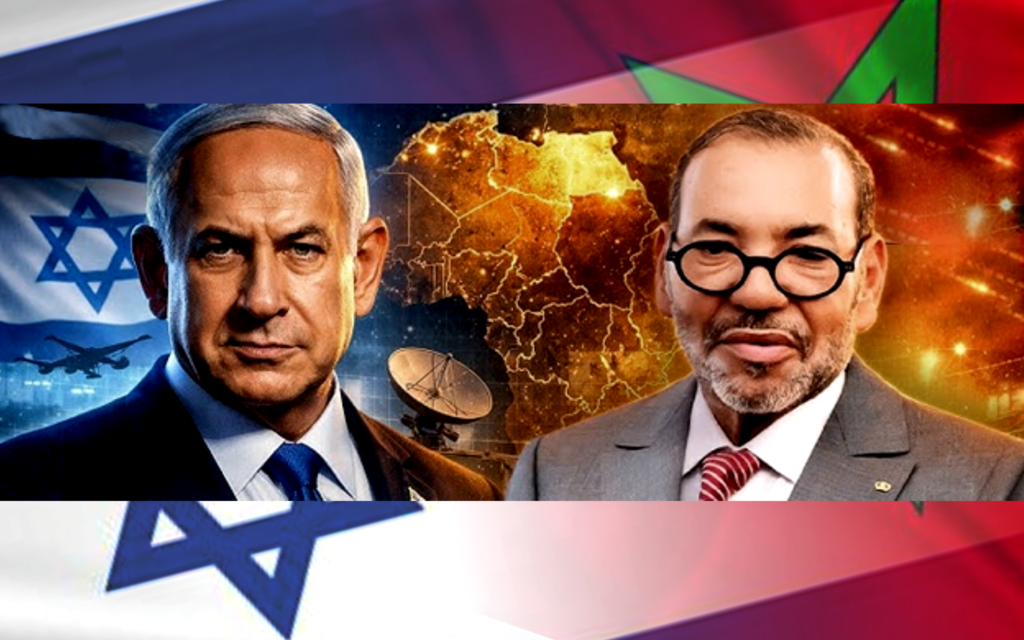
As fans fill the stadiums of Rabat and Marrakech for the 2025-2026 Africa Cup of Nations, another contest is unfolding far from the pitch. In government offices and military headquarters, Morocco and Israel have finalized a joint military work plan for 2026, an agreement that quietly but decisively reshapes security dynamics across North Africa.
Signed during the third meeting of the Israel-Morocco Joint Military Committee in early January, the plan marks five years since the two countries restored diplomatic ties under the Abraham Accords. What began as cautious normalization has matured into structured, long-term defence cooperation, placing Morocco at the center of Israel’s growing strategic footprint on the African continent.
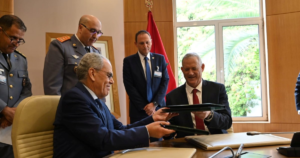
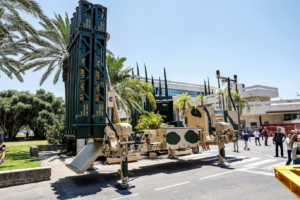
Unlike earlier arms purchases, the 2026 work plan institutionalizes military dialogue, joint industrial projects, and shared strategic planning throughout the year. Israeli expertise will support Morocco’s air defence, reconnaissance, and artillery modernization, while Moroccan forces gain access to training and systems designed for complex, hybrid security environments.
As for Rabat, officials frame this approach as a form of pragmatic sovereignty, less driven by ideology than by capability. The aim is not symbolic alignment, but operational advantage; building a military that can deter regional threats, secure major international events, and reinforce Morocco’s position as a reliable security partner for Western allies. Meanwhile, Israeli defence planners increasingly see Morocco as a gateway, where Middle Eastern technology intersects with African security needs, from counterterrorism to border surveillance.
The timing of the agreement coincides with renewed tensions across the Maghreb and the eastern Mediterranean. Moroccan officials point to recent intelligence emerging from post-Assad Syria as confirmation of long-standing concerns about Iranian influence and proxy networks. According to regional sources, foreign fighters linked to Algerian and Polisario elements were detained while operating alongside pro-Iranian forces, reinforcing Rabat’s narrative of a hostile axis threatening its interests.
This backdrop has sharpened the contrast between Morocco and Algeria. While Algiers continues to pour resources into conventional military spending, devoting a record share of its budget to largely Russian-supplied hardware, Rabat is betting on “smart power”, fewer troops, more technology and a growing domestic defence industry built through joint ventures, including with Israeli firms.
Morocco’s expanding security role has not gone unnoticed in Washington. Earlier this year, senior US law enforcement officials visited the African Security Cooperation Center in Salé, which coordinates intelligence and training among more than 20 African states. For American observers, the center offered a model of regional security governance ahead of the 2026 World Cup, which Morocco will co-host.
During AFCON, the country deployed thousands of cameras, drone teams, and integrated surveillance systems across key sites. A showcase of the same capabilities now being refined through Israeli cooperation. The message is clear: Morocco is positioning itself not just as a consumer of security, but as a provider.
Nonetheless, this strategic ascent comes with domestic tensions. Public sympathy for civilians affected by the war in Gaza runs deep, and younger Moroccans have increasingly questioned government priorities. A loosely organized, tech-savvy youth movement has staged protests over the contrast between high-profile defence and sports investments and persistent gaps in public services, particularly healthcare.
The deaths of several women at an under-resourced hospital last year became a rallying point, symbolizing what critics call a “two-speed Morocco”. Officials have responded by drawing a firm line between foreign policy and humanitarian concerns, insisting that defence cooperation serves national survival, especially regarding Western Sahara, rather than ideological alignment.
Despite political sensitivities, cooperation between Morocco and Israel extends beyond the military. Technical partnerships are expanding in agriculture, water management, and fertilizers, building on historical ties between the two societies. Israeli companies see Morocco’s phosphate reserves as strategic, while Moroccan planners value Israeli experience in arid-land innovation. These civilian links provide a quieter counterbalance to the high-profile defence relationship, suggesting a partnership designed to endure beyond immediate security crises.
Five years after normalization, the Rabat-Tel Aviv axis is no longer experimental. With the 2026 military work plan, it has become a defining feature of North Africa’s security landscape, one that strengthens Morocco’s regional standing, extends Israel’s reach into Africa and forces neighboring states to recalibrate.
As crowds cheered goals and trophies this winter, the longer game is being played elsewhere, over geopolitical partnership, doctrine, technology, politics and the future balance of power in a volatile region.