
Globalism Collapsed on Its Own Altar as World’s Political/Business Elites Shifted From Collective Global Ambition
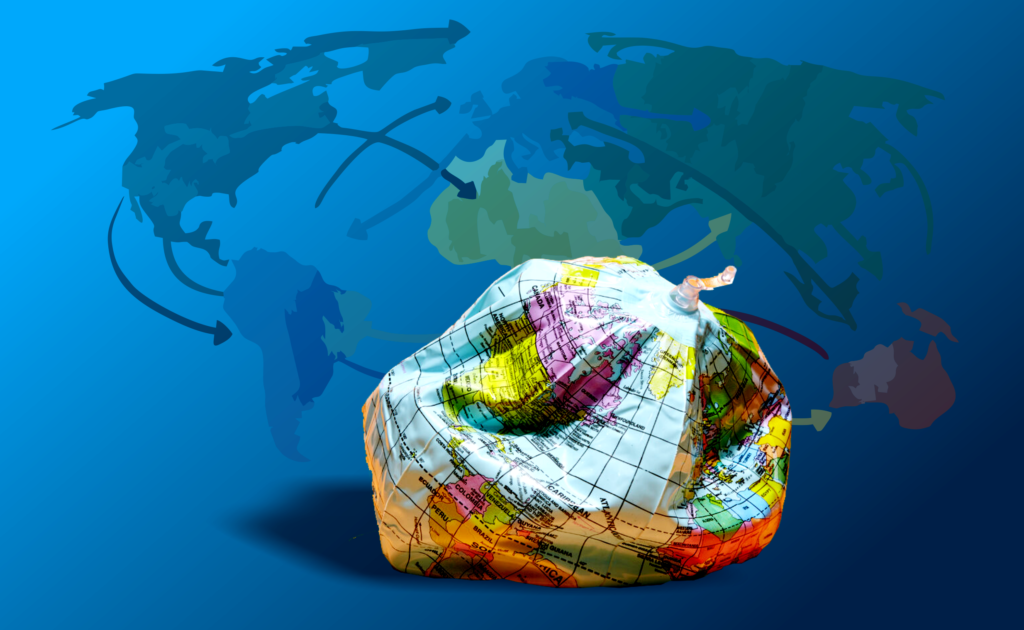
A summation: at the World Economic Forum in Davos, polite speeches and cautious pledges masked a profound rupture, as leaders failed to reaffirm the shared rules and multilateral trust that once underpinned the global economic order.
“Globalization 4,0 has only just begun, but we are already vastly under-prepared for it”
– by Klaus Schwab (Founder/Exe. Chairman, World Economic Forum) in 2024.
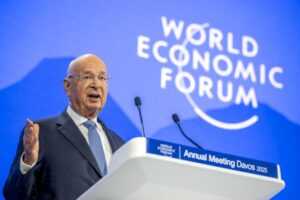

The four trillion dollars in global equity positioning built on the promise of renewed multilateral cooperation now rests on a premise that quietly collapsed on January 21, 2026, inside the Congress Centre in Davos, Switzerland. There was no dramatic walkout, no treaty torn in public. Instead, the moment passed with polite applause and carefully worded speeches that failed to conceal a deeper rupture: the world’s most influential economic forum could no longer agree on the rules of the system it was created to defend.
For decades, Davos has functioned as the cathedral of globalism, a place where leaders affirmed open markets, shared standards, and collective problem-solving. This year, the language shifted. Cooperation became conditional. Solidarity was reframed as national interest. The message to markets was subtle but unmistakable that the age of predictable multilateral alignment is giving way to fragmented power blocs and transactional alliances, which will breed human consequences beyond the forecast.
In respect to the regular people, this shift is not an abstract. When global coordination weakens, supply chains become less reliable, inflation more volatile and jobs more precarious. Workers in export-dependent economies like factory hands in Southeast Asia, logistics workers in Europe, commodity producers in Africa, are often the first to feel the tremors. Promises made in global forums translate into expectations at home; when those promises unravel, public trust erodes.
Civil society groups at Davos, who have been long relegated to the margins, noted the irony. While leaders spoke of pliability, civil organisations cautioned that fragmented governance disproportionately hurts the most vulnerable, those that are least equipped to navigate higher prices, reduced aid flows, or climate policies implemented unevenly across borders.
Markets heard the signal immediately, and mostlikely business recalculations started breeding, cautiously. Investors would had priced-in a return to harmonised regulation, coordinated climate financing and smoother trade relations. Instead, some executives left Davos discussing hedges not growth, diversifying suppliers, ring-fencing capital and preparing for regulatory divergence, seeming as dashed-resultant effect from the outcome.
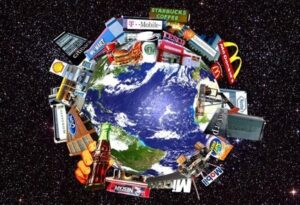
Multinational firms now face a more complex operating environment, duplicate compliance regimes, politicised trade routes and the constant risk that geopolitics with less efficiency, will determine access to markets. As for smaller businesses and emerging-market firms, the costs are even higher, widening the gap between global giants and local players. This in a parlance of individual-opinion, it is governance without a centre.
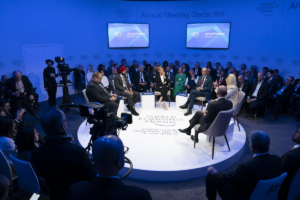
At the governance level, Davos exposed a vacuum. Institutions designed to mediate global interests appeared constrained by domestic politics back home. Leaders spoke diplomatically of cooperation, yet stopped short of binding commitments. The result was a forum rich in rhetoric but poor in enforceable consensus.
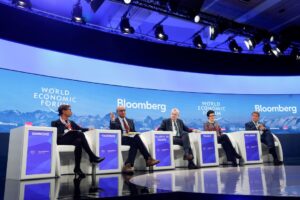
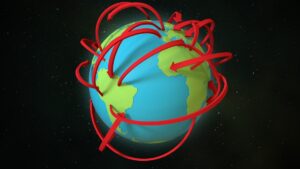
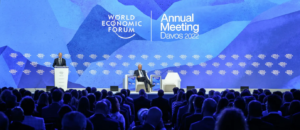
This is not the end of global interaction, but it may mark the end of globalism as a shared doctrine. What replaces it is still forming; a pragmatic regionalism, issue-by-issue coalitions and a world where alignment is temporary and trust is conditional.
On a quieter turning point, history rarely announces itself loudly. January 21, 2026, may be remembered not for what was said at Davos, but for what could no longer be convincingly promised. In the cathedral of global cooperation, faith did not collapse in a single moment, it simply faded. As the global markets noticed it, communities will live with the consequences.