
Is Russia Using African Gold Extraction to Fund its War in Ukraine?
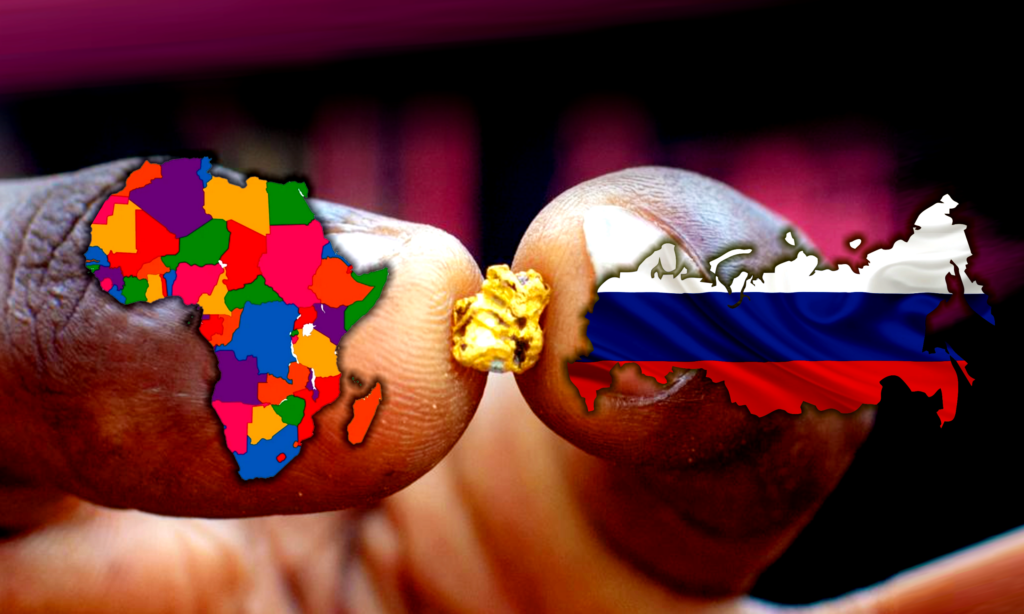
Across West and Central Africa, gold is no longer just a precious metal, it has become a weapon of war. Russian-backed mercenaries, operating under groups like the Wagner-linked Africa Corps, are turning gold fields in Sudan, Mali, the Central African Republic (CAR), and Burkina Faso into sites of violence and exploitation. Their mission: extract and smuggle gold to finance Moscow’s war in Ukraine, often at the expense of local communities.
Since the invasion of Ukraine in 2022, Russia has faced extensive Western sanctions, including restrictions on gold exports. Yet, its central bank reported record gold reserves of $310 billion in December 2025. To sustain its war economy, Moscow is selling bullion domestically and laundering foreign gold through third-party African intermediaries. Mali, for example, remains outside gold sanctions, offering a legal loophole the Kremlin exploits.
Independent investigations, such as those by the Blood Gold Project and global think tanks, estimate that smuggled African gold has generated more than $2.5 billion for Russia since 2022. This illicit wealth is used not only for domestic budget support but also to fund weapons purchases from Iran and North Korea, prop up mercenary operations, and maintain political leverage abroad.
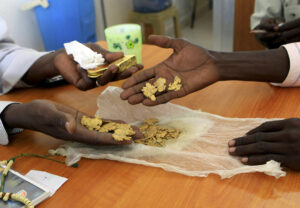
Gold has emerged as Russia’s most strategic wartime asset. Highly mobile, easy to launder, and accepted internationally, it enables Moscow to circumvent sanctions while sustaining its economy and military. Beyond finance, Russian involvement in gold mining allows for significant political leverage. By controlling or influencing mines, Russia exerts power over local governments and economies.
Before the invasion, Moscow had already shifted 60% of its National Wealth Fund into yuan and 40% into gold, a hedge against anticipated Western financial pressure. Today, gold is central to Moscow’s wartime exchanges, ranging from weapons-for-gold deals to state-to-state payments. Africa has now become the Kremlin’s alternative treasury.
Russia’s footprint in Africa has expanded dramatically since 2018, leveraging weak governance, local conflicts, and resource wealth. Wagner and Africa Corps forces provide military backing, diplomatic cover, and strategic training in exchange for access to gold, diamonds, timber, and other critical minerals.
Mali, Burkina Faso, CAR-(Central African Republic) and Sudan are at the heart of this operation. These countries collectively produce hundreds of tonnes of gold annually, making the Sahel a key supplier. In return for access to these resources, Russia supplies military support, disinformation campaigns and UN lobbying, all framed under the guise of ‘sovereignty’ or ‘security assistance’.
CAR (Central African Republic): Russia secured Ndassima, the country’s only industrial gold mine, through military support for President Faustin-Archange Touadéra. The mine generates up to $290 million annually, funneled through Wagner-linked firms.
Mali: After France reduced its presence, Russian-backed forces supported the junta of Assimi Goïta, consolidating access to gold-rich regions like Kidal. Moscow-backed firms now plan to build a national gold refinery.
Burkina Faso: Russia’s Nordgold Company operates industrial mines, with new concessions projected to produce over 20 tonnes of gold across eight years.
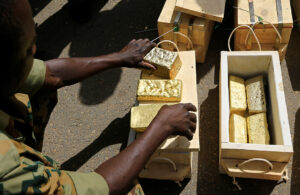
Sudan: Wagner controls access to artisanal mines, buying and smuggling up to 90% of the country’s gold, while embedding itself in military and commercial networks.
Behind the gold statistics are communities subjected to terror, displacement and daily violence. Witnesses describe villages raided by mercenaries, miners shot while working and families forced from ancestral lands.
In the CAR-(Central African Republic), Africa Corps mercenaries killed dozens of civilians at the Ndassima mine and nearby villages in late 2025. Also in Mali, ethnic Fulani men have been executed or disappeared, while survivors recount torture and waterboarding. While in Sudan, attacks on migrant mining camps have left dozens dead and reports suggest hundreds more injured.
Local economies also suffer. While Russia and African elites profit from mining, artisanal miners, mostly women and children, face exploitation, loss of livelihoods, and human rights abuses. The social fabric of entire regions is eroding, with education, healthcare and basic infrastructure sidelined in the pursuit of illicit wealth. And in some cases, this whole situation is often powered by political and diplomatic dimensions.
Russia’s gold operations are not merely economic, they are a tool of influence. By supporting authoritarian governments, Moscow gains allies who shield its activities, oppose Western pressure, and provide access to regional markets. In Mali, Burkina Faso and CAR-(Central African Republic), Russian military assistance has strengthened post-coup regimes, giving Moscow de facto control over resources and political outcomes.
The Kremlin also exploits global financial loopholes, funneling gold through intermediaries in the UAE and beyond, undermining sanctions regimes and challenging international norms. Every ounce of gold extracted strengthens Moscow’s strategic position while weakening the global effort to hold it accountable.
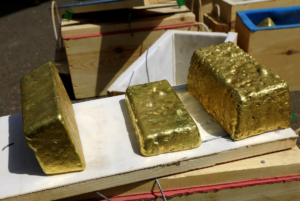
Independent research highlights the complexity of these networks. Smuggling operations involve shell companies, military flights, and cooperation with complicit local officials. Gold is converted into cash, weapons, and logistics, fueling both Russian military operations and paramilitary influence in Africa.
While official Russian data is opaque, investigative reports show a consistent pattern. Gold is mined under duress, exported through shadowy networks and reinvested into Moscow’s war machine, often at the expense of African communities and governance.
Africa has become a critical battleground not just for territory but for economic and political influence. Russia’s extraction of gold demonstrates how resource wealth can be weaponised, destabilizing countries while financing wars abroad. The consequences are immediate for local populations, manifesting in violence, poverty and fractured societies. To the world, the operation poses a direct challenge to sanctions, financial oversight and international norms.
The story of Africa’s gold is not just about but about power, survival and the human cost of geopolitics. Without greater international attention, oversight and grassroots accountability, the human and social toll will continue to grow, leaving communities trapped between global ambitions and local suffering.