
Pivoting East, Burkina Faso, Mali and Niger Partnering with Russia on the Sahel’s First Shared Satellite
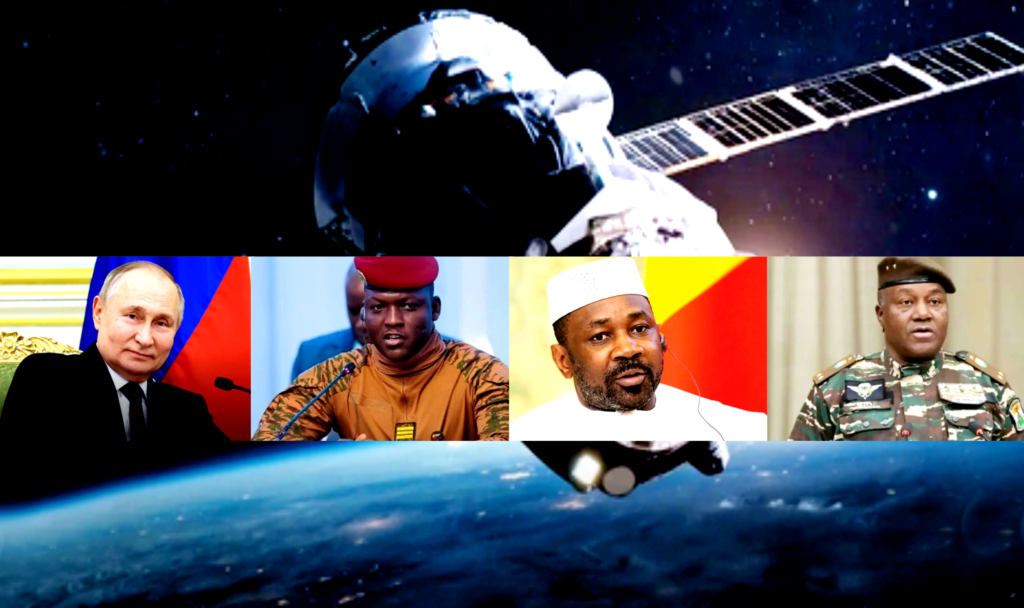
Burkina Faso, Mali, and Niger are betting that space technology can help close some of the Sahel’s most stubborn development gaps. Under the Alliance of Sahel States (AES), the three countries are working with Russian partners to develop the region’s first shared telecommunications satellite. An ambitious project aimed at expanding digital access, strengthening state capacity, and asserting greater technological independence at a moment of geopolitical realignment.
Officials say the satellite would provide broadband and mobile coverage across remote and underserved areas, supporting everything from internet access and government communications to security coordination and disaster response. Cited by Business Insider Africa, the initiative is being discussed with Russian entities, including Roscosmos, and would serve the combined needs of the AES bloc rather than a single national market.


As for millions across the Sahel, unreliable connectivity is not an abstract policy issue but a daily constraint. In rural Burkina Faso, Mali, and Niger, farmers struggle to access price information, traders rely on word of mouth, and students often travel long distances for basic digital services. A shared satellite promises to reach communities that fibre-optic cables and terrestrial towers have bypassed due to cost and geography.
Development practitioners argue that even modest improvements in coverage can have outsized human benefits: mobile banking for households without formal accounts, telemedicine for clinics short on specialists, and online learning for schools with limited teachers. In respect to most women-led microbusinesses and young entrepreneurs, connectivity can open new markets without the burden of physical distance, especially critical for landlocked economies.
Politically, the project reflects a broader push by the AES governments to reduce dependence on Western infrastructure providers and financing models. After years of security cooperation and development partnerships with Europe and the United States, the three states have increasingly sought alternatives, framing the satellite as a step toward digital sovereignty, and control over the systems that carry data, payments, and public communications.

Diplomats note that Russia’s appeal lies in its willingness to engage on state-led infrastructure with fewer governance conditions, at a time when the AES countries face sanctions, aid suspensions, or strained relations with traditional partners. Moscow, for its part, gains influence in a strategically important region by offering technical cooperation rather than troop deployments alone.
Beyond civilian use, the satellite carries strategic weight. Secure communications can improve coordination among border agencies, emergency services, and public administrators across three countries grappling with insurgency and cross-border crime. While technology cannot resolve political grievances, analysts say better communications can shorten response times, improve situational awareness and reduce bureaucratic bottlenecks, factors that matter to investors assessing risk.
Economists view digital infrastructure as a general-purpose input that cuts across sectors. By lowering transaction costs and improving market access, connectivity can raise productivity for small firms, support regional trade, and link local producers to continental initiatives such as the African Continental Free Trade Area. For the Sahel, where distance and insecurity inflate costs, digital links can partially offset physical constraints.
Still, questions remain. Financing terms, data governance, long-term maintenance, and the balance between civilian and security uses will shape public trust and outcomes. Civil society groups are urging transparency to ensure the project delivers affordable access rather than reinforcing state surveillance or elite control.
At the moment, the satellite plan captures a moment of experimentation. It blends geopolitics with everyday needs such as jobs, services and the opportunity of testing whether a shared technological leap can translate into tangible gains for communities on the ground, and whether regional cooperation can turn space-based ambition into Sahelian resilience.