
Dangote Refinery Reaffirms 75 Million-Litre Daily Output in Nigeria’s Fuel Self-Sufficiency Drive
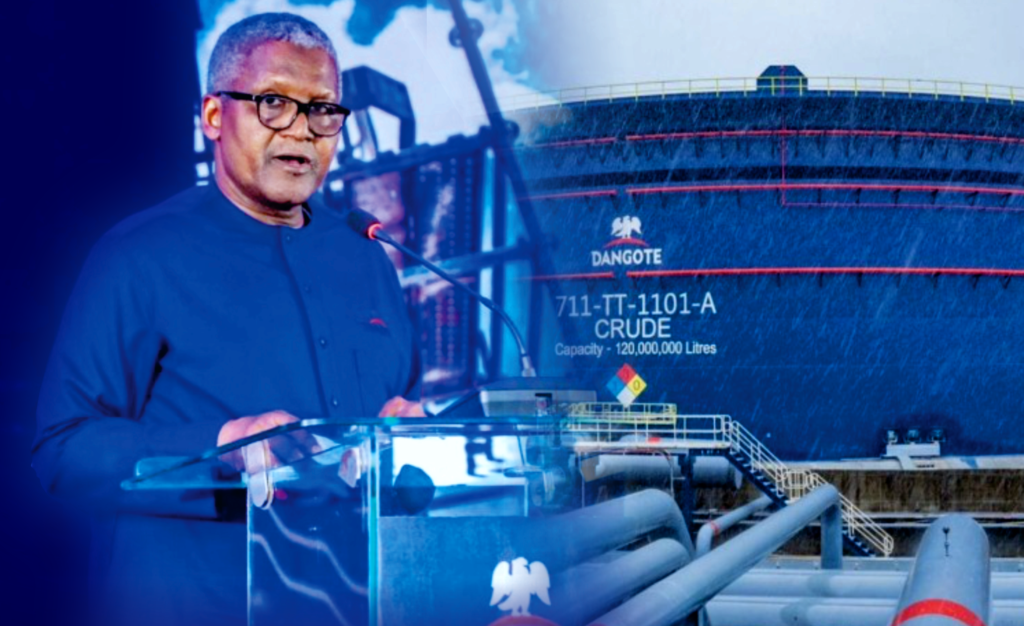
Nigeria’s long quest to refine its own fuel is hedging to a full pragmatic realization. Couple of days ago, the Dangote Petroleum Refinery reaffirmed its ability to supply up to 75 million litres of Premium Motor Spirit (PMS) daily, a volume that comfortably exceeds the country’s estimated 50 million litres per day consumption. After a steady production ramp-up through late 2025, the Lekki-based facility is now emerging as the dominant supplier to the domestic market, reshaping economic, political and everyday realities across the country.
Industry data from late January indicated that the refinery is already delivering about 50 million litres of petrol daily, effectively meeting national demand. In parallel, it is producing 25 million litres of diesel and 20 million litres of aviation fuel each day, a scale that few refineries globally can match. Designed as the world’s largest single-train refinery, the complex processes Nigerian crude, and was built to supply the entire local market while retaining surplus capacity for exports. As this is proving the human and economic payoff in the energy sector. The most immediate benefit is stability of PMS, AGO and aviation fuel supplies for consumers.
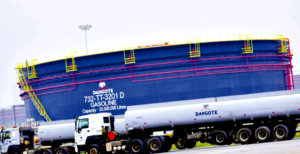
Local refining has helped cushion fuel prices at a time of volatile global oil markets and a fragile naira. Dangote officials have cautioned that without domestic production, petrol prices would likely be far higher, driven by import costs and foreign exchange scarcity. Of which most households and small businesses, which are already strained by inflation, are benefitting tangible relief from the current price moderation within the country.
The broader economic implications are equally significant. As local supply expanded in December 2025, imports reportedly fell sharply, with domestic production covering around 60-64% of demand. The reduction in fuel imports is easing pressure on Nigeria’s foreign exchange reserves and contributing to a more stable currency. This is an outcome long sought for by policymakers who believe that such productivity as this venture, will grease-in positive business upscale, painting a healthy political leadership representation.
The Dangote refinery’s rise carries political weight. Fuel imports have been a persistent vulnerability, draining public finances and exposing the country to global supply shocks. By positioning itself as Nigeria’s primary supplier, Dangote Refinery aligns private capital with national strategic goals, reinforcing arguments for market-driven industrial policy.
Operationally, the plant is supported by a vast logistics chain, moving products through with more than 1000 truck off-takes daily, including compressed natural gas (CNG) trucks aimed at cutting emissions and transport costs.
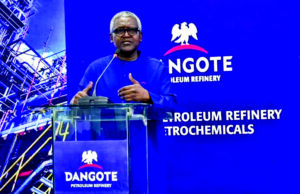
Expansion plans signal even greater ambition. The refinery is upgrading from 650,000 barrels per day to long-term projection of 1.4 million bpd. If realized, Nigeria would not only end routine fuel imports, but also become a net exporter of refined products to West Africa and beyond.
In the meantime, the Dangote Refinery stands as a rare convergence of grassroots benefit, business scale and political symbolism, offering a glimpse of what energy self-sufficiency could mean for Africa and Africa’s largest economy.