
Kenya-Based Managing Director Appointment Signals Strong US-Africa Investment Push

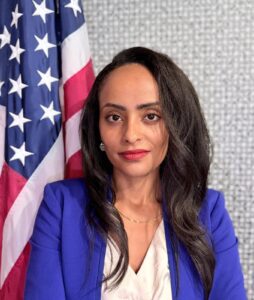
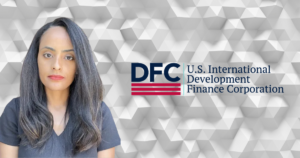
In Nairobi, Kenya’s position as a diplomatic financial and commercial gateway to Africa, received a fresh boost this week with the appointment of Selam Demissie as Regional Managing Director of the United States International Development Finance Corporation (DFC), based in Nairobi.
The announcement, made on January 29, 2026 on the sidelines of US Deputy Secretary of State Christopher Landau’s visit to Kenya, places Nairobi at the centre of Washington’s expanding economic engagement with Africa, while motioning tangible opportunities for Kenyan businesses, workers and communities. DFC said the appointment is part of a broader strategy to strengthen its operational footprint in East Africa and accelerate private-sector investment that delivers both development impact and strategic returns. As this might be Kenya’s strategic moment.
Hosting DFC’s regional leadership is widely seen as recognition of Kenya’s growing stature as a regional anchor for diplomacy, finance and innovation. From Nairobi, Demissie will oversee DFC-backed projects across East Africa and beyond, deploying tools such as debt financing, equity investments, loan guarantees and political risk insurance.
“Kenya is a strategic partner and a regional anchor for advancing US interests in East Africa; and a strong DFC presence in Kenya is critical to sourcing investment opportunities that benefit both nations and deepen our bilateral partnership”. DFC Chief Executive Officer Ben Black said.
This new chapter reinforces Kenya’s role as a convening hub where global capital meets African enterprise. Government officials and private-sector players say the decision could translate into faster deal-making, closer investor engagement and greater visibility for Kenyan-led projects. Riding from policy to people’s concerns. Beyond high-level diplomacy, DFC officials emphasised the human impact of the agency’s work, such as creation of jobs, businesses up-scaling and essential services expansion.
Demissie’s mandate includes advancing projects in priority sectors such as energy, agriculture, infrastructure, health and technology. Areas that directly affect livelihoods. In Kenya, these sectors underpin national development goals, from expanding electricity access and modernizing agribusiness to strengthening healthcare systems and supporting digital entrepreneurship.
DFC said Demissie will build on existing research, institutional partnerships and active investment pipelines developed by the agency’s East Africa Investment Advisor, allowing the organisation to refine strategies that respond to local market realities rather than one-size-fits-all solutions. Development economists note that DFC’s approach, which is crowding in private capital rather than replacing it, can help reduce the cost of financing for African businesses while maintaining commercial discipline. Bringing in political and diplomatic dimensions to bear.
Deputy Secretary of State Christopher Landau described the appointment as a strategic step that aligns development finance with foreign policy and national security objectives. “DFC plays a critical role in advancing US national security and foreign policy objectives by mobilising private-sector investment in strategic partner countries, such as Kenya. A strengthened presence in Kenya positions DFC to deliver impactful work that fosters long-term stability and prosperity for both the United States and East Africa”, Landau said.

Analysts say the move reflects a wider geopolitical contest for influence in Africa, where development finance is increasingly used to offer alternatives to state-led or opaque funding models. By anchoring its regional leadership in Nairobi, the US is betting on Kenya’s political stability, regulatory frameworks and regional connectivity. Business confidence and investor signals beam.
As for investors, Demissie’s appointment sends a signal of continuity and scale. According to the US Embassy in Kenya, Sub-Saharan Africa is now the second-largest region in DFC’s global portfolio, with more than $10 billion (Sh1.3 trillion) in exposure. That scale matters to local firms seeking long-term capital, especially in capital-intensive sectors such as renewable energy, logistics and healthcare. DFC’s ability to offer political risk insurance and loan guarantees can unlock financing that might otherwise remain out of reach. A Nairobi-based investment banker familiar with DFC transactions said “Having decision-makers on the ground shortens the distance between ideas and execution. It improves confidence for both international investors and local partners”.
Selam Demissie shoulder-pads leadership with market experience. Demissie brings extensive experience in development finance and private-sector engagement across emerging markets. Since joining DFC, she has worked on energy and agriculture projects across Africa and Latin America, focusing on reducing risk and improving project bankability. Before DFC, she led programmes aimed at strengthening private-sector frameworks to expand access to energy. An experience that aligns closely with East Africa’s infrastructure and climate priorities. DFC officials say her leadership will emphasise market-driven growth, local partnerships and commercially viable projects that can scale across borders. A Nairobi-centred future for businesses.
As Kenya continues to position itself as a regional financial and diplomatic hub, hosting DFC’s regional managing director underscores a broader national narrative: that global investment, when structured well, can serve both strategic interests and grassroots development.
To many Kenyan entrepreneurs, workers and communities, the real test will be whether this expanded presence translates into more power connections, better roads, stronger hospitals and thriving businesses. With Nairobi now firmly at the centre of DFC’s Africa strategy, expectations and opportunities are rising.