
South Africa Expels Israeli Envoy, Exposing a Wider Diplomatic Breakdown
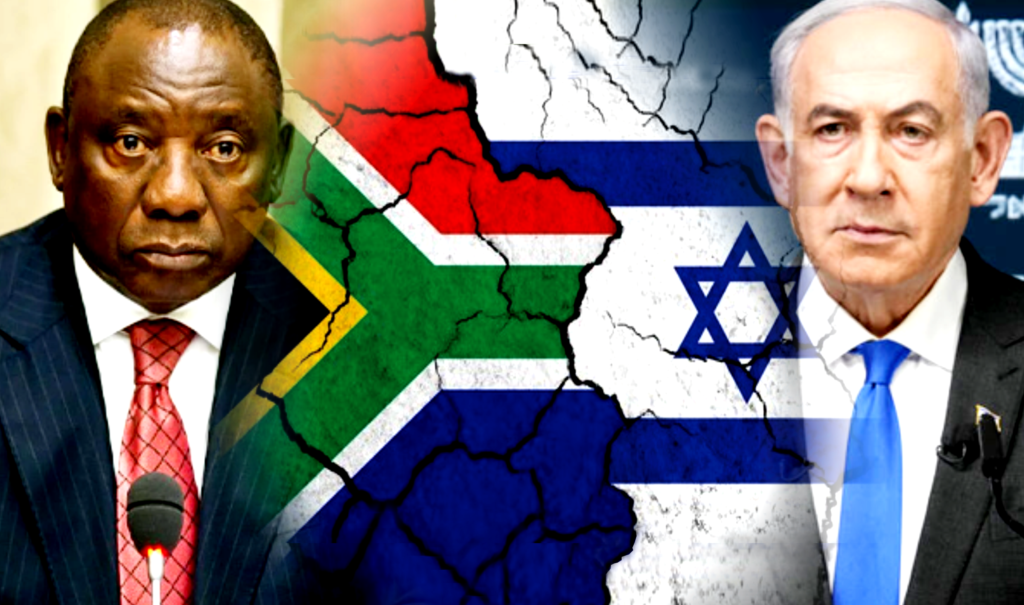
Pretoria frames the move as a defence of sovereignty and diplomatic norms, while critics warn of a widening foreign-policy rupture with regional and global implications.
South Africa has expelled Israel’s senior diplomatic representative, declaring him persona non grata in a sharp escalation of an already strained relationship shaped by the war in Gaza, international legal battles and competing claims to moral authority.
The Department of International Relations and Cooperation (DIRCO) announced on Friday that Ariel Seidman, Israel’s chargé d’affaires in Pretoria, had been given 72 hours to leave the country. The decision, officials said, followed what they described as repeated violations of diplomatic protocol, including public attacks on President Cyril Ramaphosa and failures to properly notify South African authorities of visits by senior Israeli officials. “These actions represent a gross abuse of diplomatic privilege and a fundamental breach of the Vienna Convention”, DIRCO said, arguing that the conduct had eroded trust and undermined the basic protocols that govern bilateral relations. The ministry urged Israel to “ensure its future diplomatic conduct demonstrates respect” for South Africa and international norms.
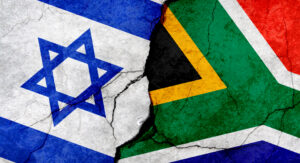
Israel responded within hours, declaring South African diplomat Shaun Edward Byneveldt persona non grata and ordering him to leave. Byneveldt serves as South Africa’s ambassador to the State of Palestine, operating from Ramallah in the occupied West Bank. Israeli officials said further steps could follow.
The retaliation climaxes a long-standing grievance. Chrispin Phiri, DIRCO’s spokesperson, said Israel’s decision highlighted what South Africa sees as an obstructionist posture toward Palestinian representation. Forcing a farcical arrangement in which a South African envoy to Palestine is accredited through Israel, the occupying power. “This emphasizes Israel’s refusal to honour international consensus on Palestinian statehood”, Phiri wrote on social media. Just how law, diplomacy and political rebounding are playing out.
The diplomatic standoff did not emerge in isolation. It sits atop months of intensifying friction following South Africa’s decision to bring a case against Israel at the International Court of Justice in December 2023, accusing it of committing genocide in Gaza. While Israel has rejected the allegations, the case placed South Africa at the centre of a global legal and political debate, drawing praise from pro-Palestinian advocates and criticism from Israel and some of its allies.
South African officials argue that their position reflects the country’s constitutional commitment to human rights and its own history under apartheid. Critics counter that Pretoria is courting diplomatic fallout, potentially complicating trade, security cooperation and relations with partners aligned with Israel.
Yet, domestically the government’s stance has carried political resonance. Civil society groups, trade unions and student movements have staged regular protests, pressing for tougher measures against Israel. Opposition parties on the left, notably the Economic Freedom Fighters, welcomed the expulsion and called for a complete severing of diplomatic and economic ties, framing the decision as a long-overdue moral stand. “The message to our own citizens is that foreign policy is not abstract. It’s about whose suffering counts, whose law matters, and whether South Africa is willing to absorb diplomatic costs for principles it claims to hold”, said one Pretoria-based political analyst. It is a diplomatic chill with broader echoes.
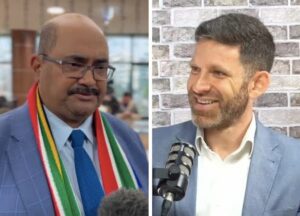
Internationally, the episode risks deepening a diplomatic chill that already extends beyond Pretoria and Tel Aviv. Several Global South governments have voiced support for South Africa’s ICJ case, while Western capitals remain divided, balancing calls for humanitarian restraint with strategic ties to Israel.
Within South Africa’s foreign policy establishment, officials insist the expulsion is not a rupture but a corrective measure. One senior SA official speaking on condition of anonymity said that “Persona non grata is a recognised diplomatic tool. It indicates boundaries. It does not close the door to dialogue”.
Still, the tit-for-tat expulsions raise questions, about how or whether relations can stabilise in the near term. With the Gaza war ongoing and international legal processes moving slowly, both sides appear locked into positions shaped as much by domestic audiences as by diplomatic calculation.
Thus far, the episode reflects a broader recalibration; a South African government leaning into its activist foreign policy identity and an Israeli government bracing against what it sees as mounting international isolation. Whether the confrontation yields renewed engagement or a prolonged freeze, may depend less on statements issued this week, than on events unfolding far beyond Pretoria’s diplomatic corridors.