
Mozambique’s Chimanimani Coffee on the Global Map, an Emerging Story from Mountain Slopes

A new scientific study has shed light on why organic coffee grown in the remote highlands of Mozambique’s Chimanimani mountains is quietly attracting global attention. Researchers say the beans contain unusually high concentrations of aromatic compounds linked to jasmine and fruit notes, which is a chemical signature that could help position the country as a new origin in the competitive specialty coffee market.
The research, conducted by scientists from the University of Lisbon, the Federal University of Espírito Santo in Brazil, the Polytechnic Institute of Manica, and Mozambique’s Mozambican Institute for Agrarian Research (IIAM), focused on coffee produced in Monte Tsetsera plantations inside Chimanimani National Park in Manica Province. Their findings suggest the region’s unique fermentation processes and high-altitude ecosystem combine to produce a distinctive flavour profile that has already achieved specialty-grade recognition. A scientific explanation for an awesomely distinctive taste.
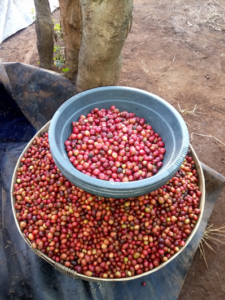
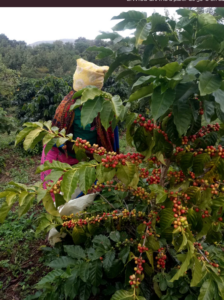

The study, titled “Integrated microbial-metabolomic analysis reveals how fermentation contributes to the unique flavour of African Arabica coffee,” examined coffee fermentation trials conducted during the June 2024 harvest. Researchers found that Chimanimani beans accumulate high levels of phenylethyl alcohol, which carries a rose-like aroma, and linalool, a compound associated with floral notes. Together with esters such as ethyl acetate, these compounds create the fruity and floral characteristics that define the coffee. The beverage result, achieved a specialty score of 87.25 points, placing it comfortably within the range recognised by the Specialty Coffee Association, as premium-grade coffee.
Scientists also identified what they describe as a previously unreported microbial-chemical signature, a combination of microorganisms and metabolites that appears to shape the flavour during fermentation. If confirmed in further studies, this biochemical fingerprint could become a marker for distinguishing Chimanimani coffee from other African varieties. As this is from forest recovery to coffee innovation.
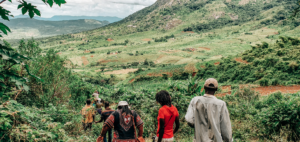 Afar from the chemistry of flavour, the coffee story unfolding in Chimanimani is also one of environmental restoration. Farmers cultivate the beans within an agroforestry system inside Chimanimani National Park, where coffee plants grow beneath native trees. The approach has been promoted as a way to rehabilitate degraded land while maintaining the park’s biodiversity. Conservation groups and local communities say the system helps stabilise soils, protect wildlife habitats and provide income in areas where livelihoods have historically depended on subsistence farming. As for families living in villages near the reserve, the swing toward specialty coffee, represents more than a new crop, offering a possible pathway out of rural poverty.
With one-by-one hand-selecting of the beans, farmers and cooperative workers spent four years preparing the first export shipment. In June 2024, 500 kilograms of Chimanimani organic coffee were sent to buyers in the United Kingdom, marking the region’s first step into the international specialty market. This is a portrait of a small industry with big trade ambitions.
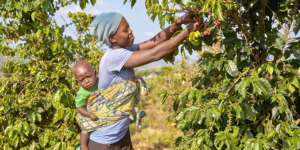
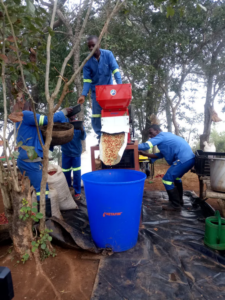
Mozambique’s coffee sector remains tiny by African standards. According to the country’s agriculture authorities, only about 300 hectares are currently dedicated to coffee production nationwide. But the new research could strengthen the country’s bid to join the ranks of well-known African coffee origins, such as Ethiopia and Kenya.
In a statement marking World Wildlife Day on 3 March, the Ministry of Agriculture, Environment and Fisheries of Mozambique said, the scientific findings reinforce the international potential of Chimanimani coffee. Some of the officials argued that the sector could become a driver of rural development, linking conservation, smallholder agriculture and export markets. A phase of the sociocultural/socioeconomic dimensions and benefits.
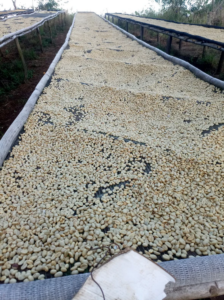
In regards to communities around Chimanimani, coffee cultivation is increasingly tied to cultural identity and local pride. Many growers are descendants of farmers who once produced coffee in the region decades ago, before conflict and economic upheaval disrupted the industry. Reviving coffee production has required scientific research and grassroots organisation; training farmers in organic methods, rebuilding processing infrastructure and creating cooperative networks to reach export markets. In villages scattered across the mountain slopes, families now depend on careful harvesting and fermentation practices that can determine whether beans achieve specialty status.
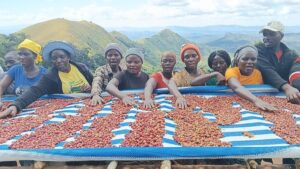
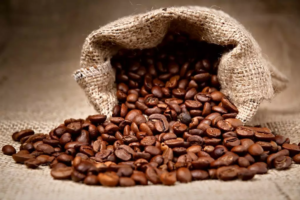
The global market test and prospective window. Still, turning a promising study into a sustainable industry will require overcoming major hurdles. Specialty coffee markets are highly competitive, dominated by established brands and regions with decades of reputation. Maintaining consistent quality across harvests, ensuring traceability and scaling production without harming the fragile mountain ecosystem will be critical.
Researchers say, future studies will examine coffee from multiple harvest seasons and micro-regions across Africa, to confirm whether the newly identified microbial markers remain stable, under different environmental conditions. If they do, Chimanimani’s coffee could gain something rare in the global coffee trade, which is a scientifically validated origin signature.
With respect to Mozambique agroeconomy, this could mean transforming a remote mountain crop into a symbol of ecological recovery, rural entrepreneurship and national ambition.