
Dangote-Peugeot Partnership Powers a Revival of Nigerian Automobile Production Line
In northern Kaduna, the hum of machinery inside the factory of Dangote Peugeot Automobiles Nigeria is beginning to sound like more than an industrial restart. It suggests the possible return of a once-upon-a-time vibrant auto manufacturing culture for many Nigerians, which could now reshape livelihoods, business opportunities and national industrial ambition.
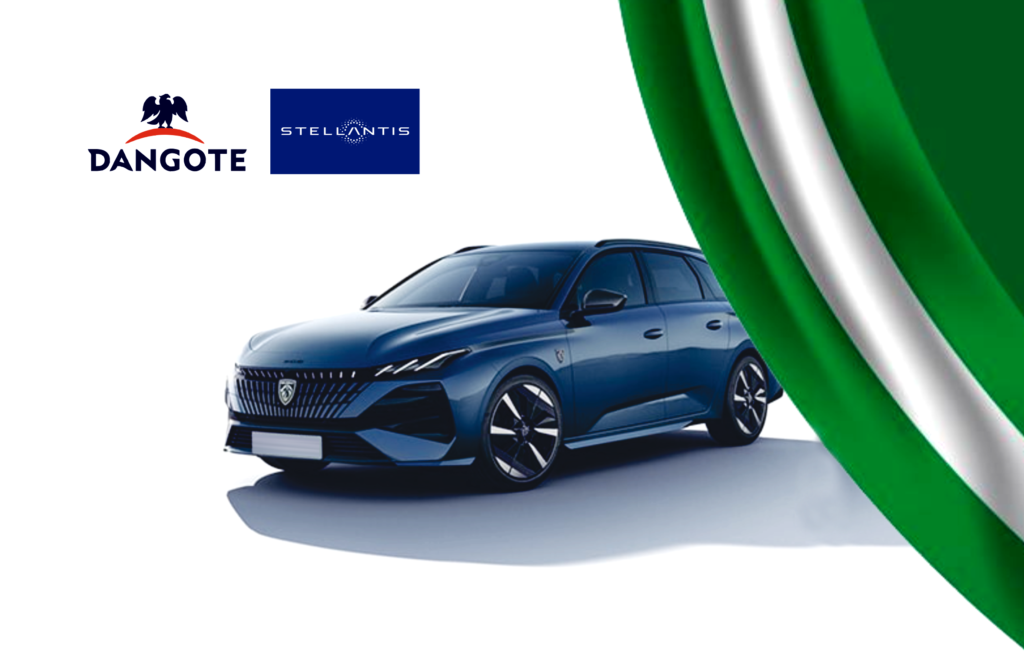
Backed by a partnership between Nigeria’s powerful Dangote Group and European automaker Stellantis, the parent company of Peugeot, the Kaduna facility has resumed vehicle assembly. The plant is currently producing models such as the Peugeot 301, 308, 3008, 5008 and 508, with a long-term ambition of assembling about 44,000 vehicles annually. Consequently, the restoration reflects a broader push to rebuild a Nigeria’s industrial base and reduce dependence on imported vehicles.
In years, Peugeot cars were a familiar sight on Nigerian roads, and the Kaduna assembly plant was a cornerstone of employment in the region. Many families in Kaduna still remember when parents, uncles, or neighbors worked on the production lines. The reopening is stir cautious optimism, as locals say, the return of the assembly plant, would grant economic security that could help stabilize households and revive small businesses around the area. If production scales as planned, the ripple effects could extend to parts suppliers, mechanics and training institutions, potentially rebuilding a local automotive ecosystem that collapsed during years of economic instability and policy uncertainty.

Industry analysts see the partnership as a sign that global manufacturers are willing to reinvest in Nigeria’s domestic market. Africa’s most populous nation remains one of the continent’s largest vehicle markets, but the majority of cars are imported used vehicles. Local assembly could gradually change that pattern, encouraging automobile-parts manufacturing and technology transfer. This also could mean new opportunities in distribution, maintenance services and automotive financing for related SMEs.
Far from being a brand, many Nigerians see Peugeot as part of a cultural memory that is also tied to government fleets, taxi services and family vehicles from past decades. Reviving production locally, taps into a sense of industrial pride and national capability. Conversely, sustaining that sentiment will depend on whether locally assembled vehicles remain competitive in price and reliability compared with imported alternatives.
According to the French ambassador to Nigeria – Marc Fonbaustier, the project reflects profound economic cooperation between France and Nigeria, particularly in manufacturing and technology, with an embellishment of diplomatic weight. In regards to Nigerian bureaucrat, the restart aligns with long-standing ambitions to strengthen local manufacturing under the country’s automotive policy. Successful production could help the government demonstrate progress in industrialization, which is an issue closely tied to job creation and political credibility.

In consideration to competition and wider industry revitalization, the Peugeot project is not the only attempt to rebuild Nigeria’s auto assembly sector. Another partnership between Renault and the Coscharis Group is also working to expand local vehicle assembly. Together, these ventures could signal the early stages of a broader revival in Nigeria’s automotive industry; a process that could redefine how vehicles are produced, sold and serviced in the country.
On the other hand, political/market analysts warn that the sector faces structural challenges, such as inconsistent policies, high production costs, currency volatility and infrastructure gaps. Without sustainable government support and stable economic conditions, large-scale local manufacturing may struggle to compete with cheaper imports.
Yet, workers and families in Kaduna are hoping for steady jobs that the return of the assembly lines would offer. To them, this provision could be something more immediate. It is also a possibility that Nigeria’s story of automobile manufacturing industry, which was once hindered, might finally be restarting.