
US Eases Curbs on Iranian Oil in Bid to Reduce Fuel Prices Hike, Exposing Policy Trade-offs
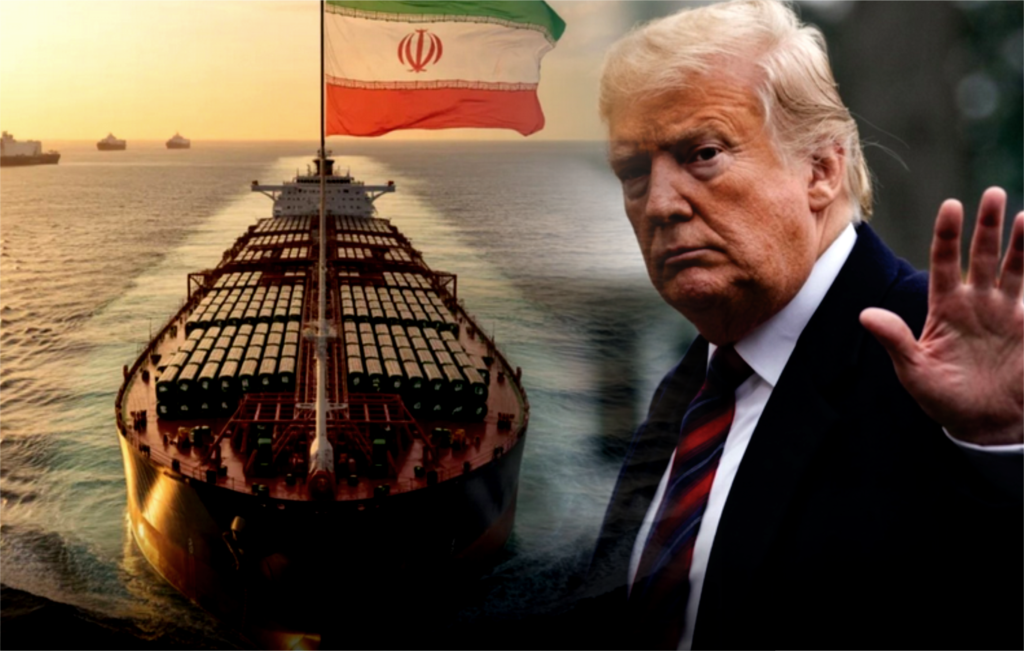
The United States has issued a tightly limited waiver allowing roughly 140 million barrels of Iranian oil, already loaded onto tankers, to enter global markets, to ease pressure on fuel prices without dismantling broader sanctions.
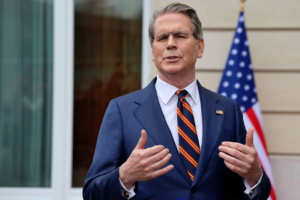
Treasury Secretary Scott Bessent, described the step as “temporary and narrowly tailored”, applying only to shipments loaded between March 20 and April 19, 2026. The goal is to clear oil that is effectively stranded at sea and inject additional supply into a market strained by geopolitical tensions. Still, the decision stresses a cavernous dilemma facing governments, on how to stabilize energy costs at home, while maintaining pressure on a long-standing adversary abroad, with a market-fix using political weight.
To the Donald Trump’s administration, the waiver reflects mounting urgency over high gasoline prices, which ripple quickly through household budgets and political sentiment. Analysts note that even modest increases in supply can temper price spikes, particularly when markets are already volatile. By limiting the waiver to oil already in transit, Washington is signaling that it is not reopening the door to sustained Iranian exports, only easing a bottleneck.
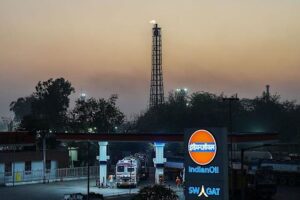
Energy economists and analysts say, the move may provide short-term relief, but structural pressures would remain. Forecasting that hike prices could persist for years, driven by constrained supply, shipping risks and uneven post-pandemic demand. These and some more unforeseen political-decisions over the war, would breed contradictions on the ground.
The policy swing, comes amid mixed signals from Washington’s security posture in the Middle East. While President Trump has suggested a possible drawdown of military engagement, reports of additional troop deployments point in the opposite direction. At the same time, tensions with Iran have intensified. Tehran recently launched ballistic missiles toward Diego Garcia, a strategic US-UK base in the Indian Ocean, though US officials say no targets were hit. The base remains central to long-range military operations and a symbol of Western presence in the region. This juxtaposition of loosening oil restrictions while confronting Iran militarily, has drawn scrutiny from analysts who see a policy balancing act, shaped as much by domestic economics as by foreign strategy.
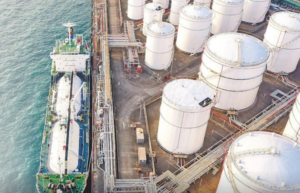
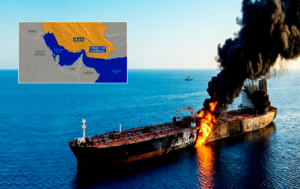
Regards to allies, shipping lanes and global optics; the waiver also reflects the fragile state of global energy logistics. Much of the world’s oil flows through the Strait of Hormuz, a chokepoint vulnerable to disruption. US officials have privately acknowledged that Iran’s ability to threaten shipping lanes has amplified price volatility.
President Trump has criticized NATO partners for not doing more to secure these routes, sharpening tensions within the alliance. Meanwhile, diplomatic changes, such as the UK’s agreement to transfer sovereignty of the Chagos Islands, while retaining a long-term lease over Diego Garcia, add another layer of complexity to Western coordination in the region. So, where lies the human and social undercurrents?
Asides from geopolitics, the waiver decision highlights the everyday stakes of energy policy. In the US and globally, higher fuel prices has translated into rising transport costs, more expensive food, pressure on small businesses, less-productivity, reduced sociocultural movements, etc. As for lower-income households, these increases are immediate and disproportionate in effect. There are also implications inside Iran. While the waiver could generate limited revenue for Tehran, its narrow scope means, it is unlikely to significantly alter economic conditions for the ordinary Iranians. Many of whom continue to face inflation and restricted access to global markets. A temporary release valve could clog-up quickly of not sustained.
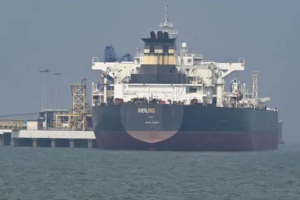
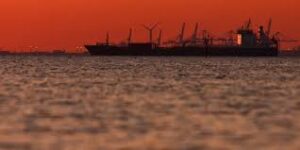
US officials insist the measure is a stopgap, not a shift in political-doctrine. But it reveals how few options remain, as Washington tries to manage an energy crunch. Previous steps of releasing strategic reserves, adjusting sanctions on other producers and boosting domestic output, have had only partial effects. The result is a policy that is both pragmatic and fraught, to ease pressure at the pump, while navigating the optics of allowing a sanctioned rival to benefit, even briefly.
Whether the waiver meaningfully lowers prices or simply buys time, may depend less on the 140 million barrels now at the sea, and more on how long geopolitical tensions continue to shape the global energy map.