

Burkina Faso Halts Fresh Tomato Exports to Shield Local Processing Industry
Burkina Faso’s decision to halt fresh tomato exports marks a sharp turn in how the country is trying to reshape its agricultural economy, by shifting from raw produce trade towards domestic industrialization, even at the risk of regional disruption.
The directive, issued in mid-March by ministers including Serge Gnaniodem Poda and Ismaël Sombié, suspends all fresh tomato exports nationwide until further notice. Authorities say the goal is straightforward, to ensure a steady supply of tomatoes for local processing plants, reduce waste, and keep more economic value within the country.
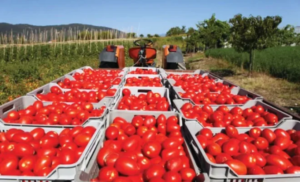
At the center of the policy, is a growing network of agro-industrial facilities such as the Société Burkinabè de Tomates (SOBTO), which has expanded its processing capacity in recent years. For these factories, inconsistent access to raw tomatoes, has long been a bottleneck, forcing reliance on imports even as farmers produce surplus crops during peak harvest seasons. The policy could be a double-edged sword, for smallholder farmers. On one hand, guaranteed local demand may stabilize prices and reduce the post-harvest losses that have plagued tomato producers across Burkina Faso. Tomatoes are highly perishable, and without reliable buyers or storage infrastructure, farmers often face gluts that wipe out profits.
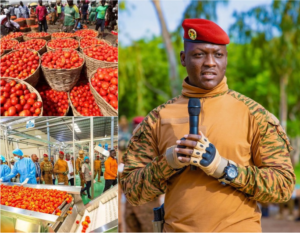
On the other hand, exporters and traders who depend on cross-border markets, particularly informal networks, may see their livelihoods squeezed. The two-week grace period for existing export permits offers little time for adjustment, and the threat of confiscation, with seized goods redirected to local factories, emphasizes the government’s firm stance. An advent to habitate a regional ripple effects.
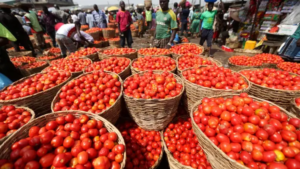
Far from Burkina Faso’s borders, the impact is already being closely watched. Neighboring Ghana, especially its northern regions, relies heavily on Burkinabè tomatoes to meet local demand. A sudden supply gap could drive up prices, disrupt food supply chains, and intensify pressure on local farmers to fill the void. Traders in cross-border markets, many of them who are women, who dominate informal agricultural commerce, stand to be among the hardest hit. For years, these networks have functioned as a lifeline, moving produce across porous borders and sustaining rural economies. The ban risks fracturing those ties, at least in the short term. Presumably, this could be industrial ambition drive.
The export suspension also reflects a broader economic strategy under the transitional government led by Ibrahim Traoré. Since taking power, the administration has emphasized economic sovereignty, with a focus on processing raw materials domestically rather than exporting them in unrefined form. In theory, this approach could generate jobs, build technical capacity, and reduce dependence on imported goods like tomato paste, a staple across West African households. But, it also raises questions about execution of whether local factories can absorb the increased supply efficiently, pay farmers fairly and maintain consistent production quality.
In balancing sovereignty and integration, the Burkina Faso’s decision highlights a broader tension facing many African economies. A challenge of how to balance national industrial ambitions with regional trade integration. While the policy may strengthen domestic value chains, it risks undermining the fluid trade relationships that underpin food security across West Africa.
In the meantime, the government is betting that the long-term gains will birth stronger industry, reduced waste and provide higher local value retention, which will outweigh the immediate disruptions. But much will depend on how inclusively the transition is managed, particularly for farmers, traders and neighboring markets caught in the shift.
As enforcement begins and borders tighten, the humble tomato-crop, has become a test case of who will ultimately benefit, when countries turn inward to build their industries; and who is left to adapt on the margins.