
West Africa Climate Resilience Summit to Focus on Scalable Local Solutions in Dakar
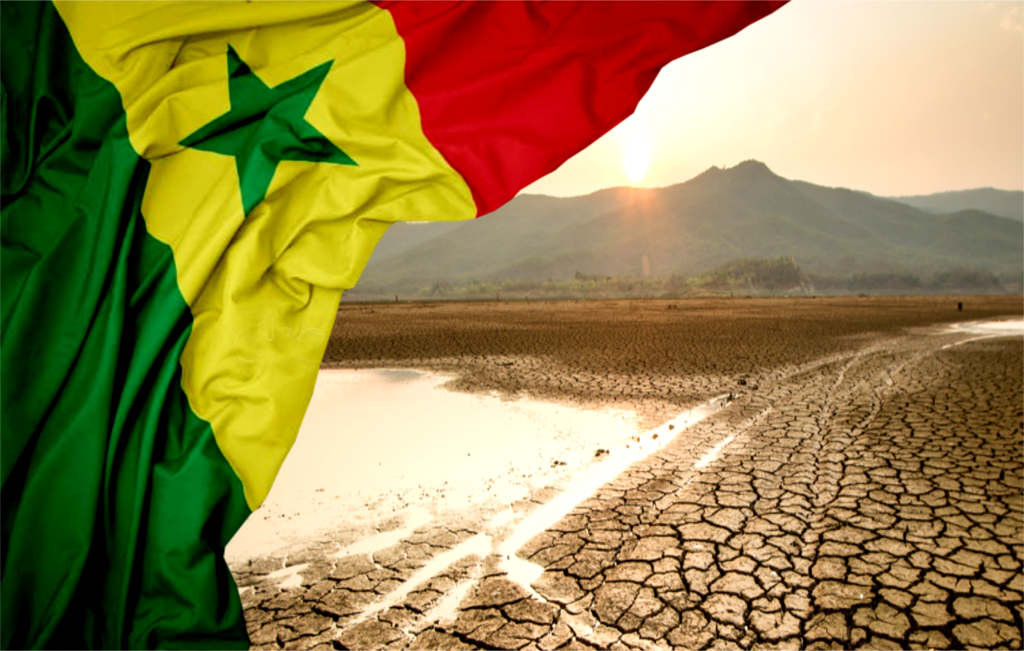
A regional climate summit in Dakar will bring together policymakers, scientists, youth leaders and development partners to advance practical solutions to climate risks in West Africa and the Sahel.
The West Africa Climate Resilience Summit, themed “From Climate Crisis to Climate Resilience: Pathways for West Africa and the Sahel at Local and Regional Levels,” aims to strengthen cooperation, promote knowledge sharing and identify actionable strategies tailored to local contexts. The event is part of a global series organised by the Pontifical Academy of Sciences and the Pontifical Academy of Social Sciences. The Dakar edition is being held in partnership with AKADEMIYA2063 and the Centre de Suivi Écologique.
Organisers say the summit will prioritise inclusive dialogue, with a focus on incorporating youth perspectives and strengthening the link between scientific research and policy action. “Climate change affects everyone, yet Africa bears a disproportionate share of its impacts”, said Peter Turkson, chancellor of both academies. He called for coordinated action that draws on local expertise and fosters integrated, community-driven solutions.
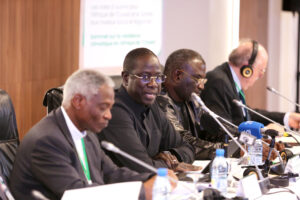
The summit builds on a global climate resilience initiative launched at the Vatican, where Pope Francis endorsed a Call to Action alongside scientists, policymakers and faith leaders. Regional summits have since been held across Europe, the Americas and Africa, with further work continuing under Pope Leo XIV.
According to Cheikh Mbow, director general of the Centre de Suivi Écologique, hosting the summit in Senegal reflects the country’s policy focus on climate adaptation in agriculture, coastal protection and renewable energy, as outlined in its long-term development strategy. Discussions will be guided by the “MAST” framework-Mitigation, Adaptation and Societal Transformation, which emphasizes community engagement, science-based solutions and improved access to climate finance.
Marcelo Suárez-Orozco, a council member of the Pontifical Academy of Social Sciences, said accelerating climate action requires combining scientific research with traditional knowledge to strengthen resilience at the community level.
The two-day summit will include thematic sessions on food systems, water security, forests and nature-based solutions, alongside broader discussions on governance, financing and regional cooperation. Ousmane Badiane, executive chairperson of AKADEMIYA2063, said the gathering would provide a platform to scale best practices and strengthen capacity for locally driven climate action.
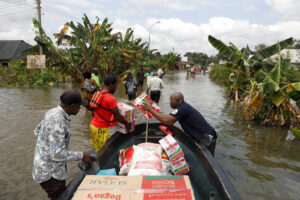
Food security will be a key focus, particularly in the Sahel, where climate impacts are closely tied to agriculture. Joachim von Braun, president of the Pontifical Academy of Sciences, called for stronger investment in food and nutrition systems and innovative financing mechanisms to support adaptation.
The summit is expected to contribute to a broader global framework, with outcomes feeding into a proposed “Universal Protocol for Climate Resilience” to be finalised at a Vatican summit in 2027.
Media Contact: Dr. Layih Butake | Director, Communication & Outreach, AKADEMIYA2063 | Lbutake@akademiya2063.org