
China Unveils 10G Internet in Xiong’an, Signaling a New Digital Era, But Who Stands to Gain?
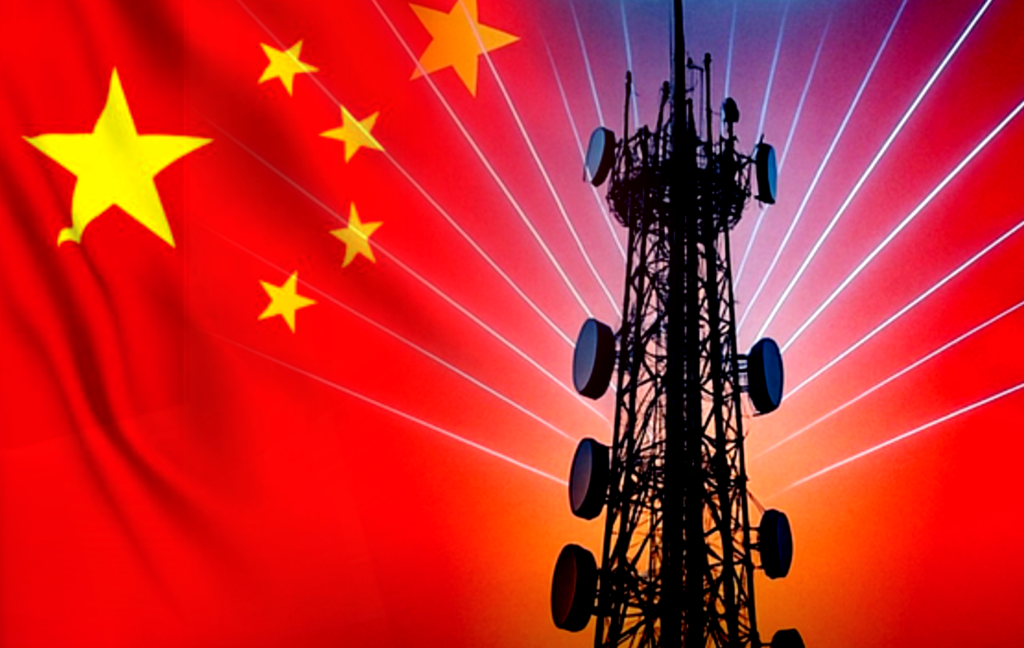
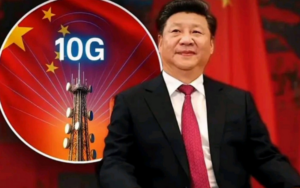
China has rolled out what it describes as the world’s first commercially viable 10G broadband network, a major leap in internet infrastructure that could reshape how people live, work, and connect. Deployed in the planned city of Xiong’an New Area, near Beijing, the network delivers speeds approaching 10,000 Mbps, roughly ten times faster than today’s standard gigabit fiber.
Built on advanced 50G Passive Optical Network (PON) technology, the system allows users to download a 20GB 4K film in under 20 seconds. Beyond raw speed, the network promises ultra-low latency, enabling seamless 8K streaming, cloud gaming, artificial intelligence services, and smart home ecosystems operating simultaneously without lag. But, behind the headline-grabbing numbers lies a broader story about technological ambition, social change, and global competition. A testbed for china’s digital future.
Xiong’an is not just another rollout location, it is a state-backed city of the future, designed to showcase next-generation infrastructure. By launching 10G broadband here first, Chinese authorities are effectively turning the region into a live laboratory for high-speed connectivity, where urban planning, data systems, and daily life are tightly integrated. This aligns with China’s broader push to lead in emerging technologies, from AI to advanced telecommunications. The network also builds on the country’s earlier rapid expansion of 5G, reinforcing its position in the global race for digital dominance.
What it means to most families and their daily life. At the household level, 10G internet could fundamentally change how families interact with technology. Ultra-fast speeds would allow multiple users to stream, work, learn and game simultaneously without disruption; something increasingly important in homes, where remote work and online education have become routine.
Smart homes may also evolve from convenience to necessity. Devices such as AI-powered assistants, health monitors and security systems could operate in real time, continuously exchanging large amounts of data. To some people, this new entrance promises efficiency and safety, while for others, it raises questions about privacy and digital dependence, as well as cultural shifts in entertainment and media.
The entertainment industry stands to be one of the biggest beneficiaries. With stable 8K streaming and near-instant downloads, traditional barriers like buffering or storage limits may disappear. This could accelerate the shift away from physical media and even reshape storytelling formats, as creators design content for immersive, high-resolution experiences. Though, faster access also intensifies the global flow of culture, potentially amplifying China’s own digital content industry while increasing competition with international platforms.

In regards to business and economic implications, especially in sectors like cloud computing, gaming, telemedicine and autonomous systems, the implications are significant. High-speed, low-latency networks enable real-time data processing at a scale previously impractical, opening the door to new services and business models. Small and medium-sized enterprises could benefit from improved digital tools, but only if access becomes widespread and affordable. Otherwise, the technology risks widening the gap between digitally advanced regions and those left behind.
The launch also carries geopolitical weight and strategic dimensions. Control over next-generation infrastructure has become a key arena of global competition, and China’s early move into 10G territory signals its intent to set standards and shape the future of connectivity. At the same time, such advancements may deepen concerns among other nations about technological dependence, data governance, and cybersecurity. The question is not just who builds faster networks, but who controls the ecosystems that run on them.

This also concerns social dissimilarity and the digital divide. While the technology promises unprecedented speed, its rollout raises familiar questions about equity. Will ultra-fast internet remain concentrated in flagship cities like Xiong’an, or will it reach rural and underserved communities? Access to high-speed connectivity increasingly determines access to education, employment, and public services. Without inclusive expansion, 10G networks could reinforce existing inequalities rather than reduce them.
China’s 10G broadband launch marks a significant milestone in the evolution of internet infrastructure. It demonstrates what is technically possible; and hints at a future where connectivity is no longer a constraint but a constant.
But as with every leap in technology, the real impact will depend less on speed itself and more on how societies choose to use it. Whether it brings greater inclusion, innovation and opportunity, or stronger divides, will be shaped not by tech-engineers, policymakers, businesses and everyday users, adapting to a rapidly accelerating digital world.