
Africa Summit in Nairobi, Pushes Domestic Capital from Sidelines to Factory Floors
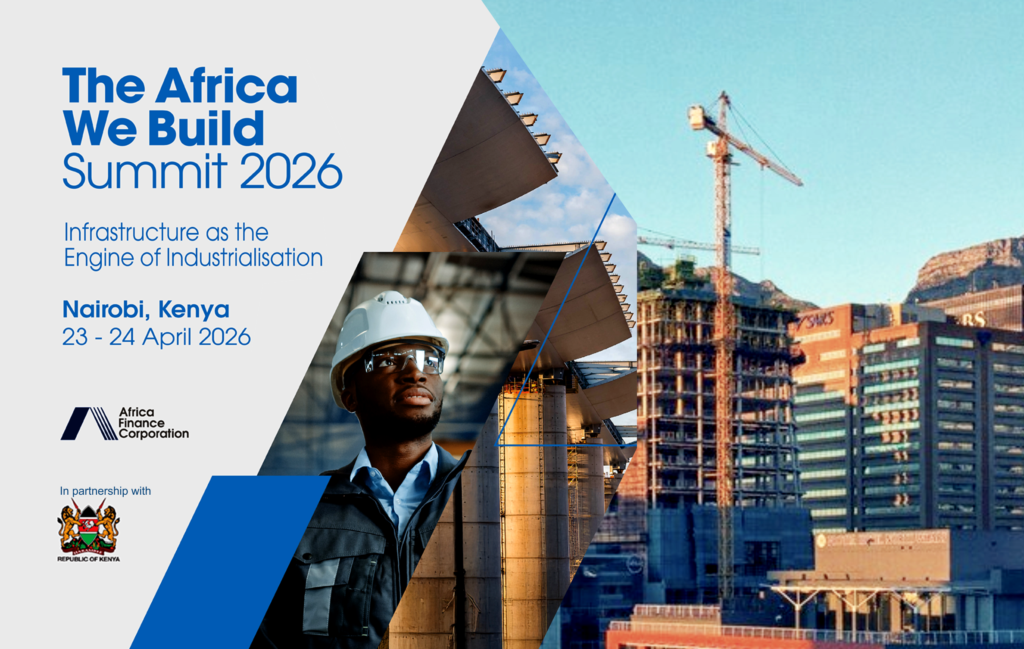
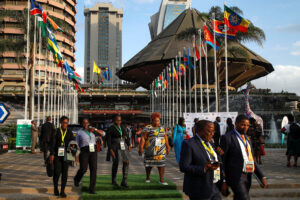
In Nairobi, a new continental push to finance Africa’s industrial future from within is taking shape as investors, policymakers and project developers prepare to meet in Nairobi for the inaugural Africa We Build Summit 2026.
Convened by the Africa Finance Corporation in partnership with the Government of Kenya, the April 23-24 gathering is being framed not as another talking shop, but as a deal-making platform aimed at converting Africa’s vast pools of domestic savings into roads, rail, power and processing industries that directly employ people.
Situated in the centre of the agenda, is a question long debated across the continent: why does Africa, often described by financiers as “capital-rich but investment-poor”, still rely heavily on external funding for infrastructure? Organisers say the answer lies less in scarcity than in structure, with fragmented markets, policy uncertainty and a shortage of bankable projects that meet investor thresholds.

The implications of this notions are immediate for communities across East and Central Africa. Expanded rail and port systems tied to corridors like the Northern Corridor could lower food and fuel prices by reducing transport costs, while new power links promise more reliable electricity for small businesses. In mining regions, a shift toward local processing of strategic minerals could translate into skilled jobs and value retained within national economies, rather than exported in raw form.
Ahead of the summit, Samaila Zubairu – head of the Africa Finance Corporation, said “Africa is not capital-poor, it is capital-trapped”. His argument reflects a broader policy move, gaining traction that pension funds, sovereign wealth pools and local banks must play a bigger role in financing long-term development, provided risks are better managed.
Politically, the summit arrives at a moment of renewed emphasis on regional integration. William Samoei Ruto, is expected to use his keynote address to gesture high-level backing for cross-border infrastructure. These are projects that often stall due to regulatory misalignment or competing national interests. Analysts say stronger political coordination could unlock stalled corridors and revive plans for an integrated East African rail network.

Also, the effort also raises questions about governance and inclusion. Civil society groups have increasingly called for transparency in large infrastructure deals. Warning that poorly structured financing, can burden public finances or bypass local communities. Organisers say the summit will address these concerns by prioritising bankable and execution-ready projects, terms that in practice, hinge on clear regulatory frameworks, environmental safeguards and measurable social returns.
The release of the “State of Africa’s Infrastructure Report 2026” is expected to sharpen that debate, mapping investment gaps and highlighting where domestic capital could be deployed more effectively. Early indications suggest that while billions of dollars sit in African pension and institutional funds, only a small fraction is currently channeled into infrastructure.
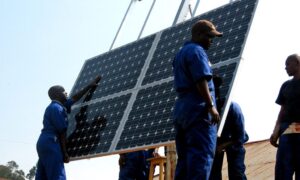
On the ground, governments are experimenting with new financing vehicles. Kenya’s national infrastructure fund, alongside cross-border initiatives such as the Lobito Corridor, are being cited as early models of how policy, capital+projects can create integrated economic ecosystems, linking mines to power, factories to ports and producers to markets. For small-scale entrepreneurs and workers, the success of such initiatives will ultimately be less-evaluated by investment volumes than by visible changes such as shorter-travel times, stable electricity, new factories and steady jobs.
If the Nairobi summit delivers on its promise, it could mark a subtle but significant transition from an Africa that exports raw potential to one that finances and builds its own industrial future.
About AFC: AFC was established in 2007 to be the catalyst for pragmatic infrastructure and industrial investments across Africa. AFC’s approach combines specialist industry expertise with a focus on financial and technical advisory, project structuring, project development, and risk capital to address Africa’s infrastructure development needs and drive sustainable economic growth.
Eighteen years on, AFC has developed a track record as the partner of choice in Africa for investing and delivering on instrumental, high-quality infrastructure assets that provide essential services in the core infrastructure sectors of energy, natural resources, heavy industry, transport, and telecommunications. AFC has 48 member countries and has invested over US$19 billion in 36 African countries since its inception.
Media Enquiries: Yewande Thorpe | Communications | Africa Finance Corporation | Mobile : +234 1 279 9654 | Email : yewande.thorpe@africafc.org