
AfDB Backs DR Congo Census with $80 Million to Strengthen Services and Planning

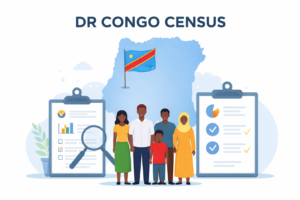
Kinshasa – After more than four decades without a national headcount, the Democratic Republic of the Congo is set to undertake a long-awaited population census, backed by an $80 million commitment from the African Development Bank Group.
Announced at a donor roundtable in Kinshasa on 23 March 2026, the funding forms a major share of the roughly $200 million pledged by international and domestic partners to support the country’s second General Population and Housing Census (RGPH2). Of the Bank’s contribution, $50 million will go directly toward field operations, while $30 million is earmarked for strengthening national institutions responsible for data collection, planning and public policy.
As for many Congolese communities, especially in rural and underserved areas, the census is expected to deliver more than statistics. Accurate population data will help authorities better understand where people live, how they access services, and what they need most—whether it is schools, healthcare, roads or clean water. Local leaders say this could translate into more targeted development projects and fairer distribution of public resources.
The last census, conducted in 1984, captured a country vastly different from today’s. With the population now estimated at over 112 million—nearly four times higher—the absence of updated data has made it difficult to plan effectively. In fast-growing urban centers and remote villages alike, mismatches between population needs and available services have become more visible.
By investing in institutional capacity, the initiative also aims to leave a lasting impact beyond the census itself. Strengthening the National Institute of Statistics and related public systems is expected to improve how the government designs budgets, monitors development programs, and evaluates results. Economists note that better data can enhance investor confidence, support job creation strategies, and guide infrastructure expansion.
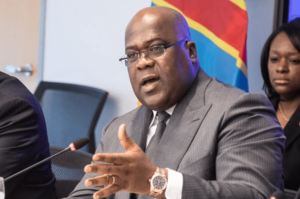
President Félix-Antoine Tshisekedi Tshilombo described the census as a turning point for governance, emphasizing that reliable data is essential for responding to citizens’ needs. Without it, he warned, decision-making risks being disconnected from reality.
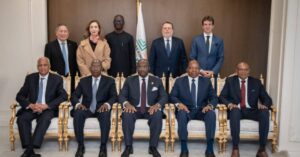
Development partners including the World Bank, International Monetary Fund, and United Nations have also pledged support, while the Congolese government has committed $30 million from its own budget. Côte d’Ivoire announced assistance with data collection tools and technical expertise, highlighting growing regional cooperation.
Beyond policy circles, the census is expected to create temporary employment for thousands of enumerators and field workers, injecting income into local economies. Civil society groups are also preparing to support awareness campaigns to ensure participation across diverse communities.
As preparations move forward, many see the exercise as a chance for the country to reset how it plans its future, grounded not in estimates, but in the lived realities of its people.