
Somalia’s Fragile Currency System and the Tussle to Sustain Daily Trade with Stitched-Banknotes
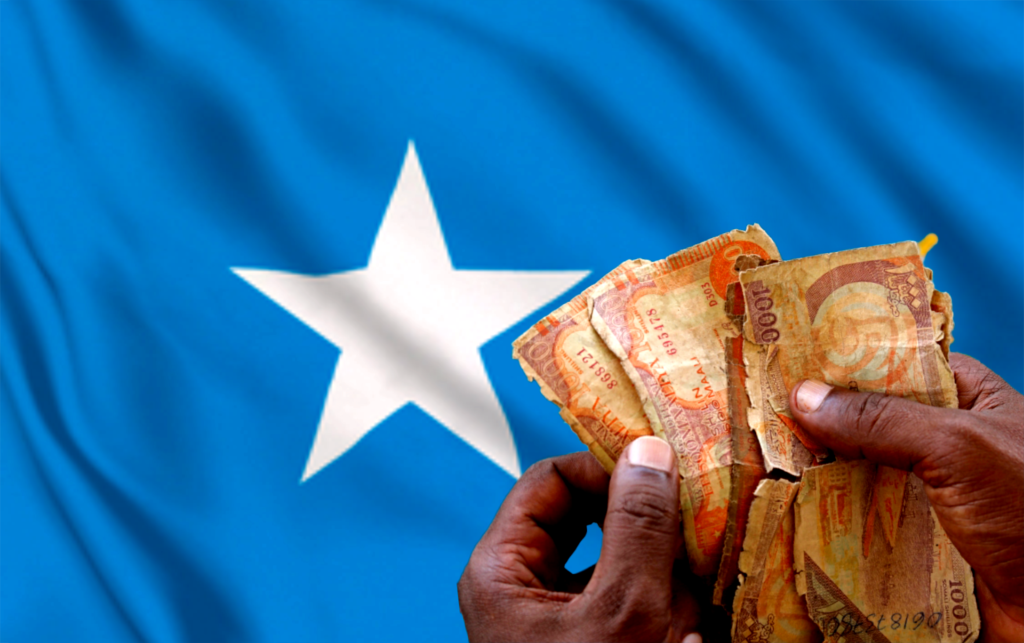
More than three decades after civil war dismantled Somalia’s central institutions, the country continues to operate under one of the world’s most unusual monetary systems that is built on worn-out banknotes, widespread counterfeiting and an uneasy reliance on foreign currency and digital finance.
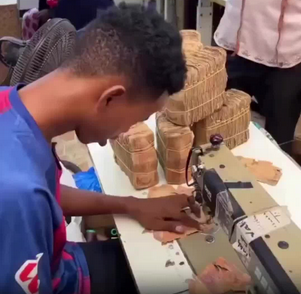
When the government of Siad Barre collapsed in 1991, it took with it the central bank and the authority to issue legal tender. Since then, Somalia has not printed new official banknotes. What remains in circulation today are decades-old Somali shillings of which many are torn, faded and patched together by hand. In markets across the country, it is not uncommon to see notes stitched by tailors or taped back into shape. It is a striking symbol of a system held together by necessity, rather than a working systemic-structure. Thus, revamping currency without control.
The absence of a functioning central monetary authority, created a vacuum quickly filled by unofficial actors. Over time, warlords, traders and private entities began producing their own versions of the Somali shilling. Today, estimates suggest that more than 98 percent of the currency in circulation, may be counterfeit or informally printed. This flood of unregulated money, has eroded trust in the local currency and fueled inflation, leaving the Somali shilling with very limited purchasing power. In many transactions, especially larger ones, bundles of cash are required. Sometimes, these cash-bundles are carried in bags or wheelbarrows, adding both logistical and security challenges to everyday commerce. Consequently, the introduction of dollarization and the rise of mobile money.
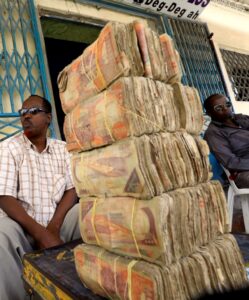
In response to the instability of the shilling, Somalia’s economy has gradually shifted toward the use of US dollars and mobile money platforms. From urban centers to rural communities, digital payments have become a backbone of daily transactions, allowing businesses and individuals to bypass the uncertainties of physical cash. This transition has helped stabilize parts of the economy, enabling trade and financial activities to continue despite the absence of a reliable national currency. Conversely, it has also extended the gap between social-class in the society. Those without access to mobile technology or foreign currency, are often the most vulnerable populations, who remain dependent on the fragile and informal stitched-together shillings trend. The human and social strain are highly inevitable.
The currency crisis carries a profound human cost, apart from its economic structure. The need to physically repair money, replicates resourcefulness though, but also the usher-in a daily strain faced by citizens who are navigating a system that offers little formal protection or stability. Trust, a cornerstone of any financial system, is instead maintained through informal networks and community norms here. Socially, the divide between those operating in dollar-based or digital systems and those reliant on degraded local currency is widening. Access to modern financial tools, increasingly determines economic opportunity, reinforcing existing disparities.
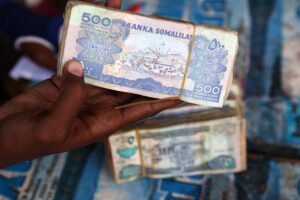
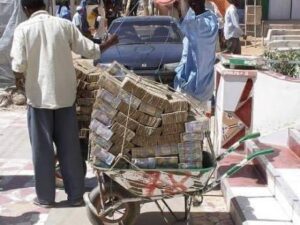
In considering the political and institutional challenges; efforts to restore a functioning monetary system have been ongoing but uneven. Weak governance structures and limited capacity to enforce regulation, have complicated attempts to curb counterfeiting, or reintroduce a credible national currency. Plans to print new Somali banknotes have been discussed repeatedly, yet concerns over implementation and trust remain significant hurdles.
Rebuilding a central bank that is capable of managing currency issuance, controlling inflation and restoring confidence, is as much a political challenge as it is a financial one. It requires technical reforms, sustained stability and institutional legitimacy. So, the Somalia economy could be seen as an adaptational economy.
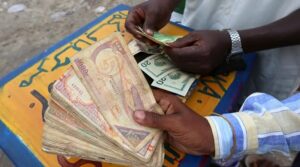
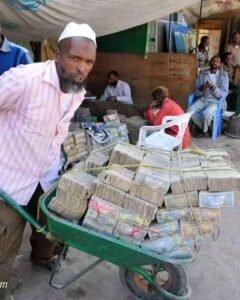
Despite these challenges, Somalia’s economy has demonstrated a remarkable ability to adapt. Informal systems, digital innovation and community flexibility, have allowed transactions to continue where formal mechanisms failed. Nonetheless, the long-term implications are complex. Without a stable national currency, economic planning remains difficult, foreign investments will take cautious grounds and social-inequality will persist. The push to reintroduce officially printed banknotes, which is more than 35 years after the system collapsed, shows both a recognition of these challenges and a tentative step toward rebuilding financial sovereignty.
In the meantime, Somalia’s stitched-banknotes remain a powerful metaphor of a nation piecing together functionality in the absence of formal structure, sustaining economic life through ingenuity, while facing the enduring consequences of institutional collapse.