
Africa: Women Who Are Leadership-Maestros in Government, Politics, Society, Business, NGOs, Faithbased Institutions, etc.
EANDEL Magazine has grown into a trusted digital platform chronicling Africa’s evolving economic and social story. With wide-ranging coverage that spans governance, business, investment, education, culture, technology, agriculture, creative industries, tourism, faithbased institutions and the organized private sector, the magazine serves as a profiling and promotional voice for Expanding Africa Nations Developmental Economic Leverages and its growing connections to the global economy.
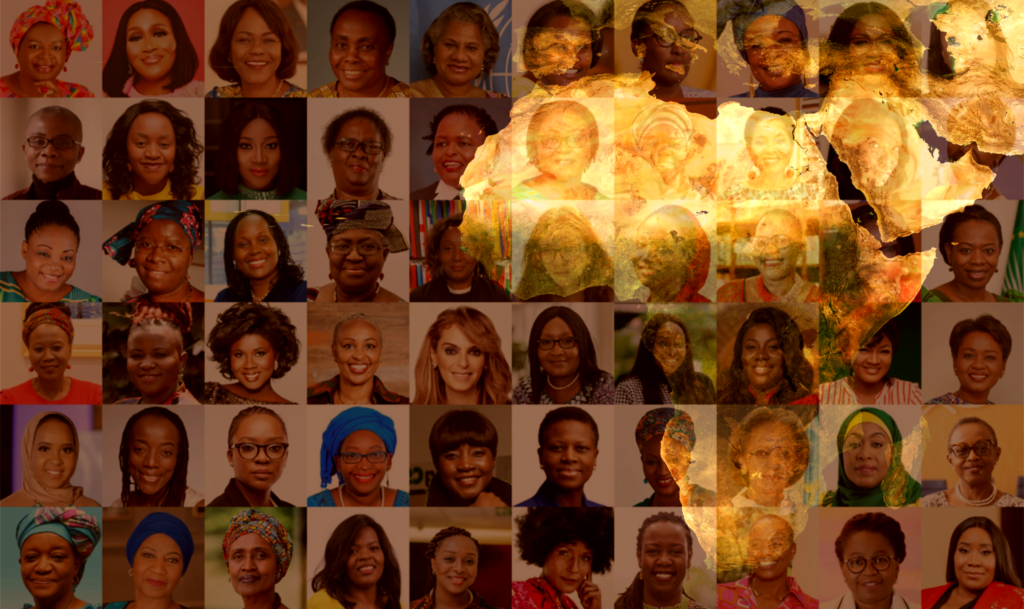
As Africa steps out of year-2025, EANDEL ushers-in the year with a continent-wide celebration of women in leadership as working mothers, professionals, entrepreneurs, public servants, creatives and advocates whose influence cuts across government, politics, socioactivism, the private sector, faithbased institutions and humanitarian services. This special feature highlights a defining shift, noting that African women are no longer emerging as leaders on the margins, they are central architects of the continent’s present and future. A new leadership era has come to take shape in the African map.
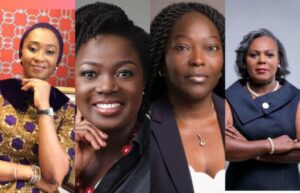
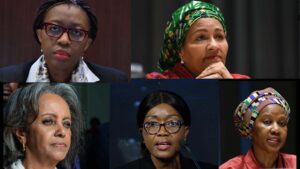
Across Africa, a new generation of female leaders is reshaping the boardrooms, public institutions, communities, corporate ecosystem, tech-world, media spectrum, informal sector, family life, etc. From billion-dollars corporate decisions to national policy formulation, women are increasingly occupying spaces once dominated by men. In doing so, they are challenging inherited norms, redefining leadership styles, rewriting cultural expectations molding directives on/about power and gender.
This transformation spans governments, political systems, civil services, financial institutions, telecommunications, energy, agriculture, technology, media, healthcare, education, faithbased organizations, tech, informal sector, SMEs, aviation, maritime, etc. It is visible in titles, appointments and also in how leadership is practiced. They display a more collaborative, socially responsive and community-anchored form of leadership with high colouration of consideration-virtue.
 Even in the midst of sociocultural and sociocorporate challenges, like cultural bias, structural inequality and unequal access to opportunities, the steady rise of women in leadership marks one of the most significant socioeconomic shifts on the continent of Africa, in recent decades. These leaderships trend is beyond titles, and it is exclusive of bragging sentiments of individual personal-growth-journeys, even in social context.
Behind the public success of Africa’s women leaders are profound personal stories. Many followed long educational paths across continents, built careers step by step and maintained disciplined lifestyles that are shaped by behavioural-elasticity and self-belief. Family support often played a decisive role, such as parents who insisted on academic excellence, challenged traditional gender expectations; and extended families that enabled women to pursue demanding careers.
At the same time, many women leaders continue to shoulder disproportionate responsibilities at home. Balancing executive roles with marital responsibilities/family life, remains a defining challenge, one that male counterparts rarely face in the same way. Yet, these experiences have shaped leadership priorities. On the hand, the sentiment of deep considerational-virtue, feature women in senior positions who frequently advocate for flexible work arrangements, parental leave policies, mentoring structures and inclusive corporate cultures that issues support-structures for the next generation to lean on. This blending of professional authority and the daily lived-experience, is gradually softening rigid corporate hierarchies and eroding long-standing patriarchal norms within African institutions. Introducing cultural shifts of balance to the power of visibility.
Public admiration for successful women often coexists with lingering expectations around marriage, motherhood and domestic roles. Female leaders still face scrutiny over personal choices, communication styles, assertiveness and so on. Though, these questions are rarely directed at men. Nonetheless, change is accelerating.
Regarding young women who are entering the marketplace-workforce today, seeing leaders who are in c-suites, parliaments, universities’ boards, as directors of creative sector and in faithbased institutions, has a positive powerful psychological effect on them. This is visibility, is reshaping what is considered impossible, by expanding a bio-believe system in the girl-child across Africa. Connoting that it is possible to attain putting-on leadership shoes, with diligence, high ability of consideration-virtue and hard work.
Conversely, leadership as a growth engine, must also be weighed on the balance of economic impact, with female at the forefront. The rise of women in leadership is not only a social milestone, it is also an economic advantage. Research consistently shows that gender-diverse leadership correlates with stronger financial performance, better risk management and higher levels of innovation. These outcomes are especially valuable in Africa’s dynamic and sometimes volatile markets.
As women rise through corporate and institutional ranks, their influence increasingly extends into public policy, civic discourse and social reform. Many serve on advisory councils, mentor young professionals, support nonprofit initiatives; advocate for financial inclusion, education, digital access, healthcare and women’s rights. Leadership in the private sector is thus translating into broader societal impact.
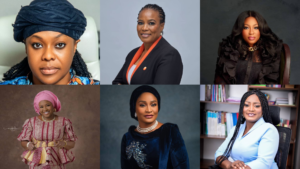
Africa’s gender leadership-maestros, a continental mosaic of paradigm shift in diverse leadership status. While no single ranking captures the full spectrum of influence, numerous platforms and industry observers have highlighted women whose work is shaping Africa’s trajectory. They represent diverse sectors and regions, yet share a common thread of excellence, suppleness and community engagement.
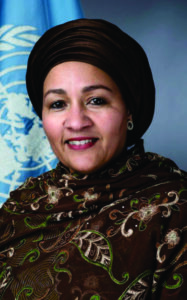
These qualitative leaders play role in telecommunications, finance, governance, academia, the arts, agriculture, technology, manufacturing, healthcare, creative industries, among many other sectors. Some panoramic name profiling showcases the following:
- Patricia Obo-Nai (Vodafone Ghana),
- Bolaji Agbede (Access Holdings),
- Abena Amoah – CEO, Ghana Stock Exchange,
- Abena Biney – Partner Deloitte Ghana,
- Abena Brigidi – CEO of Nimed Capital,
- Abena Osei Asare – Minister of State of Ministry of Finance,
- Abena Osei-Poku – CEO of Ecobank Ghana,
- Abiola Bawuah – Regional CEO of UBA,
- Jewel Howard-Taylor – Former Liberian Vice President,
- Bineta Diop (African Union Special Envoy for Women, Peace and Security)
- Ameenah Gurib-Fakim (Former President of Mauritius)
- Cesária Évora (Cabo Verde’s global music icon)
- Adoma Owusu – General Manager (Fintech Business Development) of MTN Group,
- Ama Sarpong Bawuah – Board Chair of Access Bank Ghana,
- Amma Frimpomaa Dwumah – MD of SIC Life Savings & Loans,
- Aretha Duku – MD of Ghana Union Assurance Company,
- Ayesha Bedwei Ibe – Global People Leader of Tax & Legal Services of PWC,
- Dr. Romelle A. Horton – First Female President of Cuttington University in Liberia,
- Belinda Boamah – Executive Director – Strategy & Growth of UMB Bank,
- Boatemaa Barfour-Awuah – CEO of Star Assurance,
- Charlotte Forson-Abbey – Partner of Deloitte Ghana,
- Christabel Okantey – VP, Pensions, Institutional & Private Clients, InvestCorp,
- Angélique Kidjo – performing artiste/multiple Grammy Award winner,
- Dédé Rose Gamélé Creppy – textile industry icon
- Aya Gertrude Konan – Cote d’Ivoire’s pioneering female commercial pilot,
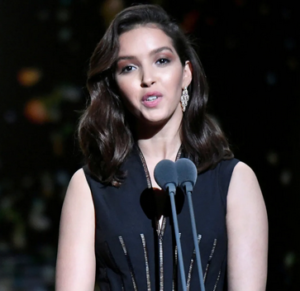
- Fatoumata Bâ – VC & Founder of Janngo Capital,
- Clara Amarteifio-Taylor – Partner of PWC Ghana,
- Dzifa Alba Cofie – CFO of Bayport Savings and Loans,
- Elizabeth Wyns-Dogbe – MD of Pelmax Insurance Brokers and Consultants,
- Ellen Ohene-Afoakwa – Managing Principal of ABSA Bank Ghana,
- Elsie Addo Awadzi – 2nd Deputy Governor of Bank of Ghana,
- Liberia’s Hon. Dewey Grayetc – Deputy Minister of Foreign Affairs,
- Fatima al-Fihri, founder of the world’s first university (Morocco),
- Zaynab al-Nafzawiyyah, Queen of the Almoravid Amazigh Empire (Morocco),
- Fatima Mernissi, renowned sociologist and founder of Islamic feminism (Morocco),
- Merieme Chadid, astronomer who planted the first Arab flag in Antarctica (Morocco),
- Victoire Tomégah-Dogbé – Former Prime Minister of Togo,
- Sandra Ablamba Johnson – the Togo Minister Secretary General of the Presidency,
- Rose Mivedor/Myriam Dossou-d’Almeida the Togo Ministers of Trade and Grassroots Development,
- Abira Bonfoh – Togo MP; Aissatou Diallo – Director of Communications and Marketing at Togocom,
- Estelle Komlan- Director of the Trading Room at Groupe Orabank,
- Fatim Cissé – Director General of IHS Towers in Côte d’Ivoire,
- Kadi Fadika – CEO and partner at Hudson & Cie, a financial company supporting women-owned small businesses,
- Ngozi Okonjo-Iweala (Nigeria): A globally recognized finance expert, she made history as the first woman and first African to serve as the Director-General of the World Trade Organisation (WTO).
- Omobola Johnson (Nigeria): The former Country Managing Director for Accenture, she is now a partner at TLCOM Capital, an experienced-based venture capital firm focused on technology and innovation.
- Touria Chaoui, fearless pilot and national hero (Morocco),
- Aida Diarra (Mali): A senior executive with over 25 years of experience in financial services, she currently serves as the Senior Vice President and Head of Sub-Saharan Africa at Visa.
- Aicha Chenna, “The Moroccan Mother Teresa” (Morocco),
- Nawal El Moutawakel, first Arab woman to win an Olympic gold medal (Morocco),
- Mo Abudu (Nigeria): The founder and CEO of EbonyLife Media, she has been instrumental in reshaping African narratives through film and television and was named one of TIME Magazine’s “100 Most Influential People” in 2025.
- Salima Amira, first General Manager of Microsoft (Morocco),
- Leila Slimani, distinguished author(Morocco),
- Folorunso Alakija (Nigeria): A prominent businesswoman who has been ranked by Forbes as one of the world’s most powerful women and, as of 2021, the richest woman in Africa, primarily through her work in the oil sector.
- Rita Maria Zniber – Chairman & CEO of Diana Holding in Morocco; President/Administrator of numerous boards of directors (Morocco); and Winner of the European Women’s International Leadership Award (EWILA),
- Nezha Hayat was the CEO of Morocco’s Capital Market Authority (Morocco)
- Mariam Kane-Garcia – Managing Director and CEO of TotalEnergies South Africa and Executive Vice President for Marketing and Services in Southern Africa,
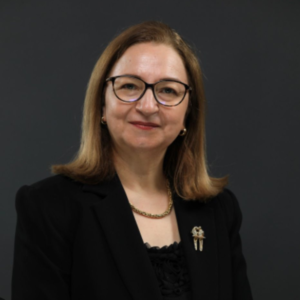
- Audrey Ehouman – Expert in technology strategy and digital transformation,
- Edith Kouassi – CEO of EcoPlast Innov, a recycling company,
- Salimata Toh – CEO of Agribana, which transforms banana tree trunks into biodegradable bags,
- Lea Karine Jehin – Known for commitment to ecological responsibility and green initiatives,
- Christiane Ohin-Traore – Advocate for gender diversity and inclusion,
- Banassa Kone – Education entrepreneur focused on developing African talent,
- Ahoua Touré – Founder of Maison Manjou, a gastronomic company,
- Soraya Mouloudji – Minster of the Ministry of National Solidarity Family and Women’s Affairs (Algeria),
- Houria Meddahi Minster of the Ministry of Tourism and Handicrafts (Algeria),
- Selma Bakhta Mansouri, Secretary of State for African Affairs (Algeria),
- Karima Tafer, Secretary of State for Mines (Algeria),
- Kaoutar Krikou – Environment and Quality of Life (Algeria),
- Nadjiba Djilali – Head, Relations with Parliament (Algeria),
- Amel Abdellatif – Minister of Internal Trade and Market Regulation (Algeria),
- Malika Bendouda – Minister of Culture and Arts (Algeria),
- Nassima Arhab – Minister of Vocational Training and Education (Algeria),
- Josiane Kwenda – Leads investment and advisory strategies for sustainable development and access to finance,
- Aya Gertrude Konan – Côte d’Ivoire’s first female commercial pilot,
- Olivia Yacé – Miss Universe 2021 second runner-up,
- Siny Samba -Founder of Le Lionceau, a social enterprise that produces nutritious, locally sourced baby food to combat malnutrition and support local farmers.
- Safiya Wane Ndour – Country Manager for A-Z Petroleum and the founder of her own consulting firm, Equinoxe Consulting, focused on the development of Senegal’s natural resources.
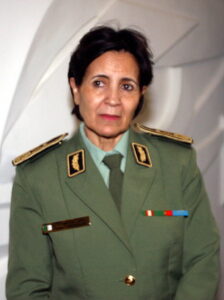
- Aissa Dione- An acclaimed textile designer and entrepreneur who has dedicated her career to reviving the country’s textile industry and producing fabrics for world-leading interior design brands.
- Victorine Sarr Awuah – Founder of Lyvv Cosmetics, a natural cosmetics brand for women of color, recognized for her business acumen and mentorship of young entrepreneurs.
- Salamba Diene – Founder of BIOSENE SARL, a business processing agri-food and cosmetic products, collaborating with groups of women producers across Africa.
- Nogaye Ndiaye Mourgaye – A leading entrepreneur in the beauty industry, heading Ongle Mania and the Fantaisika training academy, which professionalizes makeup and nail styling services.
- Seynabou Thiam – The entrepreneur behind Kepaarel, a cafe and co-working space in Dakar, who also advocates for increased support for female business owners in Senegal’s start-up scene,
- Amira Zaouak – An active researcher with numerous publications in peer-reviewed journals, she focuses on areas such as wastewater treatment and environmental challenges through radiation technologies (Tunisia),
- Douja Gharbi – With more than 20 years of entrepreneurial experience across various sectors, including industry, services, and commerce, she leads initiatives related to corporate social responsibility and employment projects (Tunisia),
- Fatma Ben Soltane – With an experience in fashion design, she has created a brand focused on empowering women through stylish, comfortable, and eco-friendly activewear (Tunisia),
- Imen Enneifar – With her 15+ years of cross-border expertise in law and multilingual mastery, she is creating a connection between Tunisia and global investors, and contributing to make Tunisia a hub for foreign investment (Tunisia),
- Imen Gharbi – For over 15 years, She has been working with both local and international brands, developing expertise in creative strategy, storytelling, and branding, also specializes in digital marketing (Tunisia),
- Ines Nasri – With a background in business development and social impact, she has worked in fostering a supportive ecosystem for startups, helping them access resources, training, and networking opportunities (Tunisia),
- Lamia Chaffai – An engineer, politician, and social entrepreneur with over 25 years of experience in technology, governance, and youth empowerment, she’s responsible for overseeing IT, Internet, and free software initiatives (Tunisia),
- Lamia Fourati – She is responsible for driving the strategic direction of the company, overseeing its growth initiatives, and ensuring that the business remains aligned with industry trends and technological advancements (Tunisia),
- Mayssa Rkhami – A seasoned professional in the advertising and media production industry, she oversees the agency’s operations, focusing on delivering innovative advertising solutions across various platforms (Tunisia),
- Wafa Makhlouf – With a background in both business and social development, involved in various initiatives related to youth and women’s empowerment, focusing on creating opportunities in the business world (Tunisia),
- Penda Mbow – A respected historian, academic, and activist who has held significant public roles, including a ministerial position, and is known for her advocacy.
- Marème Faye Sall – As the first First Lady of Senegalese birth and ancestry, she has been a symbol of potential change in the national conversation about women and power.
- Bineta Diop – A prominent figure on the continental stage, she serves as the African Union’s Special Envoy for Women, Peace and Security, working to advance gender equality across Africa.
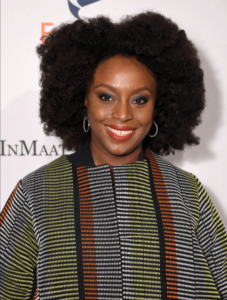
- Mata Sy Diallo – A notable 20th-century politician who contributed to the early political landscape of Senegalese women.
- Oumou Sy – An internationally recognized fashion stylist and designer known for her significant impact on the Senegalese fashion scene.
- Seni Awa Camara – A highly regarded sculptor and artist whose work has been exhibited globally.
- Younousse Seye – A pioneer in the arts, known for her contributions as an artist and potentially as one of the first female African filmmakers.
- Pélagie Gbaguidi – An influential artist whose work contributes to the broader African art scene.
- Adiouza Diallo – A popular musician known for blending traditional Senegalese sounds with contemporary styles, using her platform to promote themes of empowerment.
- Shaykha Maryam Niasse – Known for founding a famous Quran school in Dakar in the 1950s that educated thousands of students from across West Africa and the Arab world.
- Aminata Thiam – A beatmaker who is breaking barriers in the male-dominated music production industry by teaching beatmaking to other women in Dakar.
- Maïmouna Fall – An actress and ambassador known for her strong commitment to education and social causes, leveraging her influence for youth empowerment initiatives.
- Ameenah Gurib-Fakim – A renowned biodiversity scientist and the first female President of Mauritius (2015-2018). She has received numerous international accolades, including the L’Oréal-UNESCO Prize for Women in Science, and has been listed among Forbes’ 100 Most Powerful Women in the World,
- Asma Khalifa – co-founder of the Tamazight Women’s Movement and a women’s rights activist, she received the Luxembourg Peace Prize in 2016 as the year’s Outstanding Youth Peacemaker. In 2017, Asma was named as one of the “100 most influential young Africans” by the Africa Youth Awards, working in women’s rights issues since 2011 when she became involved in youth work. While she has worked on peacemaking in Libya, Syria, and Yemen, her work in Libya has included improving women’s participation in local government and fighting against gender-based violence (Libya).
- Hala Bughaighis – co-founder of the Jusoor Center for Studies and Development, the first Libyan think tank that focuses on economic development with a special focus on women issues. As a Libyan lawyer and activist, Hala is a frequent speaker in local and international conferences related to economic development, gender, and youth empowerment. Additionally, she has worked as a mentor and champion for UN Women’s “Empower Women Global Program.” (Libya)
- Hajer Sharief – a Libyan human rights activist and graduate of Tripoli Law School, she was nominated for the Nobel Peace Prize in 2019 due to her activism in peacebuilding. Hajer is the founder of Together We Build It, a non-profit organization that advocates for women’s political participation and economic empowerment, raising awareness of gender discrimination, improving human rights, and capacity building for women and youth in Libya. Notably, she is a member of a UN advisory committee that monitors youth’s positive contribution to peace processes and conflict resolution. (Libya)
- Agnès Monique Ohsan Bellepeaub – She served as the first female Vice-President of Mauritius and twice as acting President.
- Mokshda Kistoe-West – The first Indo-Mauritian woman to become a Headmistress at Queen Elizabeth College and later served as the Registrar of the Mauritius Institute of Education.
-
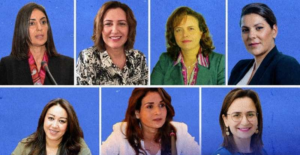
- Ananda Devi – An internationally acclaimed novelist and writer with around 30 published works. She has received several literary awards, including the Prix du Rayonnement de la langue et de la littérature française.
- Lindsey Collen – A prominent writer and activist who won the regional Commonwealth Writers’ Prize in 1994 and 2005 for her novels The Rape of Sita and Boy.
- Shenaz Patel – A journalist and writer known for her novel Le Silence des Chagos, which brought international attention to the plight of the Chagossian people. She won the Grand Literary Prize of the Indian and Pacific Ocean.
- Monique Dinan -A “quiet achiever” who has authored over 20 books on various social subjects and founded the association MAM (Mouvement d’Aide à la Maternité) to support young mothers.
- Cissé Cheikh Boide – Mauritania’s Ambassador to the US (Mauritania),
- Aziza Sidi Bouna – Mauritanian renewable energy engineer (Mauritania),
- Zeinabou Mint Abdel Jelil – the Chair of the National Youth Council, whose role is to ensure that young people’s voices are heard by the highest authorities and to participate in the design and implementation of youth strategies and programmes (Mauritania).
- Maty Mint Hamady – the first female mayor of Nouakchott, (Mauritania),
- Lemina Mint El Ghotob Ould Moma, Mauritanian Minister of Agriculture (Mauritania),
- Rahma Athie, Miss Mauritania (Mauritania),
- Zeinabou Maata, a Mourchida from Mauritania (Mauritania),
- Professor Aissata BA” is a name shared by several individuals, but the most prominent public figure is
- Aissata Ba Yahya – Mauritanian obstetrician-gynecologist and Director in National Hospital Mauritania (Mauritania),
- Christine Mukamugema – World Vision Mauritania Country Program Manager (Mauritania),
- Hamidou Diallo Manager Nouakchott AP Manager (Mauritania),
- Mama Barry – Female religious leader, parliamentary leader (Mauritania),
- Noura Mint Saleck – WV Mauritania (Mauritania),
- Priya Hein – A successful children’s book author with stories published in multiple languages, focusing on themes like respect.
- Marie-Thérèse Humbert – A notable writer whose works contribute significantly to Mauritian literature.
- Shamima Patel-Teeluck – Founder and president of the NGO Breast Cancer Care (BCC), a survivor who tirelessly works to raise awareness and provide support to other women affected by cancer.
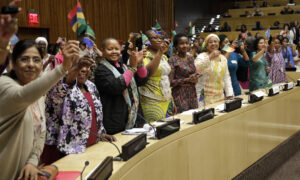
- Rani Balloo – President of the association Diabetes Safeguard and the Diabetes Parents Support Group, working for the fight against diabetes, hypertension, and obesity.
- Norina Sookmoulla – A pharmacist, a role model for women, and director of Noripharm and Noor Pharma, recognized for her dedication in the healthcare field.
- Helene Echevin – A key figure in healthcare management and leadership, known for enhancing medical services and patient care in the region.
- Cindy Choong – A leader in the finance industry with over two decades of experience driving strategic growth and financial innovation.
- Manisha Dookhony – An advisor to business and government leaders on greenfield investment, business development, and strategic planning.
- Natacha Emilien – Specializes in digital transformation, business strategy, and operational excellence, leading data-driven initiatives.
- Varuna Bangaleea – An experienced professional in the IT industry, leading high-performing teams to deliver transformative solutions.
- Madvee Muthu – Founder and Managing Director of T.I.A. Bee Products Ltd, a finalist in the Women in Africa (WIA) awards for her work in agriculture and agri-food.
- Sarah Rawat Currimjee – Chairperson of the Mauritius Sports Council (MSC) and Director at Mauritius Multisports Infrastructure Limited (MMIL), contributing to the development of sports in Mauritius.
- Dalia Elbaz – She has demonstrated exceptional leadership skills, a strategic outlook, and a successful track record of improving operations and optimizing banking processes using digital methods (Egypt).
- Dina Adel – Possessing a proven track record in the accounting and tax sector, she proficient in tax accounting, management, financial accounting, business analysis, M&A, as well as effective (Egypt). communication and collaboration
- Iman Eldeeb – An Egyptian fashion entrepreneur is dedicated to devising adaptable strategies and frameworks that facilitate the agency’s growth, all while prioritizing the comprehensive development of the models (Egypt).
- Mirna Arif – She has 20 years of experience with multinational corporations and the public sector, specializing in account management, business planning, sales management, forecasting, and sales operations (Egypt).
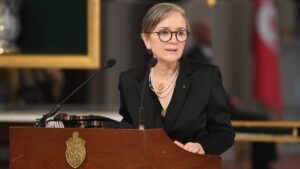
- Jane Constance – Winner of The Voice Kids in France (2015) and a UNESCO Artist for Peace, celebrated for her vocal talent and contributions to music.
- Cesária Évora: Known globally as the “Barefoot Diva”, she was a Grammy-winning singer who popularized the traditional morna music of Cabo Verde worldwide.
- Mayra Andrade: A contemporary singer-songwriter who blends traditional and modern styles, achieving international recognition.
- Orlanda Amarílis: A pioneering writer, she was the first Cape Verdean woman to publish a book-length work of fiction, with stories often exploring themes of diaspora.
- Bela Duarte: A prominent artist known for her contributions to the visual arts scene.
- Ana Firmino: A renowned singer who has contributed significantly to the country’s musical heritage.
- Dona Tututa: A celebrated composer and pianist.
- Suzanna Lubrano: A popular zouk singer with a significant following.
- Vera Duarte: A distinguished human rights activist, judge, poet, and politician who became the first female judge in Cabo Verde and a Commissioner on the African Commission on Human and Peoples’ Rights.
- Nermeen Bedeir – With twenty years of experience in the MEA market, she is effectively driving business outcomes and utilizing exceptional consumer insights and market knowledge to support the growth of local, regional, and global clients (Egypt).
- Neveen Hashem – She possesses extensive experience as a psychotherapist and has worked closely with individuals; also she has developed expertise in problem-solving, communication, and relationship management (Egypt).
- Pakinam Kafafi – With over 25 years of experience, her leadership capabilities, persuasive skills, and energy sector expertise drive the group’s targets and profit growth despite economic challenges (Egypt).
- Rasha El Sakka – With a focus on corporate law and a wealth of experience in legal practice, she has successfully guided her firm through a merger, fostering both growth and innovation (Egypt).
- Sandra Fahmy – Committed to understanding individual aspirations while cultivating strong client connections, she demonstrates a deep passion for helping both people and organizations succeed in the digital era (Egypt).
- Yasmin A. Farid – With over 20 of experience in the banking sector, she has occupied leadership positions across multiple business lines, focusing on corporate strategy, project management, and corporate transformation in the realm of wholesale banking (Egypt).
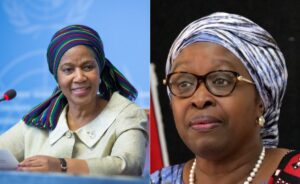
- Maria Cristina Fontes Lima: A high-ranking politician who has held several ministerial positions, including Minister of State Reform and National Defense.
- Cristina Duarte: An accomplished economist and politician, she served as the Minister of Finance.
- Fátima Veiga: A diplomat and politician who became Cabo Verde’s first female Foreign Minister and later served as ambassador to the United States and the United Nations.
- Isaura Gomes: Isaura “Zau” Gomes made history as the nation’s first female mayor, elected twice for the island of São Vicente.
- Janira Hopffer Almada: A prominent politician who served as Minister of the Presidency of the Council of Ministers and Parliamentary Affairs and aimed to become the first female Prime Minister.
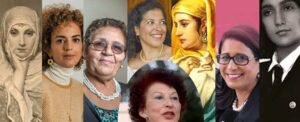
- Paula Fortes: An important figure in the independence movement, a co-founder of the Organization of Cabo Verdean Women (OMCW), and an activist for women’s rights.
- Amélia Araújo: A key voice of Radio Liberation during the independence struggle, involved in locution, writing, and editing programs to denounce Portuguese colonialism.
- Iolanda Semedo: An entrepreneur who owns a full-service salon and provides professional training to young women, contributing to community employment.
- Elaine Da Graça: The founder of Scientia, Ltd, a marketing and digital marketing solutions company focused on empowering women entrepreneurs.
- Neusa Silva: Awarded “Woman Entrepreneur of the Year”, she is a successful business owner who advises on the importance of persistence and perseverance in business.
- Débora Katisa Carvalho: The First Lady of Cabo Verde and an Ambassador for the Merck Foundation’s “More Than a Mother” initiative, she actively promotes healthcare capacity building and investment opportunities.
- Iva Brito: A poet and visual artist based in the U.S. who brings creative talents to scholarly work and is involved with the Women Warriors Project.
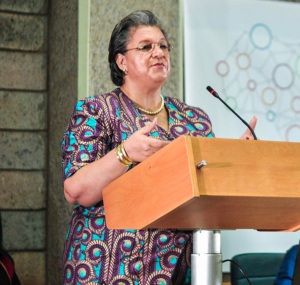
Alongside these icons are entrepreneurs, educators, scientists, artists, activists, faithbased leaders and innovators from across Africa and beyond; women who have shaped industries, preserved culture, expanded opportunity, influenced policies at national and continental levels.
The influence of these women extends well beyond their organizations. They are symbols of possibility in societies grappling with gender inequality, youth unemployment and uneven access to education. Their success encourages investment in girls’ education, challenges discriminatory hiring practices, and inspires new generations of entrepreneurs/civic leaders.
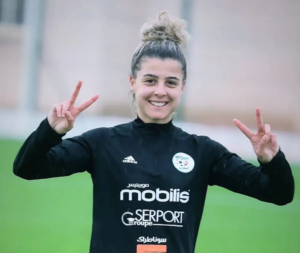
What defines this moment is not simply the number of women in leadership roles, but their collective impact on culture, policy, family expectations and economic outcomes. Leadership is increasingly being defined not by gender, but by competence, vision, empathy, integrity; this is the future shaped by women who lead in Africa.
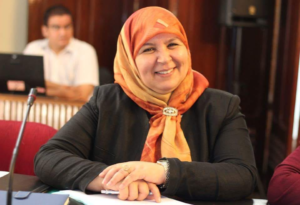
As Africa expands its economic footprint and global relevance, no doubt the contributions of women leaders will shape the continent’s competitive edge and social fabric. They stand as a powerful counter-narrative to outdated stereotypes, because we see today’s African women leading multinational expansions, negotiating complex energy and trade deals; driving digital transformation, influencing cultural discourse; and guiding communities through faith, creativity, and service.
Their stories are rooted in resilience and vision. More than individual achievements, they are signposts pointing toward an Africa where leadership is inclusive, opportunity is shared, and the next generation inherits a continent transformed by women who dared to step forward and lead.