
Africa’s Public Finances in Crisis, Governments Misplacement and Citizens Shoulder the Burden
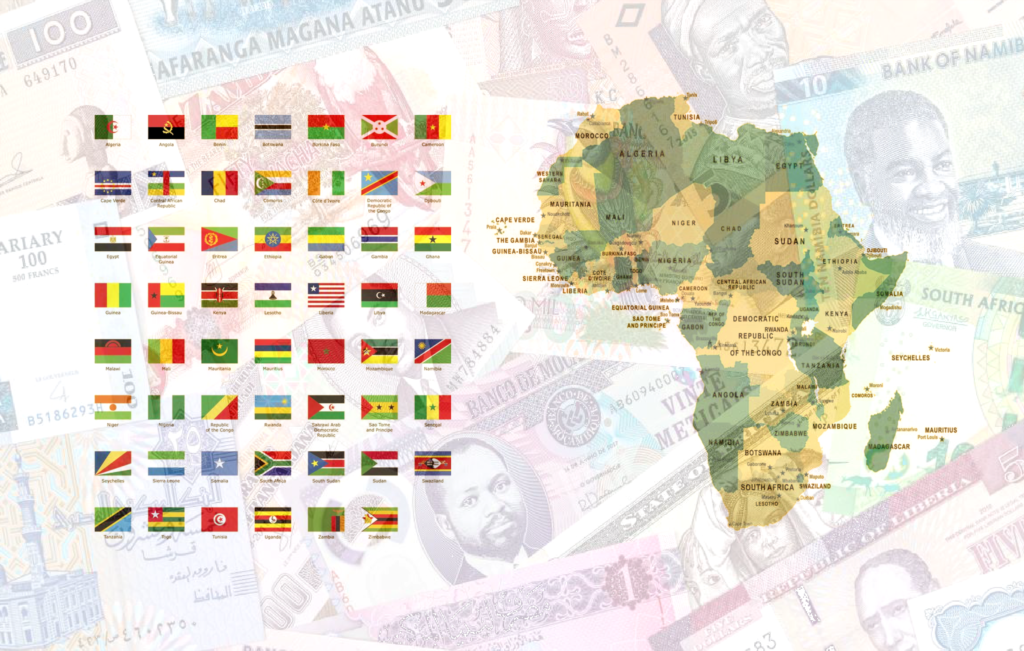
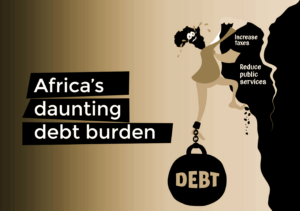
As Africa entered 2026, the continent started facing an expanding public finance crisis that is reshaping daily life from household kitchens to cabinet offices. Total public debt has climbed to an estimated $1.8 trillion, roughly two-thirds of Africa’s combined GDP, tightening fiscal space and forcing governments into painful trade-offs. Driven by high global interest rates, currency depreciation and heavy pandemic-era borrowing, debt servicing has become one of the fastest-growing budget lines across the continent. In 2024 alone, African countries spent more than $70 billion repaying creditors. According to the International Monetary Fund, 20 countries in sub-Saharan Africa are either in debt distress or at high risk of it. The classification shows difficulty in meeting debt obligations without restructuring or external support, and often precedes austerity measures at home.
Across Africa, the evidence is visible in everyday life, with the cratered road that damages your car’s suspension, the clinic without antibiotics, the public school with broken desks and unpaid teachers, etc. Public finance may sound technical, but it is severely personal. It determines whether electricity stays on, whether water runs, or whether young people find opportunities back home or look to migrate abroad.
In a new publication, a Kenyan tax scholar draws from her work across 32 countries to argue that Africa’s fiscal challenges are simply not about economics alone. They are about law, power and who gets to decide how public money is raised and spent. She describes public finance as the architecture of everyday life, away from the treasury walls. In decades, journals on public finance have largely been written in Europe and North America, reflecting systems designed there. African countries, have often been treated as case studies rather than authors of their own fiscal frameworks.
This fiscal framework is experiencing a squeeze that is felt not in bond markets or financial institutions, but at grocery stalls, open general market places, over rental payments, school gates, public transportation, SMEs, the organised private sector, etc., in most African cities. Inflation and currency weakness have eroded purchasing power, while new taxes and subsidy removals have pushed up transport, fuel and food prices. Governments that are facing revenue shortfalls, have widened tax nets. Nigeria, Kenya and South Africa, for example, introduced new tax laws and raised their VAT in 2025, with further adjustments under discussion for 2026. Across the continent, new levies on digital services, telecoms and consumer goods are becoming common. As for families with low/middle-income status, the cumulative impact is sharp. Parents report cutting back expenditure, delaying medical visits and moving children from private to public schools as fees rise and incomes stagnate. In countries where public sector wages have declined in real terms, teachers, nurses and civil servants say their salaries no longer cover monthly essentials.

Her new book titled “Governing Public Money: Law, Policies and Political Economy”, challenges this imbalance. It traces how revenue policy affects debt sustainability, how debt limits social spending and how budgeting shapes what devolved governments can realistically deliver. It also examines how regional integration, international treaties, technology and corruption intersect. “No fiscal problem exists in isolation”, she argues. “If you change tax policy, you change borrowing needs. If debt repayments rise, health and education budgets shrink. If corruption flourishes, the entire system loses legitimacy”.
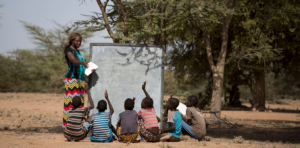
The human consequences are immediate. Underfunded infrastructure means a socioeconomic/sociocultural pressure on the common man. Weak tax systems, push governments toward borrowing, increasing the burden on future generations. Poor financial oversight, allows money meant for social welfare to leak away before it reaches communities. Debt servicing is crowding out development spending. Thirty-two African countries now spend more on debt repayment than on healthcare. Infrastructure projects have slowed down; education budgets have tightened. Health underfunded systems risk reversing gains made in maternal health and infectious disease control. Education advocates say overcrowded classrooms and delayed teacher payments could widen inequality between urban and rural communities. So, the long-term social implications are surmountingly significant. Youth unemployment are already high in many regions, and could worsen if public investment in job creation and skills training falters. Indicating that a generation entering the labour-market during fiscal retrenchment, may face diminished prospects, which is increasing the risk of migration pressures and social unrest.
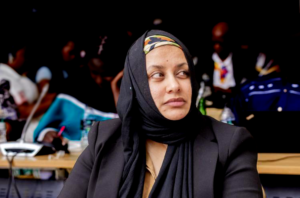

So, law has to be the foundation of fiscal power. Public finance is created by law. Constitutions and statutes determine who can tax, who can borrow, who can spend and who can hold officials accountable. For example Kenya’s 2010 constitution, dedicates an entire chapter to public finance, embedding principles of equity, transparency and public participation. These provisions were hard-won political reforms, following years of centralised executive control. They created space for county governments and citizen oversight. Yet, caution voices-out that legal frameworks alone do not guarantee results. The gap between what constitutions promise and what citizens’ experience, is shaped by political economy, entrenched interests, elite capture and global pressures that narrow domestic policy space.
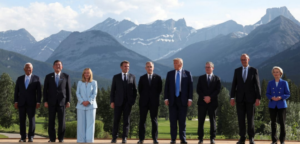
Micro-small-and-medium enterprises (MSMEs) often described as the backbone of African economies, are also absorbing the shock. Currency volatility raises the cost of imported inputs for them, while higher taxes and weaker consumer demand, puts burden on their margins. In manufacturing hubs and informal markets alike, business owners report scaling-down and back on expansion plans. Access to affordable credit remains limited, as governments compete with the private sector for domestic borrowing. Even the heavy autonomous borrowing has crowded-out private investment, slowing economic diversification. Meanwhile, foreign investors are watching our debt metrics closely. Sovereign credit-downgrades in several African countries, have raised borrowing costs further and created a feedback loop that complicates recovery efforts.
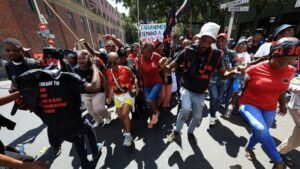
African systems, shaped by history, portrays that Africa’s fiscal vulnerabilities are rooted in colonial systems, which are designed for extraction. Culling on another Kenyan instance: in Kenya, the 1910 Native Hut and Poll Tax Ordinance, forced Africans into wage labour to meet tax obligations in colonial currency. The generated revenue, financed export infrastructure like the Uganda Railway, rather than local education or health. The structure endured. Indirect taxes fell hardest on African populations, while executive authorities remained concentrated and accountability limited. Independence brought sovereignty, but not a complete redesign of the global fiscal order.
Today, international tax treaties often allocate taxing rights in ways that favour wealthier capital-exporting nations. Multinational companies can derive profits from African markets with limited tax liability at source. Investment treaties expose governments to costly arbitration when they reform fiscal policy. Trade agreements restrict tariffs that could nurture domestic industries. And for more than six decades, cross-border tax rules were largely shaped within the Organisation for Economic Co-operation and Development (OECD), where most African states had no seat at the table.
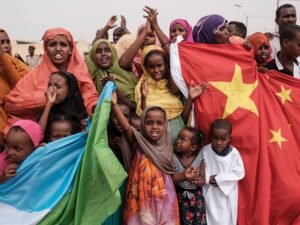
That balance is beginning to switch. In 2023, UN member states adopted a new framework from a convention on international tax cooperation, under the United Nations. The initiative, strongly backed by African countries, aims to establish binding rules on digital taxation, cross-border services and illicit financial flows, areas where voluntary standards have fallen short. Tactfully, the idea indicates a more assertive Africa, pressing for a rules-based system in which it participates as an equal. Ethically, it reflects growing confidence that fiscal sovereignty is inseparable from development. But lighting on the revenue gap at back home.
Fiscal tightening rarely unfolds quietly. Across parts of the continent, subsidy removals and tax hikes have sparked protests. Opposition parties framing this crisis as a governance issue, questioning transparency in past borrowing and public spending. Culturally, family frontline, which is a longstanding social-safety-net in many African societies, are under strained condition, as urban workers supporting relatives in rural areas, cry over being able to sustain financial-support back home. Community-based savings’ groups report rising defaults as members juggle rising living costs. Diplomatically, African leaders are pressing for reforms to the global financial architecture. The African Union has called for fairer lending terms and more accessible restructuring mechanisms, warning that the current system risks defaulting on development. Even then, some projections suggest that easing global interest rates and ongoing restructuring talks, could moderate debt service pressures in 2026. But the overall debt stock is expected to remain high and vulnerabilities would persist, particularly in countries reliant on commodity exports.
At the 2025 G20 meetings hosted by South Africa, policymakers emphasized homegrown solutions, from strengthening domestic revenue mobilization to accelerating regional trade integration, under frameworks like the African Continental Free Trade Area (AfCTFA). The goal is to reduce reliance on volatile external borrowing and build more sustainable economies.
Still, external reform alone will not solve the crisis. Africa’s average tax-to-GDP ratio remains below 16%, insufficient to fund robust public services without chronic borrowing or aid dependence. Closing that gap requires strengthening revenue authorities, professionalising public financial management and confronting politically sensitive questions about taxing wealth, property and natural resource rents. Regional cooperation is also critical. The African Continental Free Trade Area (AfCTFA) aims to create a single market that expands economic scale and improves bargaining power. Coordinated tax and customs policies could reduce harmful competition between neighbouring states and improve compliance across borders.

At the grassroots level, fiscal reform has tangible human benefits. Reliable domestic revenue reduces the need for abrupt spending cuts. Transparent budgeting builds trust between citizens and government. Participatory processes, give communities a voice in how funds are allocated, whether toward boreholes, maternal health clinics or small-business credit schemes. In different parts of Africa, civil society groups and investigative journalists have already demonstrated their influence, uncovering procurement irregularities and tracking debt deals that bypassed public scrutiny. In many countries, budget hearings are no longer formalities but contested civic spaces.
Reclaiming fiscal citizenship is a mandate for every African. In the long run and for clarity sake, please note that public finance is not government’s money. It is the citizens’ money. A functioning fiscal system is the backbone of state legitimacy, implying that people will more willing to pay taxes when they see visible, equitable returns. Reclaiming that fiscal contract is both political and social. Governments must mobilize revenue fairly and spend transparently. Citizens must insistently demand accountability and engage in public processes. Regional blocs must coordinate strategically. Diplomats must negotiate assertively.
Africa’s fiscal future, will not be decided by abstract market forces alone, or some glorified elite-social-capital alone. It will be shaped by deliberate choices with law, governance and power. When those choices align with citizens’ needs, the potholes will shrink; clinics will stock medicine; health centers will be worldclass; electricity will be surplus; employments will over-flood population; SMEs will become the societal-economic-strength; classrooms will compared its counterpart; and homefront will be on economic-grease cruise. Public finance may begin in treasury departments and treaty rooms. But its success is measured on the street and homefronts.