
Africa’s Youth SDG Records Modest Advances, Structural Gaps, and an Uncertain Road to 2030
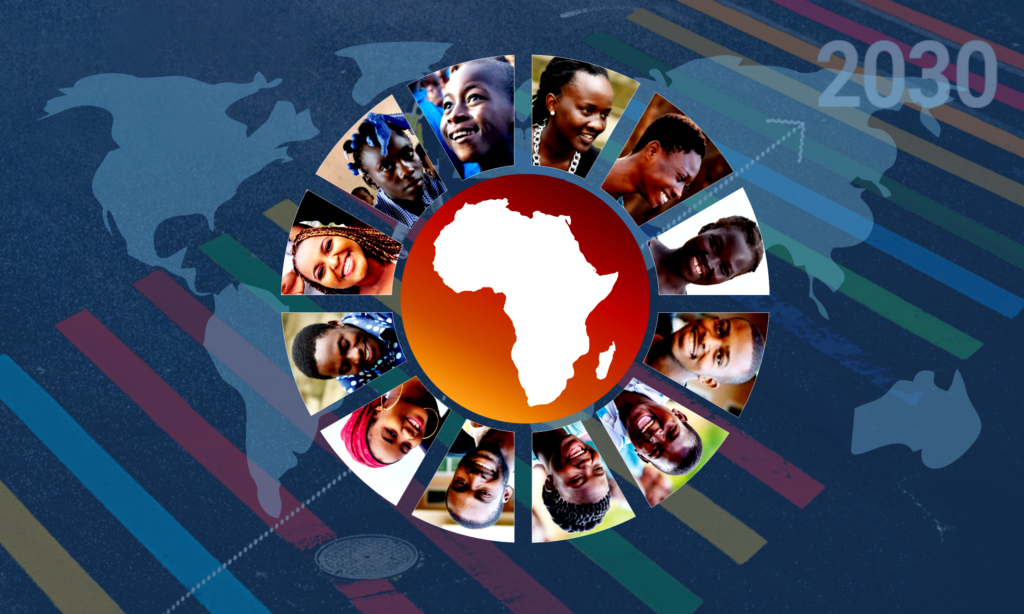
Across Africa, the story of the Sustainable Development Goals (SDGs) as they relate to young people is neither one of failure nor of triumph. It is a story of hard-won progress living side by side with deep structural gaps; of families investing hope in education while economies struggle to create jobs; of young Africans stepping forward as problem-solvers even as conflict, climate shocks and inequality slow the pace of change.
With less than five years to the 2030 deadline, the question facing the continent beyond the possibility of progress is whether it can be accelerated quickly and fairly enough to match the scale of its youth population, the youngest in the world.
In many African households, the SDG journey begins at home, with parents making daily sacrifices to keep children in school. Over the past two decades, those sacrifices have paid off in measurable ways. Primary school enrolment has risen sharply across sub-Saharan Africa, and youth literacy rates have steadily improved. For millions of families, especially in rural communities, sending a child to school has become the norm rather than the exception.
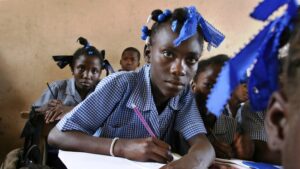
Yet, beneath these headline gains lies a more fragile reality. Many schools remain overcrowded and under-resourced, lacking electricity, clean water, internet access or trained teachers. In such settings, education often becomes a holding space rather than a launchpad. Young people may complete school without the skills needed for higher learning or employment, undermining the promise of SDG 4 quality education.
This gap is deeply personal for most families. Education is seen as the main pathway out of poverty, but when graduates return home unemployed, trust in the system erodes. “We sent our children to school so they could have a better life,” is a common refrain. “But where are the jobs?”
In health, Africa’s SDG record offers clearer evidence of success. Maternal and child mortality rates have declined, and the burden of some infectious diseases has eased. These improvements translate directly into family stability: fewer mothers lost in childbirth, more children surviving past their fifth birthday, and young people healthier and better able to learn.
Still, progress is uneven. Access to healthcare remains sharply divided along urban-rural and rich-poor lines. Climate change is reshaping disease patterns, while conflict disrupts health systems altogether. For young people living in fragile or displaced communities, health gains remain fragile and reversible.
Despite improvements in education and health, poverty continues to define the daily life of many African youth. High levels of inequality between/within countries and even within neighborhoods, blunt the impact of SDG efforts. Urban youth may find opportunities in technology or services, while their rural peers face food insecurity and limited access to markets.
Conflict compounds these pressures. In regions affected by violence, schools close, farms are abandoned and young people are pushed out of classrooms and into survival mode. Food insecurity remains high, threatening not only SDG 2 (zero hunger) but also education and health outcomes for children and adolescents.
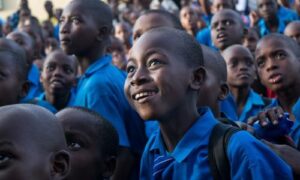
The result is a cycle that families struggle to break: poverty limits education quality, weak education limits employment, and unemployment feeds frustration and instability.
One of the less visible but most important SDG trends in Africa is the growing role of young people themselves. Youth-led organizations, community groups and social enterprises are filling gaps left by overstretched governments. From peace-building initiatives to climate adaptation projects and digital start-ups, young Africans are not waiting passively for solutions.
Programs that combine education with psychosocial support, cash transfers or entrepreneurship training have shown promising results, especially for vulnerable youth. These initiatives recognize that development is not only about infrastructure or policy, but about dignity, confidence and social inclusion.
The greatest uncertainty and opportunity, lies in jobs creation. SDG 8, decent work and economic growth, remains one of the most challenging goals for Africa. Each year, millions of young people enter labor markets that are not growing fast enough to absorb them.
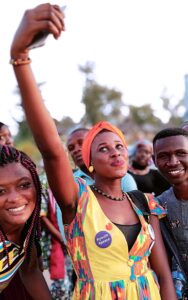
Here, the African Continental Free Trade Area (AfCFTA) looms large. By creating a single market across the continent, AfCFTA has the potential to unlock large-scale industrialization, regional value chains and new forms of employment. Estimates of its economic potential run into trillions of dollars and hundreds of millions of jobs.
But trade agreements alone do not create livelihoods. Without deliberate investment in skills, infrastructure and small businesses, especially those led by young people and women, AfCFTA risks benefiting established firms more than first-time job seekers.
Africa’s SDG journey for young people is at a crossroads. Progress in enrolment and health shows what is possible when policy, funding and community effort align. Persistent gaps in quality, employment and inequality reveal where ambition has outpaced execution.
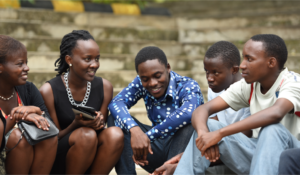
Reaching the 2030 goals will require more than incremental change. It will demand faster implementation, better data, stronger accountability and, above all, a youth-centered approach that treats young Africans not as a demographic risk, but as the continent’s greatest asset.
As for the average African families, communities and governments alike, the stakes are clear. The choices made in the next few years will shape whether Africa’s youth inherit a future of opportunity or one defined by unrealized potential.