

Celebrating an African-American Activist and Human-Right Crusader – Rev. Jesse Jackson, Departs at 84
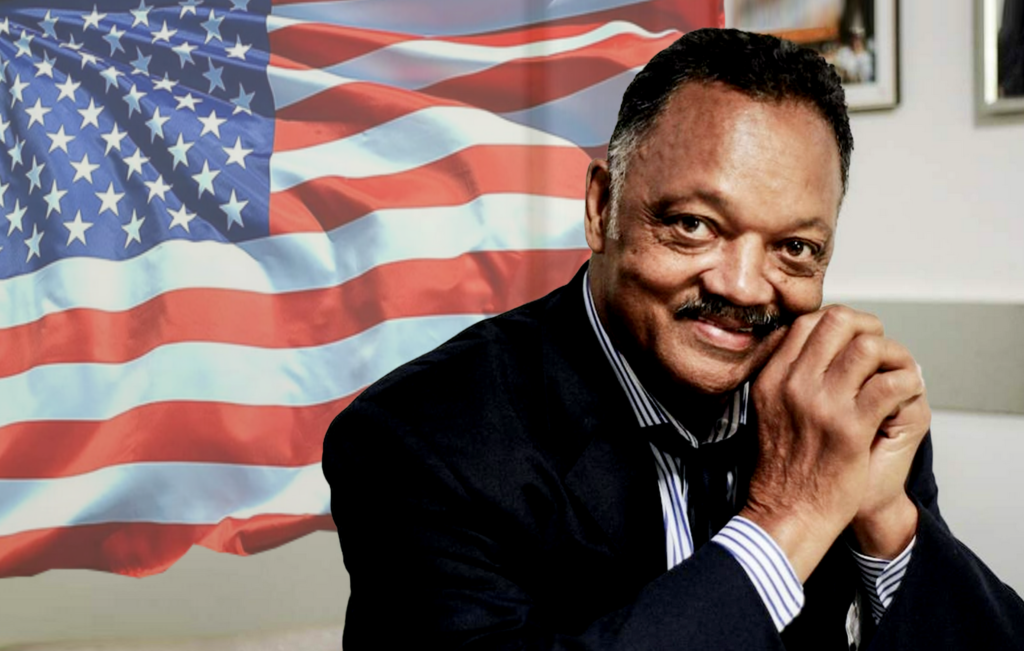
Reverend Jesse Louis Jackson, the fiery preacher-turned-presidential contender who helped carry the moral thunder of the 1960s civil rights movement into the political mainstream, has died at 84. His family said he passed peacefully in Chicago, the city that became both his organizing base and his national pulpit.
Over five decades, Jesse Jackson’s name was synonymous with protest lines, voter registration drives, corporate boycotts and the persistent call to widen America’s democratic promise. From the cotton fields of South Carolina to convention floors and global diplomatic missions, he fashioned himself as both insider and agitator, negotiating with presidents while marching with the unemployed, the underpaid, and the unheard.
Born in Greenville, South Carolina in 1941, Reverend Jesse Louis Jackson rose to prominence as a young protégé of Martin Luther King Jr.. He joined the 1965 Selma to Montgomery marches and soon became a key organizer within the Southern Christian Leadership Conference. In Chicago, he led Operation Breadbasket, pioneering economic boycotts that pressured corporations to hire Black workers and invest in Black-owned businesses, which as an early template for linking civil rights to economic justice. Those grassroots tactics would later evolve into the Rainbow PUSH Coalition, the multiracial alliance Jackson built to bridge race, labor, faith and progressive politics. The “Rainbow” was not just rhetoric. It was a strategy to unite farmers, factory workers, immigrants and minorities into a common political force.
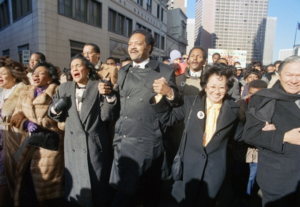

His two presidential campaigns in 1984 and 1988, transformed him from protest-leader to political-power broker. In 1988, he finished second in the Democratic primaries. An unprecedented feat for an African-American candidate at the time. Though he never captured the nomination, his campaigns registered millions of new voters and expanded the boundaries of who could viably seek the nation’s highest office. Political historians credit his runs as the pedestals for the laying of groundwork that later was navigated by figures across the ideological spectrum.
Jesse Jackson’s career was not without controversy. Detractors questioned his sharp rhetoric, his shifting alliances and moments of political miscalculation. Even then, the detractors conceded his ability to command attention and concessions. He criticized Republican administrations and pushed Democratic leaders to embrace more expansive social policies, from voting rights protections to anti-poverty measures.

In the 1990s, Jackson served as the District of Columbia’s shadow senator and hosted a CNN program, translating activism into policy debate. Internationally, he engaged in diplomatic missions, advocating for sanctions against apartheid South Africa; and negotiating humanitarian efforts abroad. Some of his latest foreign policy stance, featured his very most recent one – the critique of the Gaza war. This criticism brought on him both praise and rebuke. Nonetheless, it reflected his willingness to wade into morally fraught terrain.
Even after being diagnosed with Parkinson’s disease in 2017, Jackson remained visible at protests, following the killings of George Floyd and Breonna Taylor. He called for sweeping police reform and urged Congress to protect voting rights and raise the federal minimum wage. In 2021, he was arrested while protesting against the Senate filibuster. This was a reminder that for him, civil right protest was never merely emblematic.
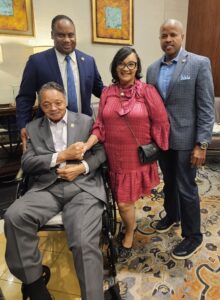
Chicago Mayor Brandon Johnson once described Jackson as “an architect of the soul of Chicago”; a city where deindustrialization, segregation and gun violence formed the backdrop to much of his work. To the supporters in diverse neighborhoods who have suffered lack of investment-support, Jackson represented both access and agitation to them. Reverend Jesse Jackson who had a huge network through to any president, also displayed his humility and selfless-service to humanity, through bustling shoulder-to-shoulder with striking workers, and for any human-right protest.
He is survived by his wife of more than six decades – Jacqueline, and their children; including the US Representative Jonathan Jackson and former Congressman Jesse Jackson Jr..
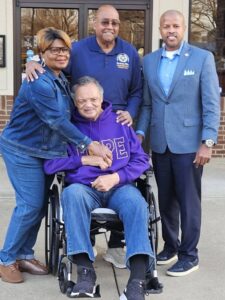
Jackson’s death closes a chapter in the generation that transformed civil rights from a regional battle into a national reckoning. Although, the political/social questions that he pressed-for, about economic disproportion, systemic racism and the unfinished architecture of democracy, still remains an ongoing journey that has outlive him now. In one of his final public reflections, Jackson urged leaders to pursue “an aspirational agenda” that met the scope of the nation’s crises. It was a fitting epitaph for a man who believed protest was not an end in itself, but a fragile-bridge between suffering and policy, between exclusion and power.