

Appraisal: Why Sustainable Agriculture Should be Imperative, Redesigning the Food System
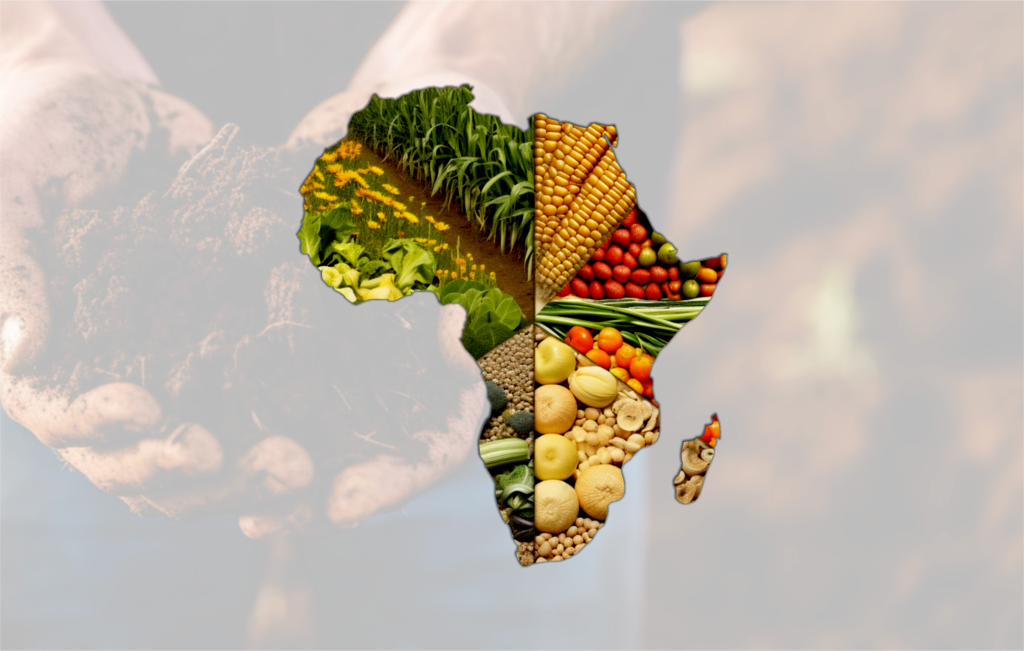
By the time the rains failed for the third consecutive season in parts of the Sahel, farmers like Yacouba Sawadogo in northern Burkina Faso were no longer debating climate change, they were living it. Fields once considered barren have since been restored using an ancestral technique known as zaï, small planting pits filled with organic matter that trap scarce rainfall and rebuild soil fertility. Sawadogo’s work has helped regenerate dozens of hectares of degraded land, reviving more than 90 tree species and challenging long-held assumptions about what African soils can produce. His story reflects a broader shift unfolding across the continent: sustainable agriculture is moving from environmental slogan to political and economic imperative.
According to the Food and Agriculture Organization, hundreds of millions of Africans face food insecurity. Agriculture accounts for roughly a quarter of Africa’s GDP and employs more than half of its workforce. Yet, yields remain significantly lower than global averages, while droughts, floods and soil degradation intensify.
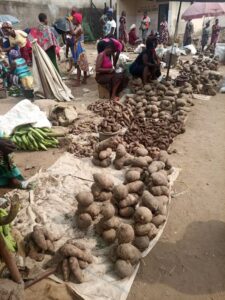
In decades, success in agriculture was measured almost exclusively in yield per hectare. Governments promoted mechanization, imported seed varieties and chemical inputs in pursuit of rapid productivity gains. While these policies delivered results in some regions, they often overlooked local ecological realities and traditional knowledge systems. In several cases, farmers became dependent on costly imported fertilizers and seeds, exposing them to global price shocks and volatile supply chains. Today, agro-policymakers are confronting a harder question: can food systems built for short-term output survive long-term climate stress?
Across East and Southern Africa, organizations such as the International Fund for Agricultural Development are working with smallholder farmers, who produce much of the continent’s food, to scale sustainable practices that combine science with indigenous knowledge. In Kenya, push-pull technology, planting pest-repelling legumes like lablab alongside maize and trap crops such as brachiaria grass, has reduced fall-armyworm infestations significantly, cutting reliance on chemical pesticides. In Ethiopia, small-scale irrigation systems have doubled yields for participating farmers. In Eswatini, orange-fleshed sweet potatoes that are rich in vitamin-A, are improving nutrition while thriving in poor soils.
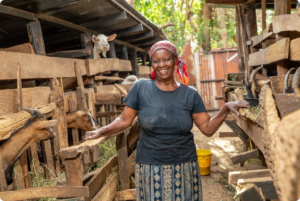
These are not isolated experiments. Conservation agriculture, like minimal tillage, crop rotation and soil cover, is gaining ground in Zambia, Zimbabwe and Malawi. Agroforestry initiatives in Ethiopia and Tanzania are integrating trees with crops and livestock to restore biodiversity and stabilize microclimates. In Rwanda, milk collection cooperatives now use cold storage to reduce post-harvest losses and improve rural incomes. At the grassroots level, farmer cooperatives are pooling resources to access drip irrigation, climate forecasting tools and improved storage facilities. 80 percent of women in agricultural production in parts of Africa, are increasingly leading agroecological enterprises, from beekeeping in Cameroon to food processing ventures in Zimbabwe, diversifying household income.
Thus far, adoption remains uneven. Transitioning to regenerative systems often involves upfront costs, training and short-term risk. Many smallholders operate on razor-thin margins, making experimentation financially perilous. This has pushed sustainable agriculture squarely into the realm of fiscal policy. Governments are debating whether subsidies, crop insurance and public procurement rules should reward practices that deliver measurable public goods, carbon sequestration, water conservation and biodiversity protection. Also, some finance/agriculture ministries are beginning to view soil degradation and aquifer depletion as environmental issues with long-term fiscal liabilities.
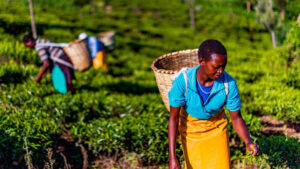
There is also a growing scrutiny of power imbalances in agricultural markets. Concentrated agribusiness buyers can suppress farmgate prices, limiting farmers’ ability to invest in soil restoration or irrigation infrastructure. Without stronger cooperatives or fair competition frameworks, sustainability risks becoming a luxury that few producers can afford.
A marriage of indigenous knowledge meeting modern science. Critics of earlier agricultural modernization efforts, argue that policies often sidelined local populations, sometimes echoing colonial narratives that blamed smallholders for land degradation. In Uganda, breeding programs favoring exotic cattle varieties, have threatened indigenous breeds that have been managed by pastoralist communities such as the Bahima in decades; along with the knowledge systems tied to them.
By contrast, agroecology, which is increasingly promoted by institutions including the FAO, seeks to integrate scientific research with traditional practices. In the Sahel, pastoralist calendars that distinguish multiple seasonal variations help communities anticipate climate risks. Across West Africa, revived water-harvesting systems and polycultures are proving more resilient to erratic rainfall than monoculture plantations. These approaches are less about rejecting innovation and more about recalibrating it. Soil sensors, digital moisture monitoring and climate-adapted seed breeding, can complement ancestral techniques rather than replace them.
However, in the cost of delay, agricultural economists warned that postponing transition in agricultural upgrade, carries systemic risks. Farms dependent on imported fertilizers are vulnerable to geopolitical disruptions; monocultures are more susceptible to pests and extreme weather; and degraded soils require increasing chemical inputs to maintain yields, otherwise it will erode profitability over time.
Even so, by contrast, diversified systems distribute risk. Improved soil organic matter reduces irrigation needs. Integrated pest management lowers chemical expenditure. Water harvesting/drip irrigation conserve scarce resources while stabilizing production. The debate then, is no longer framed as productivity versus conservation. It is about redesigning incentives so that agro-environmental stewardship and economic survival reinforce one another, through activating government’s agriculture developmental imperative.
In respect to the African governments, sustainable agriculture should not just be a rural policy alone, it is a matter of national stability. Food-price volatility can trigger urban unrest; as much as climate-induced migration would strain social systems; while rural poverty indeed fuels inequality. In all of these instances, collaboration between African governments and international partners, including regional development banks, face their own reckoning. Financing must align with long-term resistance agriculture transactions and dynamics, rather than short-term output metrics. Trade rules, research funding and climate adaptation funds, all shape the trajectory of African food systems.
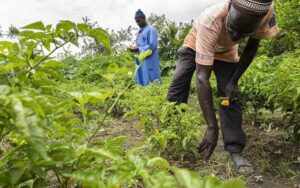
Across legislatures, research institutions and farming communities, a consensus is emerging that agricultural sustainability is not an environmental add-on, but a structural redesign challenge. Because the risks are dreadfully tangible with intertwine of food security, national fiscal stability and ecological survival.
Whether Africa’s sustainable agricultural systems get structurally redesigned adaptation in time, will depend less on so much seminars, meetings, etc., and more on the collaboration of governments, investors and communities’ commitment to align policy, capital and indigenous knowledge toward one productive shared objective – producing enough food today, without undermining the land that must feed tomorrow.