
An Emerging Age-of-Competition, Shaping the Global Risk Landscape through Volatility, Interdependence and Polycrisis
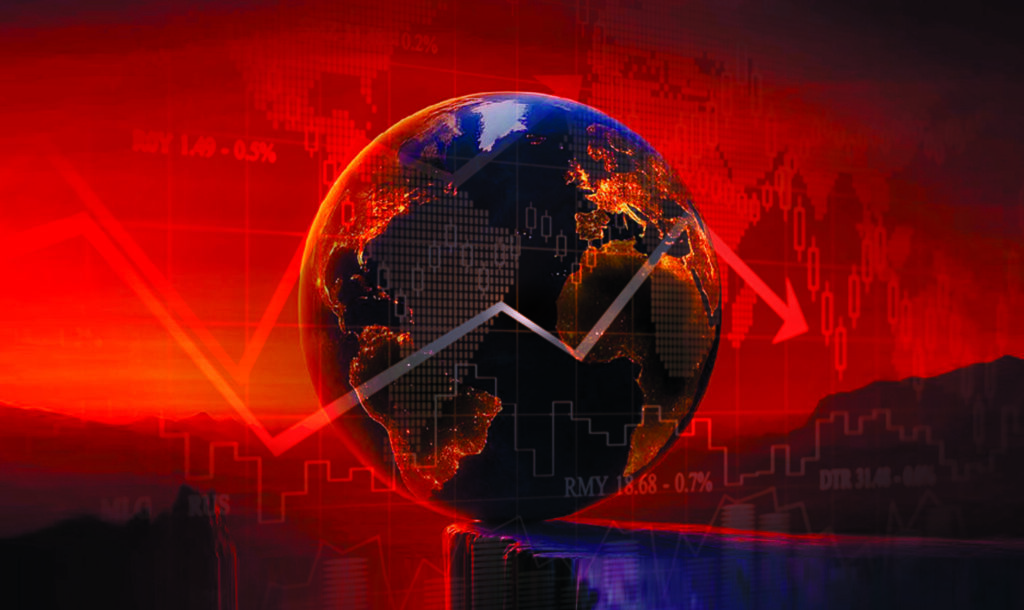
The world is entering what global risk experts now call an “Age of Competition”. A period defined by less cooperation, shared rules, more by rivalry, fragmentation and constant disruption. According to the World Economic Forum’s Global Risks Report 2026, based on surveys of more than 1,300 global leaders, policymakers and experts, the risks facing humanity are no longer isolated shocks. They are entangled, cascading and increasingly personal.
From trade wars that raise food prices, to climate disasters that uproot families, to artificial intelligence reshaping jobs and trust, the global risk landscape is marked by what analysts describe as a “polycrisis”: multiple crises unfolding at once, each intensifying the others.
This is not just a story about governments and global summits. It is about households recalculating budgets, businesses rethinking supply chains, communities navigating division, and young people confronting a future shaped by volatility rather than certainty. It is a world tilting towards rivalry.
In the short term between now and 2028, geoeconomic confrontation stands out as the most immediate global threat. Nearly one in five respondents to the WEF survey ranked it as the risk most likely to trigger a worldwide crisis. Economic tools once reserved for trade negotiations are now being deployed as strategic weapons. Tariffs, sanctions, export controls, and investment restrictions are increasingly used to pressure rivals and even allies. The result is a global economy that feels less like a shared marketplace and more like a battlefield.
This means higher costs, disrupted supply chains and difficult decisions for businesses, about where to invest or withdraw. To families, it often translates into rising prices for everyday goods like food, fuel, electronics and fewer job opportunities in industries exposed to global trade. Small exporters and informal traders, particularly in developing economies, are among the most vulnerable. When major powers clash, the shockwaves often hit those with the least protection first.
Misinformation, trust and the fracturing of society; alongside economic rivalry, misinformation and disinformation rank among the top three short-term global risks. Advances in artificial intelligence have made it easier to create deepfakes, manipulate images and videos, and spread false narratives at unprecedented speed and scale.
The consequences go beyond online confusion. Elections are increasingly contested not only at the ballot box but also in digital spaces. Communities fracture as people lose trust in institutions, media and even one another. In many countries, the us-versus-them narratives, which are often framed as the-streets-versus-the-elites, are gaining ground.
At the family level, this erosion of trust shows up in dinner-table arguments, generational divides, and growing anxiety about what sources of information can be believed. Also, for the young people in particular, navigating a world where truth feels unstable, has become an everyday challenge, considering the cost-of-living crisis and a k-shaped recovery. Economic vulnerability has surged back into focus. Risks linked to inflation, debt and economic downturn now trail only geopolitical threats in the short term.
While some sectors and individuals have rebounded strongly from recent global shocks, many others remain stuck, or are falling further behind. This uneven, “K-shaped” recovery has deepened inequality within and between countries.
In practical terms, this means families spending a larger share of income on basic necessities; young adults delaying education, marriage, or home ownership; and communities experiencing rising frustration as wealth concentrates at the top. The WEF report warns that without intervention, these patterns risk becoming permanent, hardening social divisions and fueling political instability.
Furthermore, the climate risks and long emergency scenario. Looking a decade ahead, environmental risks dominate the global outlook. Extreme weather events, biodiversity loss and ecosystem collapse are projected to be the most severe threats through to 2036. Scientists warn that the world is approaching critical climate tipping points, including the widely cited 1.5°C threshold. Beyond these points, environmental damage may become irreversible, with adaptation efforts unable to keep pace.
The human consequences are already visible: floods washing away homes, droughts destroying livelihoods, and climate-related migration placing pressure on cities and social services. Cultural traditions tied to land and seasons are under threat, particularly among Indigenous and rural communities. The report makes it clear that climate change is no longer a distant environmental issue. It is an economic, social and humanitarian crisis unfolding in real time.
On the part of technology innovation, its promises and threats, the evolution of AI (and even SI-Synthetic Intelligence) is railing speedily on the world’s track. Artificial intelligence and other frontier technologies sit at the heart of the global risk debate. While AI promises productivity gains and medical breakthroughs, its adverse impacts are expected to rise sharply over the next decade. Concerns include job displacement without adequate retraining; AI-driven misinformation eroding public trust; the militarization of emerging technologies; and cyberattacks targeting critical infrastructure. For most workers and students, this creates a sense of uncertainty about which skills will matter tomorrow. While to the governments and companies, it raises urgent questions about regulation, ethics and responsibility.
However, in a polycrisis world, experts argue that what makes this moment uniquely dangerous is not any single risk, but the way risks interact. Climate shocks strain economies; economic stress fuels social polarization; polarization weakens cooperation; weakened cooperation undermines responses to climate and technology risks. And most experts survey describe the next decade as “turbulent” or “stormy”, with a high likelihood of both local and global crises. In such a world, the unexpected is no longer the exception, it becomes the baseline.
One would ask that can resilience replace fragility? Despite the grim outlook, the report does not argue for resignation. Instead, it calls for a shift in mindset, from short-term crisis response to long-term resilience, which includes, rebuilding trust through transparent institutions; investing in climate adaptation alongside emissions reduction; managing technological change with safeguards and inclusion; and reviving, rather than abandoning, multilateral cooperation.
Resilience may mean diversifying income, strengthening local networks, and prioritizing education and digital literacy for many communities and families. What about for businesses? Well, it may involve redesigning supply chains and planning for disruption rather than stability in any case.
The Age of Competition, the report suggests, does not have to become an age of collapse. But navigating it, will require acknowledging a hard truth, which is, the risks shaping global captions are the same ones shaping daily life; and ignoring them is no longer an option.