
Benin Republic: Military Seizes Power and Dissolves Government
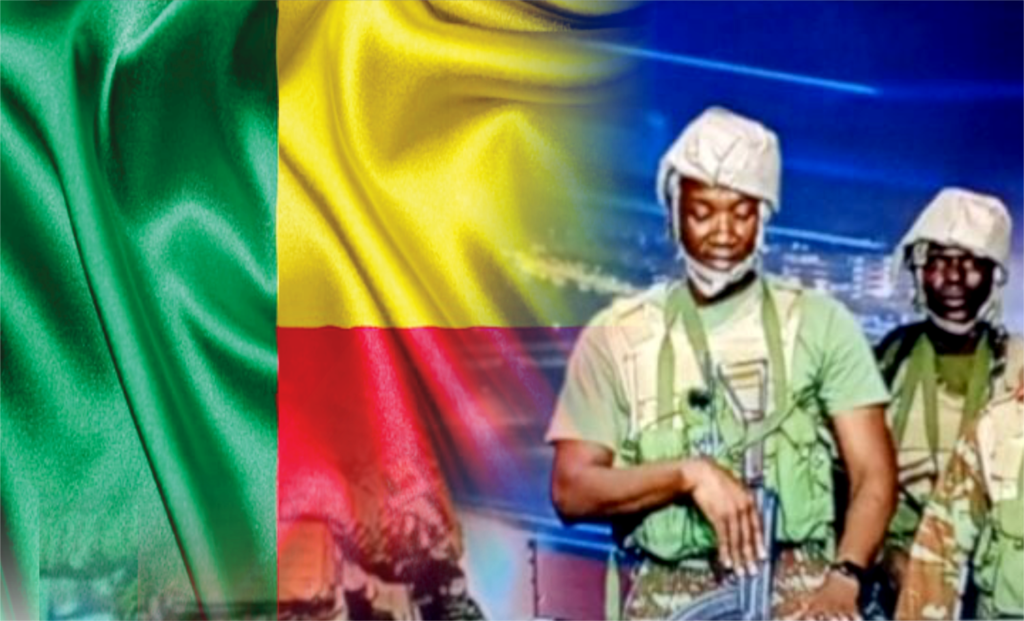
Benin Republic has joined the growing list of West African nations swept up in a wave of military takeovers, after a group of soldiers announced on Sunday that they had dissolved the federal government and removed all political officeholders.
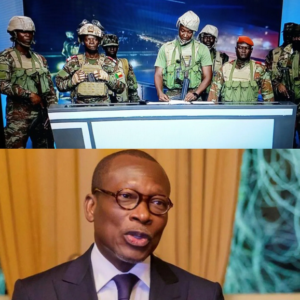
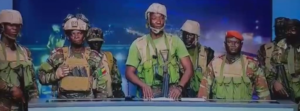
Speaking on state television, the coupe officers operating under the name – Military Committee for Refoundation, declared that President Patrice Talon and all state institutions were no longer in authority. The announcement thrust the usually stable coastal country into immediate uncertainty, ending a political era that began when Talon assumed office in 2016 and pledged to step down in April 2026.
The takeover follow months of tension within the political and security establishment. In September 2024, Djimon Tevoedjre, commander of the Republican Guard and head of Talon’s security detail, were arrested over an attempted coup, raising early questions about fractures within the armed forces. Sunday’s broadcast now signals that those divisions have fully erupted into a wholesale power shift. A region under strain.
Benin’s sudden transition mirrors a broader regional pattern. In the past five years, militaries have toppled governments in Burkina Faso, Guinea, Mali, and Niger, citing corruption, insecurity, or electoral disputes. Only weeks ago, officers in Guinea-Bissau seized power after both President Umaro Embaló and his chief opponent claimed victory before official results were released.
With Benin now following suit, West Africa faces yet another political rupture, complicating efforts by ECOWAS and continental bodies to restore civilian rule across the region.
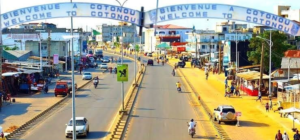
The human and social ripples on the ordinary Beninese families, makes the announcement an immediate alarming concerns of barrage of questions. Will the borders close? Will schools and public services continue to run? Will there be unrest in major cities such as Cotonou and Porto-Novo? As with most sudden transitions, uncertainty tends to ripple faster through daily life. Such as, delays in public salaries, disruptions to trade, and the strain of living under tightened security measures.
Culturally, Benin has long prided itself on its democratic tradition, having made relatively peaceful transitions since the early 1990s. Many citizens will now be to grapple with the shock of seeing the country depart from that legacy and join its neighbors in a growing band of military-led states. Businesses and the economy will have to brace for the future impact.
Benin’s economy, heavily tied to regional trade, particularly cross-border commerce with Nigeria, will face new risks. Political instability typically slows foreign investment, disrupts port activities and stokes inflation. Small businesses and informal traders, who rely on predictable movement and market access, may feel the pressure almost immediately if the military imposes curfews or movement restrictions.
Investors and international partners will also watch closely for signs of policy continuity or sharp shifts in economic direction. These and many more are the political repercussions and international reaction.
The dissolution of all state institutions effectively resets Benin’s political landscape. Talon, who had faced criticism for tightening control over political space, heading almost all the government institutions, but remained a key regional figure, now becomes the latest West African leader unseated by military intervention.
How regional powers respond, particularly within ECOWAS, will shape the coming weeks. The bloc has struggled to reverse military takeovers in recent years, and its credibility is once again being tested by this new chapter of military coup.
Once again in the West African region, a nation at the crossroads of military overthrow. In Benin Republic, the military’s promise of ‘Refoundation’ will invite questions about the country’s long-term trajectory. Will the officers organize a transitional process, or consolidate power? Will political freedoms shrink or re-emerge in a new form? And what does this mean for citizens who have lived nearly three decades under elected governments?
As the situation develops, it is presumed that Benin Republic would find itself navigating a delicate balance between security, governance and public trust, which is currently an increasingly familiar challenge across West Africa with the spree of coup d’état.
However, with the military officers’ stated commitment to conduct general election next year, one can only hope that Benin Republic’s future will be reshaped for the best, in the years to come.