

Building Africa’s Next Industrial Frontier: The Role of Sustainable Aviation Fuels
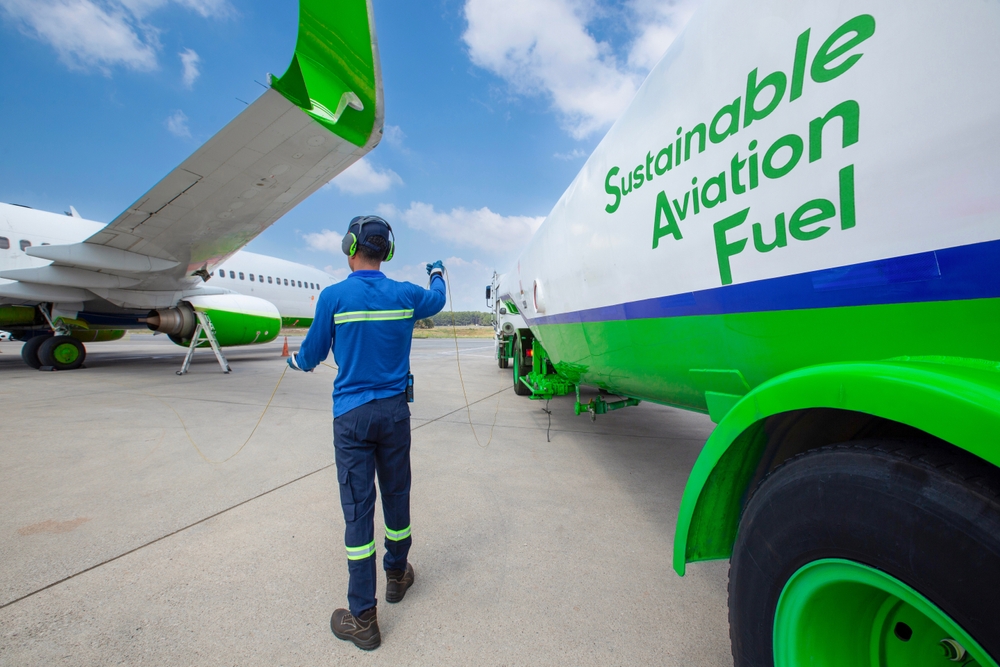
LUANDA, Angola – Africa stands at the threshold of a new industrial era, and one of its most promising frontiers is emerging not on the ground but in the skies. Sustainable Aviation Duels (SAF) are rapidly gaining global traction as airlines face mounting pressure to cut emissions. But for Africa, SAF represents more than a climate solution. It is a pathway to economic resilience, skilled job creation, political modernization, and social transformation. A path to economic independence.
Africa currently imports most of its jet fuel, draining billions of dollars from national budgets each year. This dependency exposes governments and airlines to wild swings in global oil prices and currency fluctuations. For many African carriers already burdened by higher taxes, weaker supplier competition, and smaller procurement volumes, fuel costs can be the difference between profit and loss. Domestic SAF production could change that equation.
By replacing imports with locally produced fuels, African nations could retain more value within their economies. This shift would reduce vulnerability to external shocks while strengthening airlines, the critical engines of trade, tourism and continental integration. Unlocking a jobs boom for a growing workforce.
The World Bank projects that Sub-Saharan Africa will experience one of the world’s largest working-age population booms by 2050. Whether this demographic growth becomes an economic dividend or a missed opportunity will depend heavily on the continent’s ability to create high-quality jobs. The SAF industry fits that need.
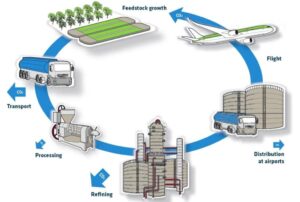
From cultivating feedstocks like energy crops and agricultural residues, to building biorefineries and managing complex supply chains, SAF production requires a wide range of skilled labor. These are not short-term or low-value jobs. They represent a foothold into advanced manufacturing, engineering, agritech, and renewable energy. To the rural communities, SAF feedstock programs could provide new income sources and reduce reliance on volatile commodity markets. And for young professionals, an emerging green-energy sector offers career pathways that match global trends.
Political momentum and policy modernization: building a viable SAF market requires more than raw materials. It demands modern policy frameworks that encourage investment and ensure sustainability.
Across Africa, governments are beginning to recognize the strategic potential of local SAF ecosystems. Policy support from tax incentives to infrastructure development, could help countries reduce energy dependence while positioning themselves as innovators in a global transition.
Moreover, as African governments engage international aviation bodies, climate funds, and development partners, SAF development becomes a diplomatic tool. It strengthens Africa’s voice in global climate negotiations and signals a commitment to green industrialization.
Boeing’s ongoing research partnerships, including studies with WWF South Africa, the International Institute for Applied Systems Analysis, and the Roundtable on Sustainable Biomaterials (RSB), highlights another essential step: credible data-driven feedstock assessments. These studies ensure that SAF development enhances, rather than competes with, food security, land use, or water resources.
The community impact, from fields to flight decks. The social benefits of SAF extend far beyond airlines to the following elements: Farmers can diversify revenue streams through energy crops and agricultural by-products. Local businesses benefit from supply chains that keep value circulating within national economies. Youth and women gain new opportunities in technical fields traditionally dominated by imports and foreign expertise. Communities see development of rural infrastructure tied to feedstock logistics and processing.
In regions where underemployment and migration pressures are rising, SAF could emerge as a stabilizing force, anchoring people to local economies with meaningful, future-oriented work.

Henok Teferra Shawl, Boeing Managing Director for Africa
In climate leadership and an energy transition: SAF can reduce carbon emissions by up to 80% over its lifecycle compared to traditional jet fuel. Achieving net-zero aviation globally will require massive scale: from an expected 2 million tons of SAF in 2025 to nearly 500 million tons annually within the next 25 years, according to IATA.
Africa’s abundant sunlight, vast land resources, and agricultural diversity position it as one of the few regions capable of contributing significantly to this global supply. If managed sustainably, SAF could help Africa leapfrog outdated, fossil-fuel-heavy development patterns and embrace a greener industrial model aligned with global climate goals. However, technology still matters in fuel efficiency and modern fleets.
While SAF builds momentum, African airlines can also reduce emissions and operating costs through efficient aircraft. Models like the Boeing 737 MAX and 787 Dreamliner burn less fuel and allow airlines to expand regional connectivity.
Since nearly 70% of projected African aircraft deliveries are narrow bodies, fuel-efficient planes will be key to supporting more intra-African routes, essential for implementing the African Continental Free Trade Area (AfCFTA) and strengthening tourism. This is a shared vision for Africa’s industrial future.
The rise of sustainable aviation fuel is more than a shift in energy sources; it is an opportunity to build a new industrial backbone for the continent. If governments, airlines, financiers, farmers, and researchers collaborate, Africa could build a homegrown SAF ecosystem that creates jobs, enhances energy sovereignty, and portrays the continent as a proactive player in the global green-energy transition.
Working together, Africa can transform its natural wealth into long-term prosperity, creating safer skies, stronger economies, and sustainable futures for upcoming generations.