
Congo’s Upstream Expansion Signals New Era for Central Africa’s Energy Future
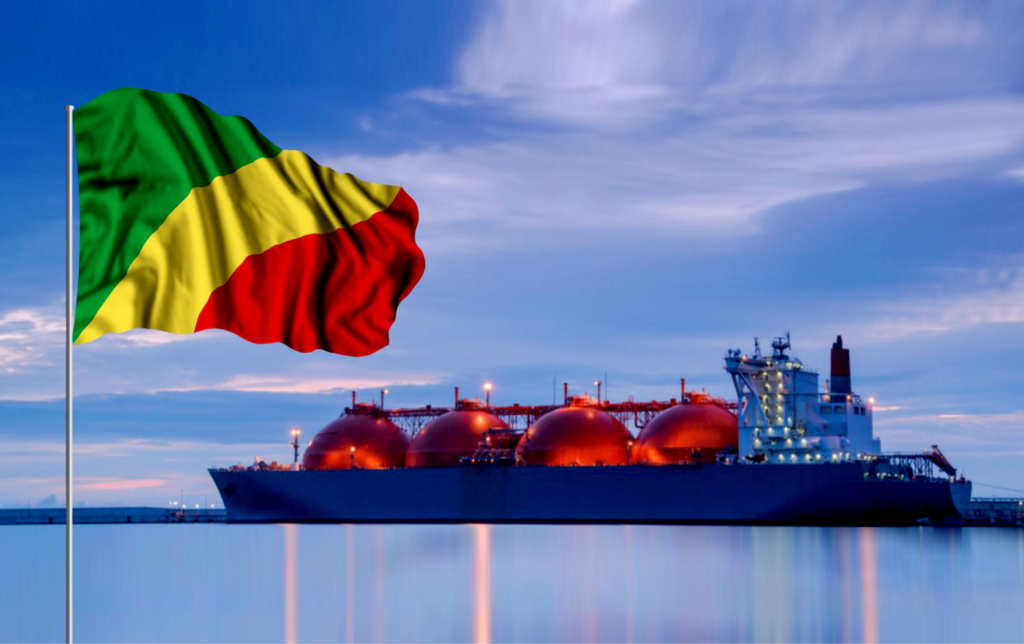
With Congo LNG Phase 2 coming online, the Republic of Congo enters a new phase of accelerated upstream growth that carries economic, political and social implications for all of Central Africa.
The Republic of Congo is moving into a period of unprecedented energy-driven transformation. With new oil and natural gas projects progressing at remarkable speed, including the launch of Congo LNG Phase 2, the country is positioning itself as a strategic anchor for Central Africa’s energy security. The government’s target of boosting oil production to 500,000 barrels per day (bpd), coupled with sweeping regulatory reforms, is signaling to foreign investors that Congo is open for business and determined to execute large-scale energy projects on time.
Beyond economics, the developments mark a turning point in how the region can leverage natural resources to support human development, strengthen political cooperation and accelerate the social transition toward more reliable energy access. Gas is one of the catalyst for national and regional progress.
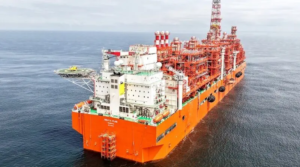
Natural gas has rapidly become the backbone of Congo’s energy ambitions. The commissioning of Congo LNG Phase 2 in December 2025, six months ahead of schedule, marks one of the fastest LNG development timelines in recent African history. The expansion adds 2.4 million tons per annum (mtpa), raising total project output to 3 mtpa, supported by three new production platforms, the Scarabeo 5 gas treatment unit, and the Nguya FLNG vessel. First LNG cargo is expected in early 2026.
This milestone follows the launch of Phase 1 in 2023, effectively making Congo one of Africa’s newest LNG exporters. The speed of rollout reflects a clear but ambitious national strategy: use gas not only as an export commodity, but also as a foundation for industrialization, power generation and job creation.
Parallel to LNG development, the Bango Kayo project, led by China’s Wing Wah, is building a fully integrated gas value chain. By delivering LNG, LPG, butane and propane to domestic consumers, the project will help reduce energy poverty, stabilize cooking fuel prices and curb reliance on imported products. Over 25 years, up to 30 billion cubic meters of gas could be unlocked. A resources that can support local industries, small businesses and households.
To many Congolese, these projects represent more than numbers: they promise more stable electricity, new technical careers, better infrastructure and increased government revenue that could fund public services. This is a push toward 500,000 bpd, a narrative where economic ambition meets regional need.
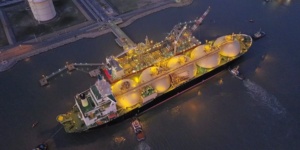
Congo’s oil sector has long sustained the national economy, but the new push to reach 500,000 bpd signals a higher level of ambition—one tied to both national growth and regional responsibility. With Central Africa’s demand for secure energy sources rising, Congo’s upstream revival positions the country as a stabilizing force.
Key investments include:
- TotalEnergies committing $600 million to strengthen output, particularly from the Moho Nord field.
- Trident Energy, which expanded significantly after acquiring Chevron’s assets in 2024, ramping up redevelopment and efficiency.
- Perenco, advancing the Kombi 2 platform toward early-2026 operations.
- Wing Wah, preparing a massive multi-field expansion under a $23 billion agreement covering Bango Kayo, Holmoni and Cayo.
If realized, these projects will inject billions into Congo’s economy, support thousands of jobs and increase revenue streams that can be reinvested into health, education and infrastructure, critical components of long-term social progress.
Promoting reforms that attract investors and reassure citizens. A major driver behind Congo’s renewed momentum is its evolving regulatory environment. The government is developing a Gas Master Plan to create a unified national roadmap, while a new Gas Code—expected to be launched this year—aims to provide clarity, transparency and long-term governance for investors.
These reforms are not only about stimulating foreign capital. They also aim to strengthen public confidence by improving sector oversight, boosting revenue accountability and ensuring that natural resource wealth translates into tangible benefits for citizens.
A forthcoming licensing round, despite minor delays, is expected to unlock new exploration opportunities and attract fresh players. Platforms such as African Energy Week (AEW), scheduled for 12–16 October 2026 in Cape Town, would serve as global showcases for Congo’s strategy, enabling new partnerships and cross-border cooperation.
As a broader political message for central Africa, Congo’s rapid energy progress carries implications beyond national borders. It positions the country as a political stabilizer in a region where energy scarcity has often slowed development and fuelled instability. By accelerating monetization of existing resources, Congo strengthens Central Africa’s bargaining power in global energy markets and demonstrates that African countries can deliver large, technically complex projects swiftly when political will aligns with strategic partnerships.
As noted by NJ Ayuk, Executive Chairman of the African Energy Chamber,: “The Republic of Congo is showing the continent what is possible when you combine political will, strong partnerships and a commitment to monetizing the resources you have today, not 10 years from now”.
Congo’s upstream expansion is more than an economic story, it represents a multidimensional transformation. The benefits span household energy access, industrial growth, strengthened regional ties and improved investor confidence. While challenges remain in governance and equitable resource distribution, the groundwork being laid today has the potential to reshape livelihoods and accelerate Central Africa’s economic integration.
If managed sustainably and inclusively, Congo’s new energy era could serve as a model for how resource-rich African nations can convert hydrocarbons into long-term human development, driving a more secure and prosperous future for the entire region.