

CREATIVES: Mame Bineta Sané’s Breakthrough from Thiaroye to the World: the Fast Ascending Senegal Creatives
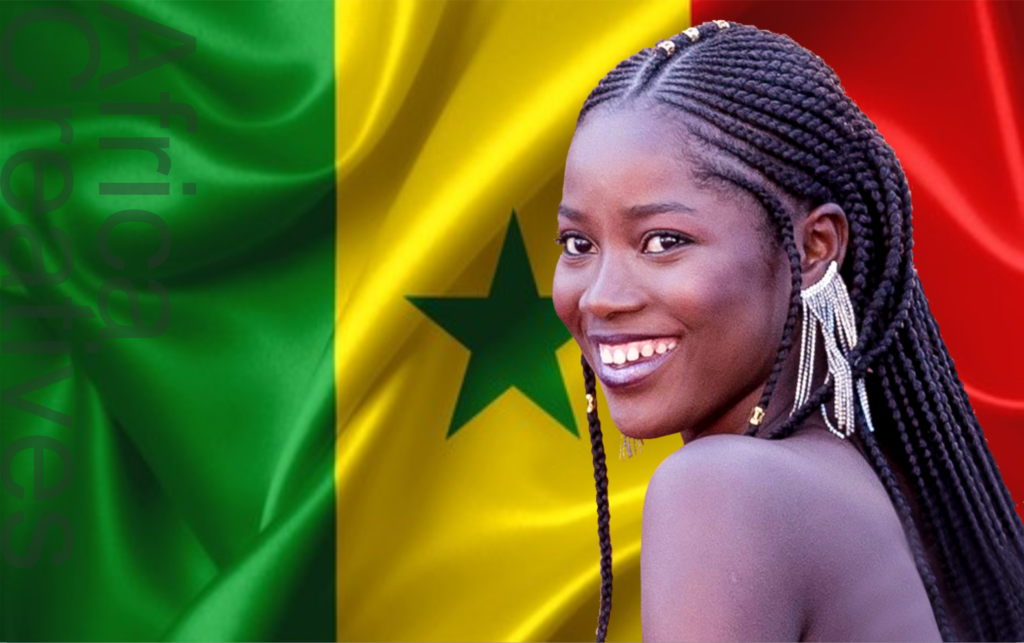
When Atlantics premiered in Dakar, few in the audience could have predicted that it’s quiet, haunting lead performance, would help redraw global attention toward Senegalese cinema and towards the everyday lives that inspire it. Ever before, Mame Bineta Sané, professionally known as Mama Sané, had never acted before. She was not a drama school graduate or a familiar face from television. She was a young woman from Thiaroye, a working-class suburb of Dakar, whose life experience mirrored the social realities the film sought to examine.
Today, Sané stands at the intersection of film, fashion and grassroots cultural change. Her rise offers more than a celebrity story to opening a narrative-window into family structures, informal economies, youth migration, and how global industries increasingly source talent from local communities rather than elite institutions.

Roots in Thiaroye, family, work and community, she was born on February 3rd, 2000, and raised in Thiaroye, Sané grew up in a densely populated area shaped by informal labor, close-knit families, and limited economic opportunity. Like many young Senegalese women, her early path did not follow a traditional academic route. Instead, she trained as an apprentice tailor, part of a widespread vocational system that sustains households across Dakar’s suburbs.

Community members describe tailoring apprenticeships as more than a trade: they are social networks where skills, discipline, and survival strategies are passed down. This background would later become central to Sané’s screen presence. Her portrayal of Ada in Atlantics, which narrates a young woman navigating love, loss and economic pressure, felt grounded because it was informed by real experience rather than performance technique. “She didn’t act struggle. She understood the roleplay” one Dakar-based film worker said at the time of the film’s release. It was a film that carried a story of generation.
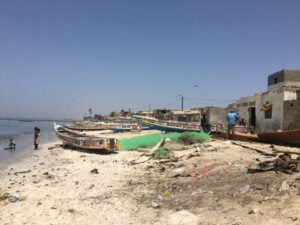
Directed by Mati Diop, Atlantics explores the emotional aftermath of dangerous sea migration, a subject intensely embedded in Senegalese society. Entire neighborhoods have been shaped by young men who leave and often never return, going to seek working and greener pastures in Europe.
Sané was cast after Diop scouted locally rather than through agencies, a decision that challenged industry norms. The result was a performance that anchored the film’s supernatural elements in social reality. When Atlantics won the Grand Prix at the 2019 Cannes Film Festival, it marked a historic milestone not only for Diop as the first Black woman in Cannes’ main competition, but for a generation of Senegalese creatives rarely represented on such platforms.

Within Senegal, the film sparked conversation at community screenings and universities, with audiences debating migration policy, economic inequality and the emotional toll borne by women left behind. Sané’s face became associated with those discussions, even as she herself remained largely private. However, the trail of a symbolic stardom with dark skin colouration, in the French/European-hemispheres, attracts the economy of fashion, modeling, runway, etc., as a bridge.
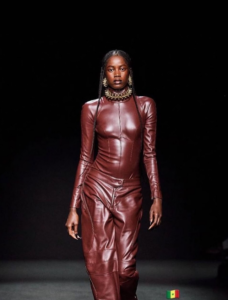
Following Atlantics, international fashion scouts took notice of Sané’s appearance and what she represents, as contemporary African identity rooted in place. She began modeling selectively, appearing in campaigns and editorials that emphasized sustainability and African designers, and walking at Paris and Dakar Fashion Weeks.
To many young Senegalese creatives, fashion offers financial stability that film alone cannot provide. Modeling contracts helped Sané navigate an industry where acting opportunities remain limited and sporadic across West Africa. Cultural analysts note that this dual career path of film/fashion, is becoming increasingly common, reflecting how artists assemble livelihoods across sectors rather than relying on a single income stream. This was the genesis of fame without distance.

Despite global exposure, Sané continues to live in Senegal and maintains strong ties to her community. She keeps her family life and romantic relationships private, a choice that contrasts with the visibility often demanded by international celebrity culture.
Local observers say this decision resonates with young people who see her success not as an escape from Senegal, but as proof that international careers can still be grounded at home. Her presence challenges the idea that global recognition requires permanent departure, which is a powerful counter-narrative in a country shaped by outward migration.

In measuring career growth, since the film – Atlantics, Sané has chosen roles carefully. Her appearance in the 2025 short film Don’t Wake the Sleeping Child reinforced her preference for intimate, story-driven projects over rapid exposure. Industry professionals describe her approach as deliberate, reflecting a broader shift among African actors toward long-term sustainability rather than quick fame.
Her awards and nominations including the Prix Suzanne Bianchetti and César and Lumière nods, highlighted how rare it is for a first-time actor from outside traditional systems to gain such recognition. One would call it the business of visibility by the elegance of talent.
Estimates of Sané’s net worth vary between $500,000 and $1.2 million (as of 2026), generally ranging between the mid-six figures, reflecting combined earnings from film, modeling, and brand partnerships. Analysts caution that such figures fluctuate widely, particularly for artists balancing international contracts with local living.
More telling than numbers is how her income streams reflect structural realities: cinema brings prestige and cultural capital; fashion brings financial continuity. Together, they illustrate how African creatives navigate global markets while remaining rooted in local economies.
- Full Name: Mame Bineta Sane
- Also Known As: Mama Sané
- Date of Birth: February 3, 2000
- Place of Birth: Dakar, Senegal
- Nationality: Senegalese
- State of Origin: Thiaroye, Dakar
- Occupation: Actress, Model
- Years Active: 2019–present
- Net Worth: estimated between $500,000 and $1.2 million (as of 2026)
Filmography
| Year | Film | Role | Genre |
| 2019 | Atlantics | Ada | Supernatural Drama |
| 2025 | Don’t Wake the Sleeping Child | Sister | Short Film |
Awards & Honors
- Prix Suzanne Bianchetti (2020) – Awarded to the most promising young actress beginning a significant cinema career
- Golden Starfish Award – Honorable Mention (2019)
Hamptons International Film Festival
Nominations
- César Award (2020) – Most Promising Actress
- Lumière Award (2020) – Best Female Revelation
- Black Reel Award (2020) – Outstanding Breakthrough Performance, Female

Personal Life: Mame Bineta Sane maintains a high level of privacy regarding her romantic relationships and family life. Her primary focus remains on developing her acting career while balancing international recognition with her personal values and cultural identity.
Mame Bineta Sané is a symbol larger than stardom. Her story is not simply about individual success but about how grassroots talent, community experience and cultural authenticity can reshape who gets seen and heard on the world stage.

From Thiaroye’s tailoring workshops to Cannes’ red carpets, her journey mirrors broader questions facing Senegal today: How do young people build futures at home? How do global industries engage local communities without extracting them? And how can stories told from the ground up change the way the world looks at Africa?
Furthermore, Sané continues quietly working, choosing carefully and carrying with her the texture of a place that shaped her long before the cameras arrived.