

Dangote Refinery Hits 650,000 bpd Capacity, Driving a Colourful-Shift in Nigeria’s Energy Sector

As of this February 2026, the $20 billion Dangote Petroleum Refinery has achieved a significant milestone by reaching its full capacity of 650,000 barrels per day (bpd). The facility has successfully completed its initial, intense 18-to-24-month startup phase and has transitioned to full operational status capacity on its Crude Distillation Unit (CDU) and Motor Spirit (MS) production block, marking a colorful and transformative shift in Nigeria’s energy landscape.
The company confirmed that the CDU and MS Block are now running at full nameplate capacity following a scheduled maintenance exercise and a 72-hour intensive performance test conducted in collaboration with its technology licensor, UOP. The validation process, according to the refinery, ensured that all key performance indicators met international standards before full operations resumed.
Chief Executive Officer, David Bird, described the milestone as a demonstration of engineering precision and operational stability. “Our teams have demonstrated exceptional precision and expertise in stabilising both the CDU and MS Block. This milestone underscores the strength, reliability and engineering quality that define our operations”, he said. At full capacity, the refinery is positioned to supply up to 75 million litres of Premium Motor Spirit (PMS) daily to the domestic market, as a significant increase from the 45 to 50 million litres supplied during the recent festive period.

Energy analysts say sustained operations at 650,000 bpd could dramatically cut fuel imports, reduce pressure on the naira and potentially stabilize pump prices over time, provided distribution systems and regulatory frameworks function efficiently. Nigerians also believe the refinery’s output capacity will solidify fewer fuel shortages, more predictable pricing and improved access to petrol across the country. A steady domestic supply of up to 75 million litres daily would not only serve Nigeria’s consumption needs but could also create surplus for export within West Africa, strengthening Nigeria’s position as a regional energy hub and generate foreign exchange earnings. Dangote refinery has already generated thousands of direct and indirect jobs across different industries.
The milestone arrives at a sensitive moment in Nigeria’s energy reform landscape. The federal government’s removal of fuel subsidies in 2023 was partly justified by expectations that domestic refining would eventually reduce the fiscal burden of imports. The refinery’s achievement may bolster government claims that reforms are beginning to yield structural results.
However, industry observers noted that market dynamics remain complex. Questions around pricing mechanisms, regulatory oversight and competition within the downstream sector continue to shape public debate. As a privately owned mega-refinery, Dangote’s market dominance has significantly influenced national fuel pricing structures, raising discussions about competition policy and market balance.
The refinery reiterated that its progress strengthens Nigeria’s drive toward energy self-sufficiency and reduced import dependence. Nevertheless, achieving true self-sufficiency will transcend refining capacity to efficient distribution networks, transparent pricing systems and sustained crude supply agreements.
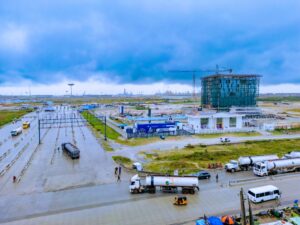
The refinery’s claim of becoming the first globally to achieve and sustain 650,000 bpd capacity on both its CDU and MS Block, marks a notable engineering benchmark. The CDU that is the central point of any refinery, processes crude oil into various fractions. While the MS Block, which includes the naphtha hydrotreater, isomerisation unit and reformer unit, upgrades these fractions into high-grade petrol. Other processing units are scheduled to begin performance test runs in Phase 2 next week, suggesting that the facility’s full integrated capacity is still being optimized.
While the operational milestone is significant, its broader success will ultimately be measured by its long-term stability, pricing impact and contribution to national development impact to millions of Nigerians who have endured years of fuel queues and price shocks. The refinery’s 650,000 bpd output full-capacity run, represents a domestic refining that can finally deliver consistent energy security.