

ECOWAS Fast-Tracks ECOVISA to Ease Travel and Strengthen West African Integration
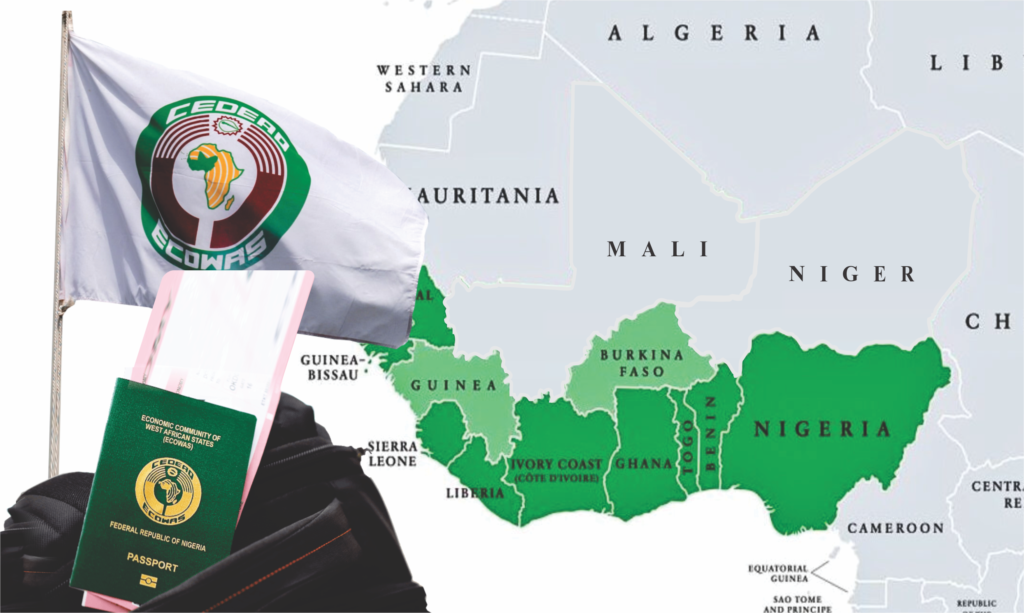
The Economic Community of West African States (ECOWAS) is accelerating plans to introduce ECOVISA, a single-entry visa intended to make it easier for foreign travelers to move across West Africa. The initiative marks a renewed push to translate the bloc’s long-standing promise of free movement into a system that is practical, digital, and region-wide.
At the center of this effort was a technical workshop held on March 10-11, 2025, in Lagos, Nigeria, where experts from across the region gathered to test and refine the ECOVISA framework. The meeting brought together immigration officials, IT specialists and visa management professionals who often working quietly behind the scenes, whose decisions would shape how millions of future visitors experience West Africa, in building a visa system that works for people.

Modeled in part on the Schengen visa system in Europe, ECOVISA aims to replace fragmented national visa processes with a single application that allows travel across multiple ECOWAS countries. In favour of most tourists, business travelers, researchers and members of the African diaspora, the change promises fewer forms, lower costs and shorter waiting times. To small tourism operators, hotel owners, transport workers and traders, easier entry could translate directly into jobs and income.
Participants at the Lagos workshop focused on the ECOVISA digital portal, designed as the backbone of the system. According to officials involved in the process, discussions went beyond technical efficiency to questions of trust, how to protect personal data, ensure transparency in approvals; and how to make the platform accessible even to applicants with limited digital skills. A fragrance of political coordination behind the scenes.

While ECOVISA is often presented as a technical reform, it also reflects careful political negotiation among member states. Immigration remains a sensitive area tied to national security and sovereignty. Harmonizing visa rules requires governments to align standards, share information, and build confidence in one another’s systems.
ECOWAS officials describe the project as a diplomatic balancing act, strengthening regional unity while respecting national concerns. By investing in interoperable systems rather than imposing a single centralized authority, the bloc is pointing at a cooperative, step-by-step approach to integration. Champions economic stakes for a connected region.

ECOVISA is expected to support broader economic goals, including increased tourism, smoother business travel, and improved perceptions of West Africa as a single investment destination rather than a patchwork of separate markets. Analysts note that simplified travel could particularly benefit countries with emerging tourism sectors and landlocked economies that rely on regional routes.
Aside economics, civil society groups see the visa as part of a larger social vision, for a West African region that is more open to cultural exchange, academic collaboration, people-to-people ties, etc.

Where ECOVISA holders can travel. Once operational, ECOVISA will allow foreign travelers to visit the twelve current ECOWAS member states:
- Benin
- Cape Verde
- Côte d’Ivoire
- Gambia
- Ghana
- Guinea
- Guinea-Bissau
- Liberia
- Nigeria
- Senegal
- Sierra Leone
- Togo

ECOWAS previously counted fifteen members, but Burkina Faso, Mali, and Niger formally withdrew on January 29, 2025, to form the Alliance of Sahel States (ESA), reshaping the region’s political landscape.
ECOVISA is more than a visa for the ECOWAS states. This is a test of whether regional cooperation can deliver tangible benefits to the ordinary people. If successful, it could redefine how the world enters, experiences and does business with West Africa.