

Eritrea and Ethiopia Edge Back Near the Conflict Brink
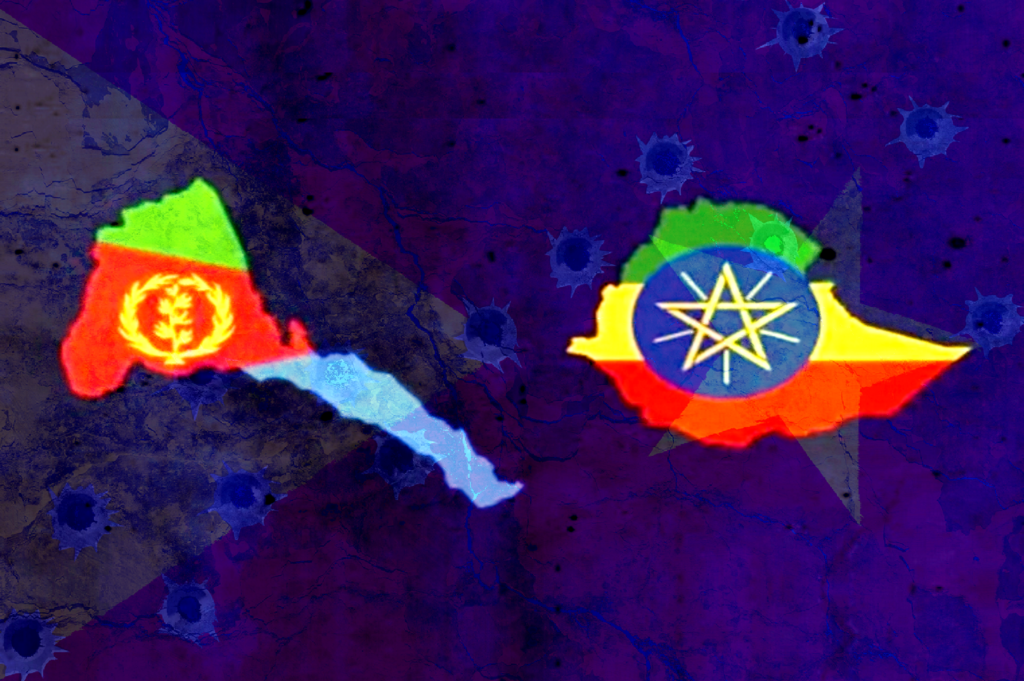
By early 2026, the handshake that once symbolized reconciliation between Abiy Ahmed and Isaias Afwerki feels like a relic of another era. The 2018 peace declaration that ended two decades of hostility between Ethiopia and Eritrea had raised hopes across the Horn of Africa. Today, renewed troop movements, diplomatic recriminations and rising nationalist rhetoric suggest those hopes are fraying.
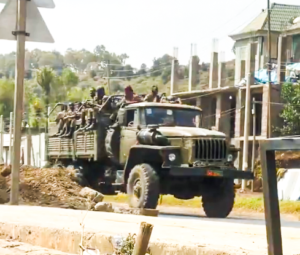
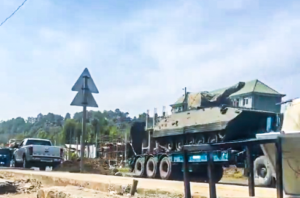
Communities along the 1,000-kilometre border, are visualizing the fear of war as non-abstract presumption. In towns across Tigray and southern Eritrea, families who survived the 1998-2000 war that claimed tens of thousands of lives, are now watching military convoys with growing anxiety. “We buried sons once already, we cannot bury another generation”, said one elder in the borderlands.
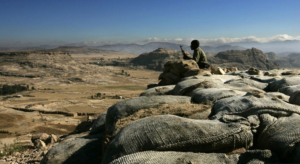
The roots of the crisis stretch back decades. Eritrea, once a part of the Ethiopian federation, launched an armed struggle for independence in 1961 and formally seceded in 1993 after a referendum. But independence did not settle all disputes. In 1998, fighting erupted over the contested town of Badme, igniting one of Africa’s deadliest modern wars. The Algeria Agreement in year 2000 halted open hostilities, mandated UN peacekeepers and established a boundary commission. But the border was never fully demarcated on the ground. Instead, a tense militarized standoff hardened into a no man’s land, entrenching mistrust between two governments shaped by liberation-era rivalries.
When Abiy took office in 2018, he moved swiftly to end the stalemate. His outreach to Asmara won international praise, eventually awarding him a Nobel Peace Prize. Flights resumed, families reunited and embassies reopened. But beneath the ceremony, structural tensions endured. The Tigray war and an unstable alliances still lingered. Those tensions extended after war broke out in Ethiopia’s Tigray region in 2020. Eritrean forces intervened on Addis Ababa’s side against the Tigray People’s Liberation Front (TPLF), which once the dominant force within Ethiopia’s ruling coalition. The war devastated Tigray, displaced millions and drew allegations of widespread abuses that many attributed to Eritrean troops.
When a peace accord ended the Tigray conflict in 2022, Eritrea complained it had been sidelined from negotiations. Since then, relations between Addis Ababa and Asmara have cooled-out sharply. Ethiopian officials now accuse Eritrea of backing armed groups in Tigray, Amhara and Oromia. These claims were denied by Eritrea, citing them as fabrication.
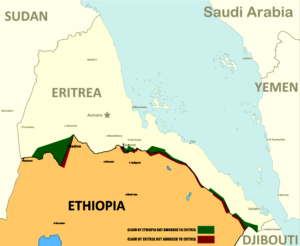 The recriminations escalated in late 2025 when Ethiopia’s foreign minister formally accused Eritrea of fresh incursions and troop movements. Eritrea responded with counter-accusations. Both sides have reinforced positions near the border. The sea questions the armoury-fashion parade at her sentinel.
At the core of the present impasse lies a sensitive geopolitical issue, the access to the Red Sea. Eritrea’s independence left Ethiopia landlocked, dependent largely on Djibouti’s ports for trade. Prime Minister Abiy has publicly argued that Ethiopia that is housing over 120 million people, needs reliable maritime access for its economic future. He has floated diplomatic solutions involving Eritrea’s port of Assab and other regional options. But for many Ethiopians, the loss of a coastline for a shipping harbour, is hanging on a smear of national grievance. While the Eritreans feel, any suggestion of historical claims over Assab, strikes at against national sovereignty. The discussions and decades of struggle over this Assab coastline, even when framed as negotiation, stirs citizens’ sentiment on both sides. Furthermore, some political analyst warn that the maritime debate is as much about political legitimacy as economics. In both capitals, appeals to history and sovereignty, resonate with domestic audiences grappling with inflation, unemployment and post-war recovery.
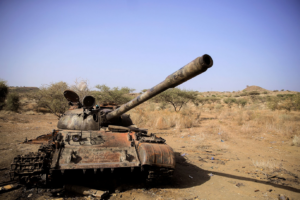
A looming renewed conflict will beget enormous grassroots’ implications. Ordinary citizens are already feeling the chill. Trade across the informal-border markets has slowed down. Families divided between the two countries, sponsored by decades of migrations and intermarriages, fear travel restrictions or renewed conscription. In Eritrea, where indefinite national service has long driven emigration, the specter of war could accelerate youth flight. In northern Ethiopia, communities are concurrently rebuilding sustainably from the Tigray war. So, facing the possibility of a fresh displacement is not in the picture atall.
Regional implications are equally going to be severe. Neighboring Sudan remains embroiled in its own protracted conflict; and the Horn of Africa is navigating overlapping humanitarian crises already. Another interstate war would strain fragile supply routes, testing the capacity of regional institutions that supports these supplies’ transactions. From the look of things, diplomacy is at a narrow junctions.
Despite the drumbeat of accusations, both governments publicly say they remain open to dialogue. Ethiopia has indicated willingness to discuss maritime access through negotiation. Eritrea insists it will defend its sovereignty but has not formally withdrawn from diplomatic channels. The African Union Commission with its Headquarter in Addis Ababa, faces mounting pressure to mediate before escalation becomes irreversible. While regional observers are maintaining that quiet shuttle-diplomacy, coupled with confidence-building measures such as third-party border monitoring, could help cool tempers.

War is not inevitable inspite of the much smoke that has kissed the clouds. But history shows how quickly miscalculation along this border can spiral. As for citizens on both sides of the countries, the stakes are not ideological but intensely personal in a sense of the right to rebuild, trade, send children to school without fear of sirens, etc.
In the Horn of Africa, where memory of conflict is never distant, the window for preventive diplomacy is narrowing. If leaders choose confrontation or compromise, whichever one, will shape the bilateral ties and stability of an entire region.