
Europe/Africa Are Slowly Shifting and Communities Are Already Feeling the Questions It Raises
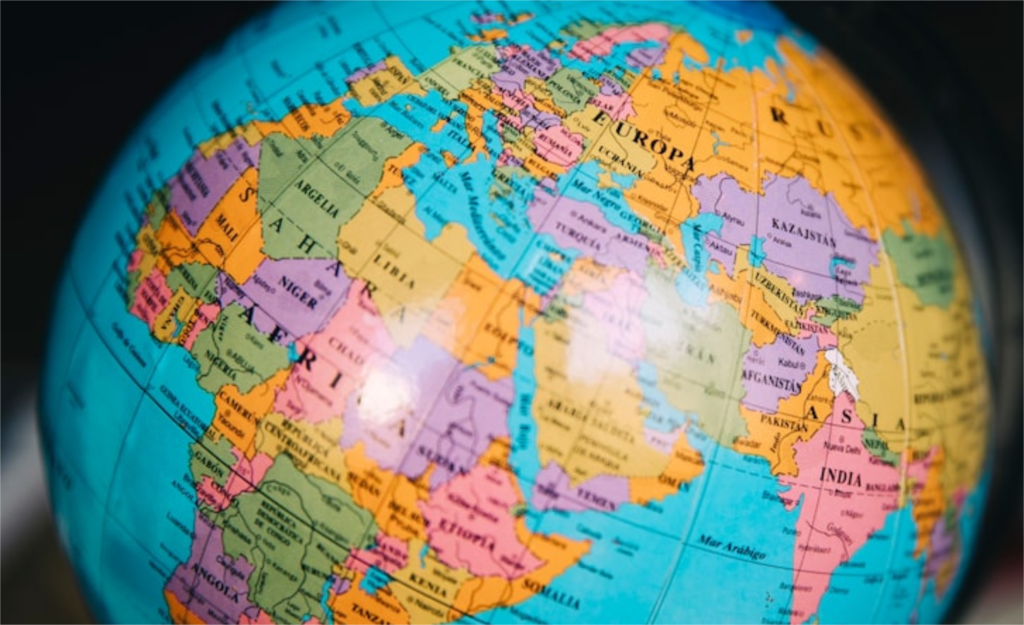
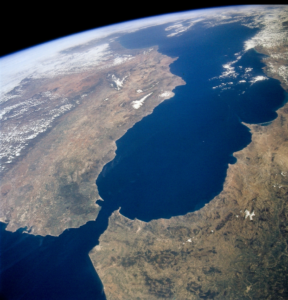
Scientists say Europe and Africa are not where they used to be in geological terms. New research shows the Iberian Peninsula, home to Spain and Portugal, is slowly rotating clockwise as the African tectonic plate presses into Europe. The movement is almost imperceptibly moving-in less than a quarter-inch a year. But, its implications would stretch farther than the laboratory to touching families, cities, businesses and governments across the Mediterranean world, with time as a conductor.
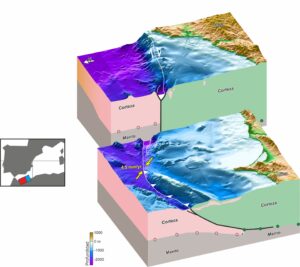
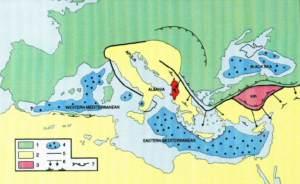
Using satellite measurements and earthquake data, researchers have confirmed that the boundary between the African and Eurasian plates, is undergoing a quiet but complex reorganization. While Africa continues to drift northward, the long-assumed process of Africa sliding beneath Europe has slowed. Some scientists now suggest the interaction may eventually reverse, with parts of Europe beginning to move under Africa. Over millions of years, this could even form a new subduction zone.
People living in southern Europe and North Africa, would see the science raising practical concerns closer to home. Increased seismic risk along the Mediterranean, which might already be prone to earthquakes, would have implications on housing safety, insurance costs and urban planning. In older neighborhoods of Lisbon, Seville, Algiers, or Naples, where historic buildings were never designed for modern seismic standards, families quietly wonder whether their homes are prepared for the future. One geophysicist involved in the research noted that “these aren’t apocalyptic shifts, but they do force societies to think long-term”. That long view is not always easy for communities balancing immediate economic pressures.
Businesses are also paying attention. Ports, undersea cables, pipelines and transport corridors that link Europe and Africa, depend on stable geological assumptions. Even small changes in seismic risk can influence investment decisions, shipping insurance and infrastructure planning. In tourism-heavy regions around the Mediterranean, local operators worry that heightened earthquake awareness though gradual, could affect perceptions of safety, even if the actual risk remains low.
The findings add another layer to an already delicate Europe–Africa relationship politically. The tectonic boundary mirrors a cultural and economic one, where cooperation on climate adaptation, disaster preparedness, and scientific research is increasingly necessary. Shared geological risks may push governments toward stronger cross-border collaboration, particularly in early-warning systems and construction standards.
At the grassroots level, the science is filtering into classrooms, community meetings and local media. In parts of Spain and Portugal, educators are using the discovery to spark conversations about Earth science, adaptability and humanity’s place on a constantly changing planet. In North Africa, where earthquakes have historically caused devastating losses, civil society groups are calling for stronger enforcement of building codes and better public awareness.
Meanwhile, the African continent itself is changing from within. Far to the east, the East African Rift continues to slowly pull Africa apart, a process that could one day create a new ocean. Also, to most communities in Ethiopia, Kenya and Tanzania, this reminds residents that geological change is a living process beneath their feet, as against being just a distant theory.
Although, scientists emphasize that none of these shifts will dramatically alter daily life anytime soon. The movements would unfold over millions of years. Probably not human lifespans. Nonetheless, the discovery reinforces a humbling truth of borders, continents and civilizations that rest on foundations that are anything but fixed.
As Europe and Africa subtly spin and strain against each other, the challenge for the surrounding societies is not to panic, but to plan ahead on how to translate extreme-time science into safer cities, informed citizens and cooperation that recognizes how closely connected the two continents truly are.