
Gabon and South Africa Strengthen Mining Ties in Strategic Geoscience Pact
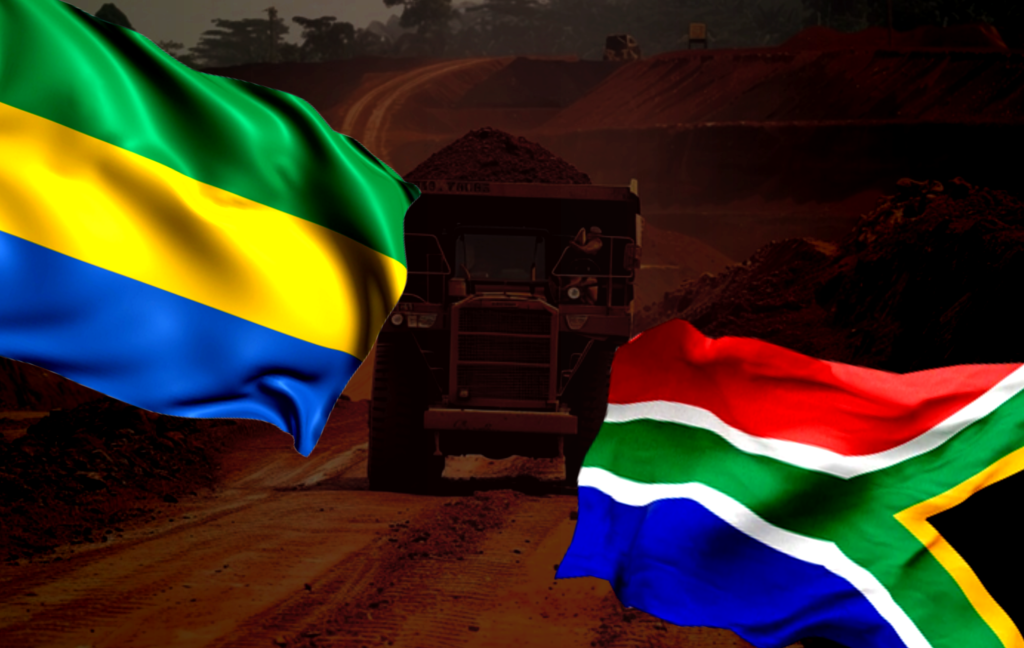
LIBREVILLE, Gabon has moved to accelerate the transformation of its mining sector, signing a new geoscience collaboration agreement with South Africa that officials say could reshape the country’s economic future and strengthen African-led industrial cooperation.
The agreement, signed in Cape Town between Gabon’s Ministry of Mines and Geological Resources and the Council for Geoscience, signals a shift in Gabon’s long-term development strategy: reducing reliance on oil by unlocking the commercial value of its largely under-explored mineral wealth.
The pact was formalized by Alain Manzanza, Director General of Geology at the ministry, and Mosa Mabuza, CEO of the Council for Geoscience, in the presence of Mines Minister Sosthene Nguema Nguema and Gabon’s ambassador to South Africa. Officials describe the deal as both technical and strategic foundation for stronger economic ties between Libreville and Pretoria.
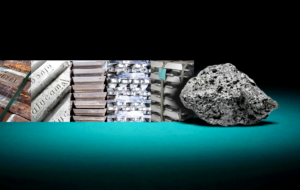
In decades, Gabon’s economy has been anchored by petroleum exports, a strategic economic pivot. So far, below its dense rainforests and remote interior lies significant deposits of iron ore, manganese, gold and other strategic minerals increasingly sought after in global markets.
President Brice Clotaire Oligui Nguema has publicly pledged to increase the mining sector’s contribution to national GDP, framing mineral development as central to job creation and long-term fiscal stability. The new geoscience agreement is one of the clearest policy steps toward that goal.
At its core, the partnership aims to modernize Gabon’s geological database. Joint teams will review legacy data, digitize records, conduct updated surveys and produce new resource maps. Specialists say this type of foundational work, which is often overlooked is critical. Without reliable geological data, governments struggle to negotiate fair contracts, attract reputable investors, or plan infrastructure effectively.
By improving transparency around its mineral reserves, Gabon hopes to reduce investor uncertainty, strengthen regulatory oversight and limit the governance risks that have historically plagued extractive industries across parts of Africa. While mineral exports may drive headlines, officials emphasize that the agreement’s most immediate impact could be human.
The collaboration includes training programs, technical exchanges, internships and joint research initiatives aimed at strengthening the skills of Gabonese geologists, engineers and regulators. Exposure to advanced exploration technologies and international standards could help build a new generation of mining professionals capable of managing complex projects domestically.
To most of the young Gabonese graduates, particularly in science and engineering fields, the agreement could expand career pathways beyond oil and public service. Mining-sector expansion has the potential to create direct employment in exploration and operations, as well as indirect jobs in logistics, environmental monitoring, construction and local services.
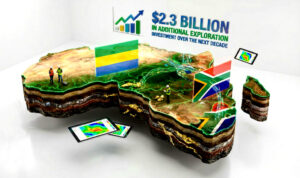
If managed effectively, experts note, improved geological governance can also enhance community outcomes. Clearer mapping of mineral zones helps authorities anticipate social and environmental impacts, plan resettlement policies where necessary, and ensure that local communities benefit from infrastructure investments such as roads, water systems and energy supply linked to mining projects.
In regards to political significance and regional indicators, the agreement carries weight beyond its technical scope. It reflects a growing emphasis on intra-African collaboration in strategic sectors, rather than reliance solely on external partners. South Africa, home to one of the continent’s most mature mining industries, brings decades of regulatory and technical experience. For Gabon, partnering with an African institution strengthens diplomatic ties while reinforcing the idea that expertise and institutional leadership can be cultivated within the continent.
Minister Nguema Nguema described the partnership as aligned with presidential directives to deepen cooperation with “advanced mining economies like South Africa.” The move also positions Gabon as a more serious player in regional mineral supply chains, particularly as global demand for battery minerals and infrastructure materials continues to rise.
Another notable dimension of the agreement is its emphasis on environmental and technological standards. Both parties have committed to sharing knowledge on modern mining technologies, environmental monitoring systems and evolving regulatory frameworks. This comes at a time when international investors increasingly scrutinize environmental, social and government (ESG) performance. Gabon, which markets itself as a biodiversity leader with significant protected forest areas, balancing mining expansion with conservation commitments will be politically and economically delicate.
Improved geological data can reduce unnecessary exploratory disruption, while stronger environmental oversight can mitigate pollution and land degradation risks, raising issues that have sparked public opposition to mining projects in several African countries.
In the coming months, joint working groups are expected to define implementation timelines, prioritize survey regions and integrate data systems. The real test will lie in execution: translating technical cooperation into measurable economic growth and tangible social gains. If successful, the collaboration could help Gabon negotiate better mining contracts, attract responsible investors and ensure that a greater share of mineral wealth remains within the country.
More broadly, the agreement is a strategic recalibration. As the global energy transition reshapes commodity markets, Gabon is seeking to extract more minerals with stronger institutions, clearer data analysis and a sharper focus on national development.