

Ghana’s Railway Master Plan Promises Economic Reconnection to Major Cities
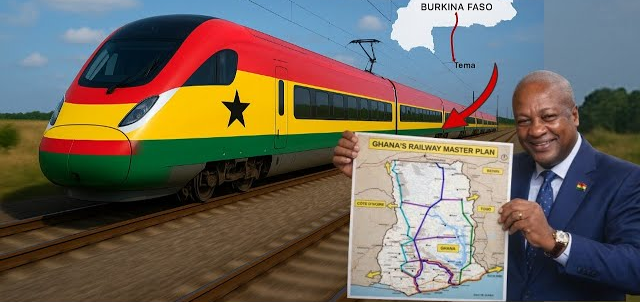
From cocoa farms in the hinterland to crowded urban markets, Ghana’s economy still moves largely on roads built for a smaller, slower country. That dependence may soon ease. This week, the Ghana Railway Development Authority (GRDA) unveiled an ambitious national railway master plan aimed at reconnecting major cities, industrial zones and resource corridors, by steel tracks rather than asphalt.
Launched by GRDA Chief Executive Officer Dr. Frederick Appoh, the plan sets out a long-term vision to revive rail transport as a backbone of both family life and business logistics, offering a safer, cheaper and more reliable alternative for moving people and goods across the country.
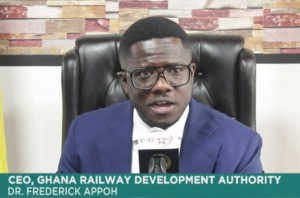
At the heart of the proposal is a clear economic calculation. Passenger rail alone, Dr. Appoh admitted, rarely pays for itself. The real opportunity lies in freight, particularly bulk cargo from Ghana’s mining and agricultural sectors. “Return on investment can largely come from connecting the railway to our mining sectors”, he said, pointing to manganese, bauxite and iron ore, alongside cocoa-growing regions whose produce currently relies heavily on road haulage.
The strategy reflects a broader shift in thinking: railways not just as public infrastructure, but as commercially viable assets capable of attracting private capital. By linking mines, ports, farms and cities, the master plan aims to de-risk investment and draw in billions of dollars from the private sector.
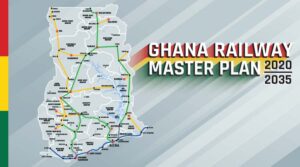
Dubbed the Ghana Railway Master Plan 2026, the project was developed in collaboration with state agencies including GIADIC, GISDEC, and is now entering a national roadshow phase to court investors at home and abroad. According to GRDA, discussions are also underway with trade, mining and transport authorities to finalize operational details.
The balance sheets shows that the social implications are significant. Efficient rail links could ease travel for families, lower transport costs for small businesses, reduce road accidents and cut emissions in fast-growing urban corridors.
The message from the GRDA is clear, for a country balancing rapid growth with infrastructure strain; posting out clearly that Ghana’s future towards movement of goods, workers and the social-security families is assured, and would on once again draw socioeconomic strength from running on the rails.